What Does Code P0482 Mean?
DTC P0482 indicates a malfunction within the control circuit for “Cooling Fan 3.” The Engine Control Module (ECM) or Powertrain Control Module (PCM) monitors the operational status and electrical characteristics of the cooling fan circuits. While specific manufacturer implementations may vary, “Fan 3” typically refers to either a dedicated third cooling fan, a high-speed control circuit for a multi-speed primary cooling fan system, or a fan associated with a secondary cooling loop such as an auxiliary transmission cooler or A/C condenser fan in more complex systems. The ECM/PCM detects this malfunction by monitoring the voltage feedback, current draw, or continuity across the control circuit (e.g., the relay coil circuit or the power supply circuit to the fan motor). If the ECM/PCM detects an open circuit, a short to ground, a short to voltage, or an abnormal current draw that falls outside of specified parameters for the Fan 3 control circuit, it will register P0482 and illuminate the Malfunction Indicator Lamp (MIL). This issue directly affects the vehicle’s ability to maintain optimal engine operating temperature and can severely compromise air conditioning system performance.
Common Symptoms
- Illumination of the Malfunction Indicator Lamp (MIL) on the dashboard.
- Engine overheating, particularly at idle or low vehicle speeds, due to inadequate airflow through the radiator.
- Reduced air conditioning performance, as the condenser fan (if Fan 3) may not be operating to dissipate heat effectively.
- Unusual noises from the cooling fan area, or the complete absence of fan operation when commanded on.
- In some vehicles, a fail-safe mode might be activated, potentially limiting engine power to prevent overheating.
What Causes the Code P0482?
- Faulty Cooling Fan 3 Relay: A common cause, the relay may be internally shorted, open, or have seized contacts, preventing proper power delivery to the fan motor.
- Open or Short Circuit in Wiring Harness: Damage, corrosion, or chafing in the wiring leading to or from the Cooling Fan 3 relay, or directly to the fan motor, can interrupt the control circuit or cause an unintended electrical path.
- Defective Cooling Fan 3 Motor: The fan motor itself may have failed due to worn brushes, seized bearings, or internal electrical shorts/opens, preventing it from spinning when commanded.
- Corroded or Loose Electrical Connectors: Poor contact at the relay socket or the fan motor connector can lead to intermittent or complete loss of circuit integrity.
- Faulty Engine Control Module (ECM/PCM): Although less common, an internal fault within the ECM/PCM’s driver circuit responsible for controlling Fan 3 can trigger this code.
How to Diagnose and Troubleshoot
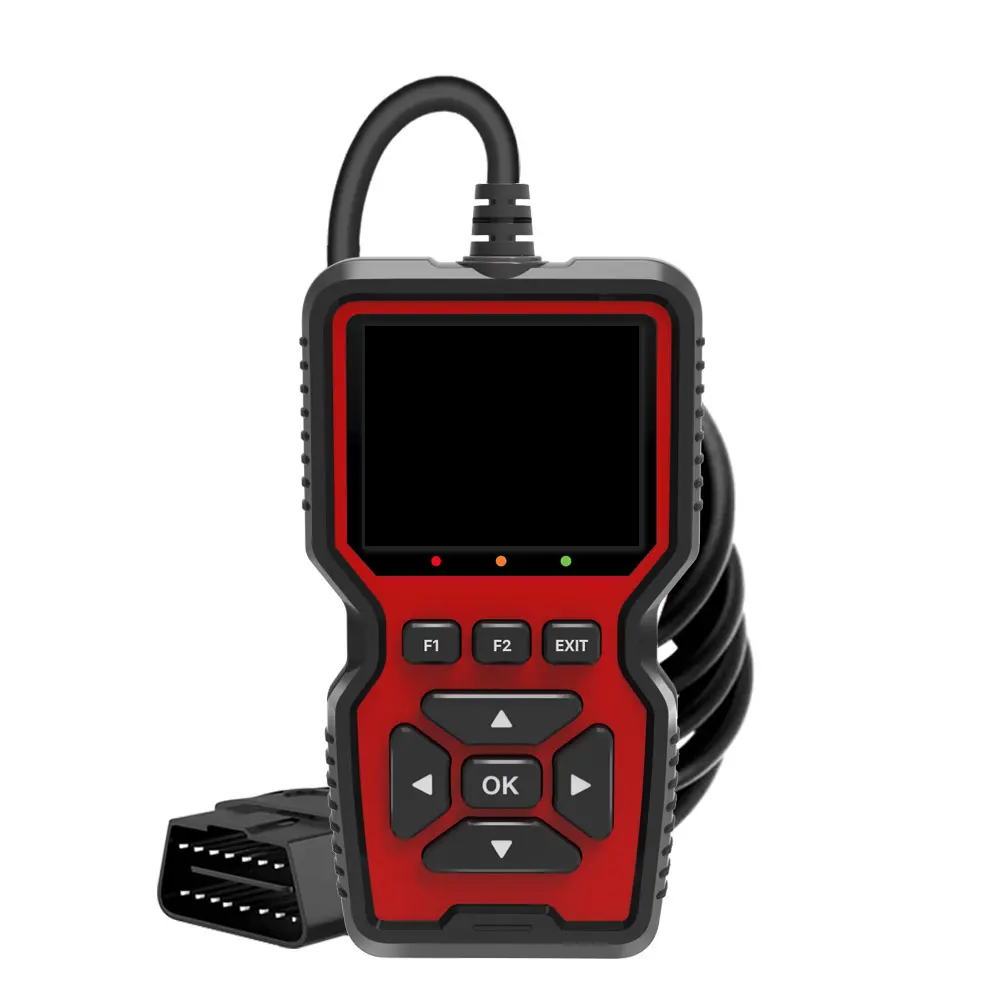
Diagnosing P0482 requires a methodical approach, utilizing an OBD-II scanner and a digital multimeter (DMM).
- Retrieve and Analyze DTCs and Freeze Frame Data: Connect an OBD-II scanner to extract P0482 and any associated codes. Review freeze frame data to understand engine conditions (ECT, vehicle speed, engine RPM) at the time the fault was set. This provides crucial context for replication.
- Visual Inspection: Begin with a thorough visual inspection of the Cooling Fan 3 system. Examine the fan blades for obstructions or damage. Inspect all accessible wiring harnesses and connectors associated with Cooling Fan 3 and its relay for signs of chafing, burning, corrosion, or looseness.
- Cooling Fan 3 Functional Test: Using a bi-directional scan tool, attempt to command Cooling Fan 3 ON and OFF. Listen for the fan operation. If it does not engage, proceed with electrical testing.
- Test Cooling Fan 3 Relay:
- Locate the Cooling Fan 3 relay, often found in the underhood fuse/relay box.
- Identify the relay’s pinout (usually marked on the relay or diagram). Typically, there are two control pins (85 & 86) and two power pins (30 & 87).
- Control Side: Using a DMM, check for voltage at one control pin (e.g., 86) when the fan should be active (either commanded by scanner or engine hot, A/C on). Check for a ground signal at the other control pin (e.g., 85) from the ECM/PCM. If control signals are present but the fan doesn’t activate, the relay or power side is suspect.
- Power Side: With the relay removed, use the DMM to check for constant battery voltage at the fused power input terminal (pin 30) of the relay socket. This ensures the fan’s power supply is intact.
- Bench Test the Relay: Apply 12V and ground to the control pins (85 & 86) and check for continuity between the power pins (30 & 87) with the DMM in continuity mode. A clicking sound and continuity confirm a functional relay (unless it’s failing intermittently). Alternatively, swap the Fan 3 relay with a known good, identical relay from a non-critical circuit.
- Test Wiring to Cooling Fan 3 Motor:
- With the relay in place and the fan commanded ON (or engine hot/A/C on), back-probe the output terminal (pin 87) of the relay socket for battery voltage. If voltage is present, the relay is likely good, and the issue is further downstream.
- Disconnect the electrical connector at the Cooling Fan 3 motor.
- With the fan commanded ON, test for voltage at the power input terminal of the fan motor connector. If no voltage, trace the wiring from the relay to the fan motor for an open circuit using a DMM in continuity mode (with battery disconnected and connectors unplugged).
- Test for a good ground connection at the fan motor connector.
- If power and ground are present at the motor connector but the fan doesn’t spin, the fan motor itself is likely faulty.
- Test Cooling Fan 3 Motor Resistance: If accessible, disconnect the fan motor and measure its internal resistance across its terminals. Refer to manufacturer specifications; an open circuit (infinite resistance) or very low resistance (short) indicates an internal motor fault.
- ECM/PCM Verification: If all other components (relay, wiring, fan motor) test good, and the ECM/PCM is sending proper control signals but the circuit still malfunctions, consider the possibility of an internal ECM/PCM driver fault. This should be a last resort after meticulously ruling out all external components.
Recommended Repairs and Solutions
Once the root cause of P0482 has been precisely identified through diagnostic steps, the recommended repairs are as follows:
- Replace the Faulty Cooling Fan 3 Relay: If the relay is determined to be defective, replace it with a new OEM-equivalent part. Ensure the new relay matches the electrical specifications and pinout of the original.
- Repair or Replace Damaged Wiring: Address any identified open circuits, shorts, or corroded wiring. For small sections, proper soldering and heat-shrink tubing can be used for repair. For extensive damage, a section of the harness or the entire harness may need replacement. Ensure proper gauge wire is used for any repairs.
- Replace the Defective Cooling Fan 3 Motor: If the fan motor itself has failed, it will need to be replaced. Ensure the replacement fan assembly (often sold as a unit including the motor and shroud) is specific to your vehicle’s make, model, and engine configuration.
- Clean or Replace Corroded Connectors: If corrosion is present, clean terminals thoroughly with electrical contact cleaner and a small brush. If corrosion is severe or terminals are deformed, replace the connector shell and/or terminals. Apply dielectric grease to prevent future corrosion.
- ECM/PCM Replacement/Reprogramming: If diagnostics definitively point to an internal ECM/PCM fault, this component will need to be replaced and potentially programmed to the vehicle. This is a complex and often costly repair that should only be performed after all other possibilities have been exhausted and confirmed by a qualified technician.
After any repair, clear the DTCs and perform a functional test by running the vehicle to operating temperature, or by commanding the fan on via a scan tool, to ensure the problem is resolved and the code does not return. Always re-check for proper fan operation and engine temperature management.