What Does Code P0510 Mean?
DTC P0510 indicates a malfunction within the Closed Throttle Position (CTP) switch circuit. The Engine Control Module (ECM), often referred to as the Powertrain Control Module (PCM), monitors the CTP switch to determine when the throttle plate is in its fully closed, or idle, position. This signal is crucial for various engine management strategies, including idle speed control, deceleration fuel cut-off, and torque converter lock-up. When the ECM detects a signal from the CTP switch that is inconsistent with expected parameters—for example, if it indicates the throttle is always closed when the vehicle is accelerating, or always open when the engine is at idle—it interprets this as a malfunction. This discrepancy suggests an open circuit, a short circuit, or a stuck switch, preventing the ECM from accurately determining the throttle’s closed state. The subsystem primarily affected is the idle air control and fuel management strategy, leading to improper engine operation at low RPMs or during deceleration.
Common Symptoms
- Check Engine Light (CEL) illumination: The primary and often first symptom.
- Erratic or high idle speed: The ECM may not correctly manage idle air if it doesn’t know the throttle is closed.
- Engine stalling: Especially when decelerating or coming to a stop, due to incorrect fuel/air mixture at idle.
- Poor fuel economy: Incorrect idle fuel maps can lead to excessive fuel consumption.
- Hesitation or surging: During light throttle applications or deceleration if the ECM incorrectly interprets throttle position.
- Inability to engage cruise control: Some systems use the CTP signal as a safety interlock.
What Causes the Code P0510?
- Faulty Closed Throttle Position (CTP) switch: The switch itself may have internal wear, a broken spring, or an electrical fault causing it to be stuck open, closed, or intermittent.
- Damaged wiring harness: Frayed, cut, shorted, or open circuits in the wiring connecting the CTP switch to the ECM.
- Corroded or loose electrical connectors: Poor contact at the CTP switch or ECM connectors can disrupt the signal.
- Throttle body mechanical issues: Carbon buildup or a binding throttle plate preventing it from fully closing, even if the switch itself is functional.
- ECM internal fault: While less common for P0510, a rare internal failure within the ECM could lead to misinterpretation of the CTP signal.
How to Diagnose and Troubleshoot
A systematic approach is essential for accurately diagnosing P0510:
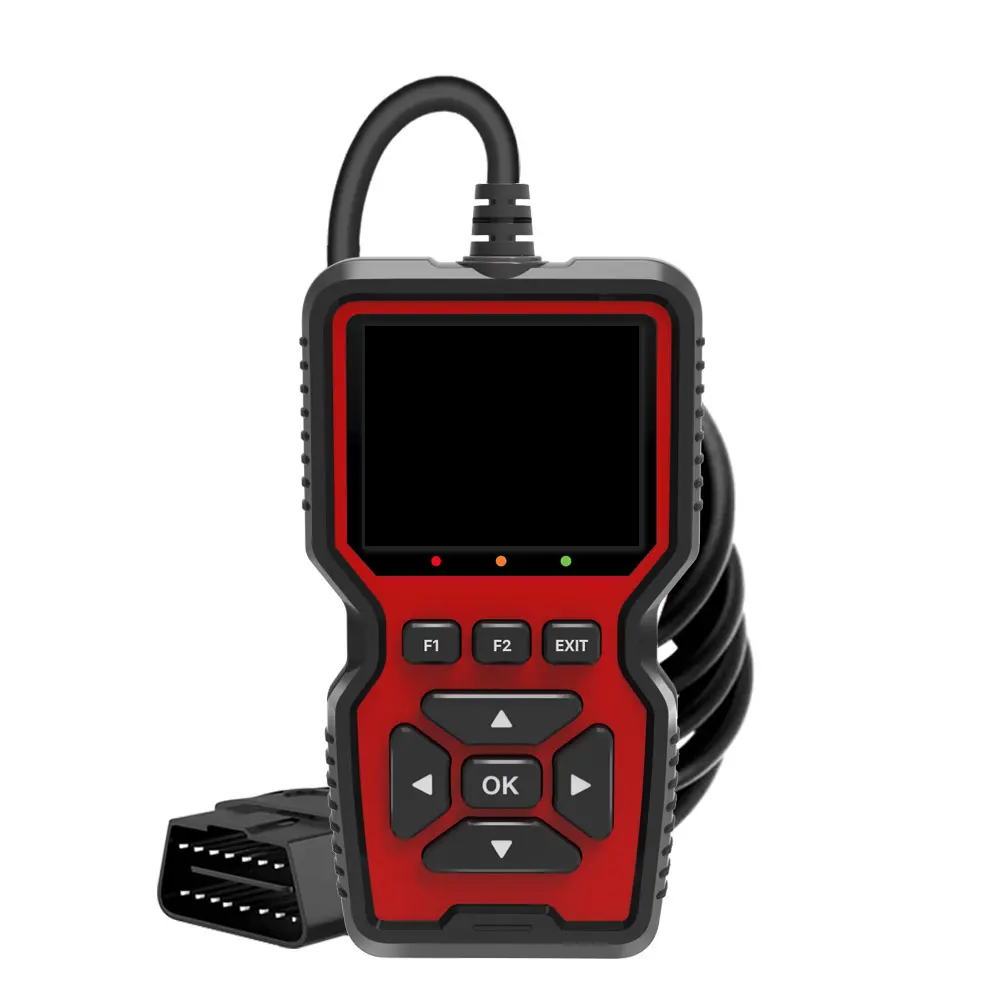
- Retrieve and Analyze DTCs: Use an OBD-II scanner to confirm P0510. Check for any other related codes, especially those pertaining to the Throttle Position Sensor (TPS) or idle control.
- Inspect Wiring and Connectors: Visually inspect the wiring harness leading to the CTP switch (often integrated into the TPS on the throttle body). Look for obvious signs of damage, chafing, corrosion, or loose connections. Disconnect and re-seat the connector.
- Monitor Live Data (If Available): Using an advanced OBD-II scanner, monitor the live data stream for the Throttle Position Sensor (TPS) voltage or percentage. With the engine off and key on (KOEO), the TPS voltage should be at its lowest specification (typically around 0.45V to 0.9V) when the throttle is fully closed. Slowly open the throttle to full open; the voltage should smoothly increase to a higher value (typically 4.5V to 5V). P0510 often implies the ECM isn’t seeing the correct “closed” state.
- Test CTP Switch with a Digital Multimeter (DMM):
- Locate the CTP switch or the CTP contacts within the TPS. Some vehicles have a dedicated two-wire CTP switch, others integrate it into a multi-wire TPS.
- For a dedicated CTP switch: Disconnect the electrical connector. Using a DMM set to continuity or resistance (Ohms), test across the two terminals of the switch. With the throttle fully closed, the switch should show continuity (or very low resistance, typically <5 Ohms). Slowly open the throttle just slightly; the switch should then show an open circuit (or infinite resistance). If it fails this test, the switch is faulty.
- For CTP functionality within a multi-wire TPS: Identify the signal wire for the CTP (consult wiring diagrams specific to your vehicle). Backprobe the CTP signal wire at the sensor connector (or at the ECM connector if necessary) with the DMM, while also providing a ground reference. With KOEO, observe the voltage with the throttle closed and then slightly open. The voltage should change distinctly, indicating the ECM’s expected “closed” state. Compare readings to factory specifications.
- Check Wiring Continuity and Shorts: If the switch tests good, disconnect the CTP switch connector and the ECM connector. Using a DMM, check for continuity of the CTP signal wire(s) from the sensor connector to the ECM connector. Verify there are no open circuits. Also, check for shorts to ground or shorts to power in the CTP circuit.
- Inspect Throttle Body: Manually actuate the throttle plate. Check for any binding, excessive carbon buildup around the throttle plate, or foreign objects preventing it from fully closing and resting on its stop. Clean the throttle body thoroughly if buildup is found.
Recommended Repairs and Solutions
Based on diagnostic findings, the most common repairs for P0510 include:
- Replace the Closed Throttle Position (CTP) Switch: If the switch itself tests faulty, replace it. In many modern vehicles, the CTP functionality is integrated into the overall Throttle Position Sensor (TPS), meaning the entire TPS unit will need to be replaced.
- Repair or Replace Damaged Wiring/Connectors: If visual inspection or continuity tests reveal damaged wiring or corroded/loose connectors, perform precise wiring repairs using proper crimping and soldering techniques, or replace the affected connector pigtail.
- Clean the Throttle Body: If carbon buildup is preventing the throttle plate from fully closing, remove the throttle body and thoroughly clean it with an appropriate throttle body cleaner. Ensure the plate moves freely and seats completely when closed.
- ECM Replacement (Rare): Only consider ECM replacement as a last resort, after meticulously confirming that the CTP switch, wiring, and all related components are functioning perfectly according to specifications. This usually requires advanced diagnostic equipment to confirm ECM failure.
- Perform Relearn Procedures: After replacing the TPS or cleaning the throttle body, many vehicles require an idle air volume relearn procedure to allow the ECM to adapt to the new component or clean state. Consult your vehicle’s service manual for the specific procedure.