What Does Code P0707 Mean?
The OBD-II diagnostic trouble code P0707 signifies a “Transmission Range Sensor Circuit Low Input.” This code is set when the Powertrain Control Module (PCM), also referred to as the Engine Control Module (ECM) or Transmission Control Module (TCM), detects a voltage signal from the Transmission Range Sensor (TRS) that is consistently or intermittently below the manufacturer’s specified lower threshold. The TRS, sometimes known as the Neutral Safety Switch (NSS) or PRNDL switch, is responsible for informing the PCM about the current gear selection (Park, Reverse, Neutral, Drive, Low gears). It typically operates as a multi-position switch or potentiometer, varying its electrical resistance or output voltage based on the selected gear. A “low input” condition indicates that the voltage on the sensor’s signal circuit is either shorted to ground, has an abnormally low resistance, or is experiencing a fault that causes its output to drop below the expected minimum operational range for any given gear. This directly impacts the PCM’s ability to accurately determine the driver’s intended gear, affecting starting procedures, transmission shift strategy, and potentially the display of the current gear on the instrument cluster.
Common Symptoms
- Malfunction Indicator Lamp (MIL) Illumination: The “Check Engine” light will be illuminated on the dashboard.
- No-Start or Difficult Starting Condition: The vehicle may not crank or start, especially if the PCM incorrectly believes the vehicle is not in Park or Neutral.
- Incorrect Gear Display: The instrument cluster’s PRNDL indicator may show an incorrect gear, no gear, or fluctuate erratically.
- Transmission Shifting Irregularities: The transmission may experience harsh shifts, delayed engagement, incorrect gear selection, or remain in “limp mode” (defaulting to a safe, usually higher, gear).
- Reverse Lights Inoperative: The reverse lights may not illuminate when Reverse gear is selected.
- Cruise Control Inoperative: The cruise control system may be disabled due to the PCM’s uncertainty of the vehicle’s gear state.
- Vehicle Stuck in Gear: In some severe cases, the transmission may be stuck in a single gear, usually a forward gear, preventing proper driving.
What Causes the Code P0707?
- Faulty Transmission Range Sensor (TRS): Internal short-circuiting, open circuit, or degraded electrical contacts within the sensor itself, causing an erroneous low voltage output.
- Wiring Harness Damage: A short to ground in the TRS signal wire, an open circuit, chafed insulation, or severe corrosion within the wiring harness leading to or from the sensor.
- Corroded or Damaged Connectors: Poor pin tension, water intrusion, or oxidation at the TRS connector or the PCM/TCM connector, leading to increased resistance or an intermittent short.
- Improper TRS Adjustment: If the TRS is adjustable (common on older vehicles), incorrect alignment can prevent proper contact or cause a consistent low signal.
- Powertrain Control Module (PCM) / Transmission Control Module (TCM) Failure: Although less common, an internal fault within the control module responsible for monitoring the TRS circuit could lead to misinterpretation of the signal or a failure to provide proper reference voltage.
How to Diagnose and Troubleshoot
Diagnosing P0707 requires a systematic approach using specialized tools and detailed vehicle service information:
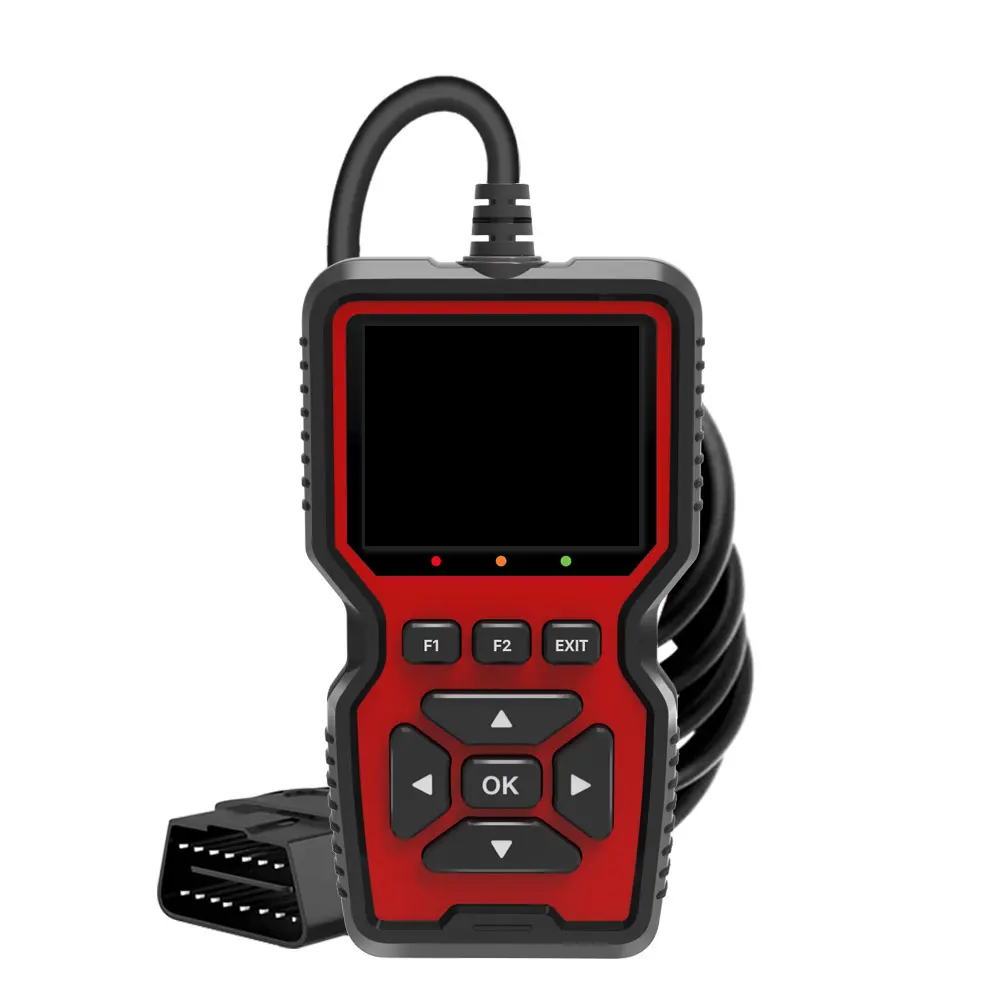
- Retrieve and Analyze DTCs and Freeze Frame Data: Connect an OBD-II scanner to confirm P0707 and check for any related or accompanying codes. Pay close attention to freeze frame data, which captures engine parameters at the moment the code was set, providing crucial context.
- Visual Inspection: Locate the Transmission Range Sensor (often mounted on the side of the transmission or on the shifter mechanism). Visually inspect the sensor, its wiring harness, and connectors for any obvious signs of damage, such as frayed wires, rodent damage, corrosion, loose connections, or physical trauma. Check for proper seating of the connector.
- Check for Technical Service Bulletins (TSBs): Consult vehicle-specific TSBs for known issues related to P0707 for the particular make and model, as manufacturers often release diagnostic or repair procedures.
- Perform a Wiggle Test: With the ignition on (engine off, or if safe, engine running in Park/Neutral), gently wiggle the wiring harness and connectors leading to the TRS while observing the live data stream on the OBD-II scanner. Look for fluctuations or sudden changes in the TRS signal voltage that would indicate an intermittent connection or short.
- Verify Power and Ground to TRS: Using a Digital Multimeter (DMM), back-probe the TRS connector (or disconnect it if testing the harness side) to verify the presence of appropriate reference voltage (typically 5V or 12V, refer to service manual) and a solid ground connection. A missing reference voltage or poor ground can cause a low signal.
- Test TRS Sensor Resistance/Voltage Output:
- Resistance Test (if applicable): Disconnect the TRS connector. Using the DMM, measure the resistance across the sensor’s pins while manually shifting the transmission through all gear positions. Compare readings to manufacturer specifications. A low resistance reading (potentially near 0 ohms) that doesn’t change with gear selection could indicate an internal short.
- Voltage Output Test: With the sensor connected and the ignition on, back-probe the signal wire from the TRS. Shift the transmission through each gear (P, R, N, D, L). Observe the voltage output for each gear. The signal voltage should change distinctly for each position and remain within specified ranges (e.g., typically a range of 0-5V or 0-12V depending on the system design). A “low input” suggests the voltage is stuck at a very low value (e.g., 0V or close to it) regardless of gear selection.
- Continuity and Short to Ground Test (Harness Side): Disconnect the TRS and the PCM/TCM connector. Using the DMM, check for continuity on the TRS signal wire between the TRS connector and the PCM/TCM connector. Also, check for any shorts to ground by placing one DMM lead on the signal wire pin and the other on a known good chassis ground. Any continuity to ground is a short.
- PCM/TCM Input Verification: If all sensor and wiring tests are conclusive, and the issue persists, carefully verify the TRS signal at the PCM/TCM connector pins, comparing them to what the sensor is outputting. This helps rule out a break in the wiring or an issue within the PCM’s input circuit.
Recommended Repairs and Solutions
The resolution for P0707 primarily depends on the root cause identified during diagnosis:
- Repair or Replace Damaged Wiring and Connectors: If the visual inspection or continuity tests reveal chafed, corroded, or broken wires, or compromised connectors, these components must be repaired or replaced. When repairing wiring, use high-quality, weather-sealed heat-shrink butt connectors or solder and seal to ensure durability and prevent future corrosion, especially in areas exposed to environmental elements. Address any bent or corroded pins in the connectors.
- Replace the Transmission Range Sensor (TRS): If the sensor itself fails the resistance or voltage output tests (e.g., it shows consistently low voltage or incorrect resistance values for different gears), it must be replaced. Ensure the replacement sensor is correctly installed and, if applicable, properly adjusted according to manufacturer specifications. Incorrect adjustment can lead to recurring issues or other shift-related codes.
- Clean Connectors: For minor corrosion on connectors, use a specialized electrical contact cleaner and a small brush to remove oxidation. After cleaning, apply a thin layer of dielectric grease to prevent future corrosion and ensure good electrical contact.
- Address PCM/TCM Failure: If all other components (sensor, wiring, connectors, power, and ground) test perfectly good, and the issue points to an internal fault within the PCM or TCM, then replacement of the control module may be necessary. This is typically a last resort and often requires programming or “flashing” the new module to the vehicle’s VIN and specific options.
After any repair, clear the diagnostic trouble codes using an OBD-II scanner. Perform a comprehensive test drive under various conditions, including shifting through all gears, to confirm the repair has resolved the issue and the P0707 code does not reappear. Verify that all symptoms, such as starting issues or incorrect gear display, are no longer present.