

Every modern vehicle manufactured today carries a distinct, legally mandated identification mark known as a VIN (Vehicle Identification Number). This complex 17-character alphanumeric code acts as the absolute factory DNA of an automobile, securely storing encrypted information regarding its build specifications, original powerplant equipment, and engineering architecture. For automotive enthusiasts, mechanics, and prospective buyers, decoding this sequence is the most critical first step before performing mechanical diagnostics, purchasing replacement internal components, or validating factory motor configurations.
The Advanced Technical Structure of an ISO VIN Code
According to international global standards (strictly regulated by ISO 3779 and ISO 3780), a standard 17-digit identification number is mathematically divided into three highly specific mechanical segments. Understanding these sections allows you to read the factory blueprint of any chassis:
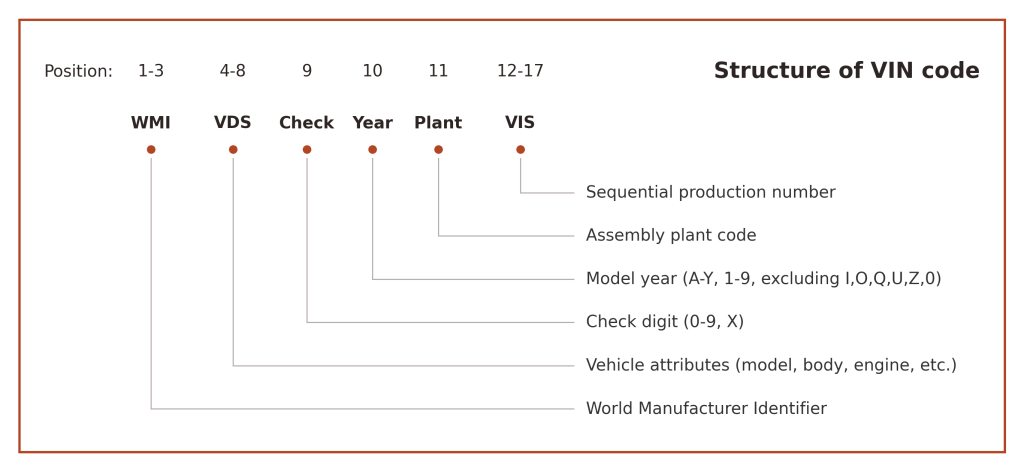
- WMI (World Manufacturer Identifier), positions 1-3: Identifies the manufacturer. First character indicates country/region, second indicates manufacturer, third indicates vehicle type or manufacturing division.
- VDS (Vehicle Descriptor Section), positions 4-8: Vehicle Descriptor Section. Manufacturer-defined attributes including model, body style, engine type, and restraint system.
- Check Digit, positions 9: Validates VIN integrity using a weighted algorithm. Required for all vehicles sold in North America.
- Model Year, positions 10: Encodes the model year. Uses letters A-Y (excluding I, O, Q, U, Z) and digits 1-9 in a 30-year cycle.
- Plant Code, positions 11: Identifies the assembly plant. Manufacturer-specific encoding.
- VIS (Vehicle Identifier Section), positions 12-17: Vehicle Identifier Section. Sequential production number unique within the model year and plant.
Why Motorists and Engineers Must Decode a VIN
Verifying a vehicle classification using an autonomous internal decoder database provides vital operational benefits that go far beyond standard vehicle history lookups:
- Accurate Engine Component Matching: Auto manufacturers frequently change internal internal combustion configurations mid-year. Relying solely on the model name can lead to ordering incorrect cylinder head gaskets, wrong timing belt kits, or incompatible fuel injectors. The VIN isolates the exact engine family code.
- Fluid and Viscosity Verification: Modern high-performance, turbocharged, and eco-friendly powerplants require highly specific motor oil specifications and strict factory tolerances (e.g., specialized ACEA or API ratings). A proper factory layout decode ensures you never compromise internal components by using wrong oil weights.
- OBD-II Diagnostic Grounding: When diagnosing complex trouble codes (DTC), knowing the exact market destination (US market, European market, or Asian domestic market) allows you to properly interpret specific emission controls, sensor mappings, and ECU software architectures.
Avoid expensive logistical mistakes and hardware mismatches. Use our free, zero-cost, fully autonomous database app integrated below to safely cross-reference your vehicle parameters directly against official factory technical logs without relying on third-party tracking services.
Where to quickly locate your 17-digit VIN code?
The fastest way is checking your official registration title, vehicle insurance card, or factory technical certificate.
Stand outside the vehicle on the driver’s side and look through the lower corner of the front windshield dashboard frame.
Open the driver-side door and examine the safety compliance sticker mounted near the door lock strike or latch column.