
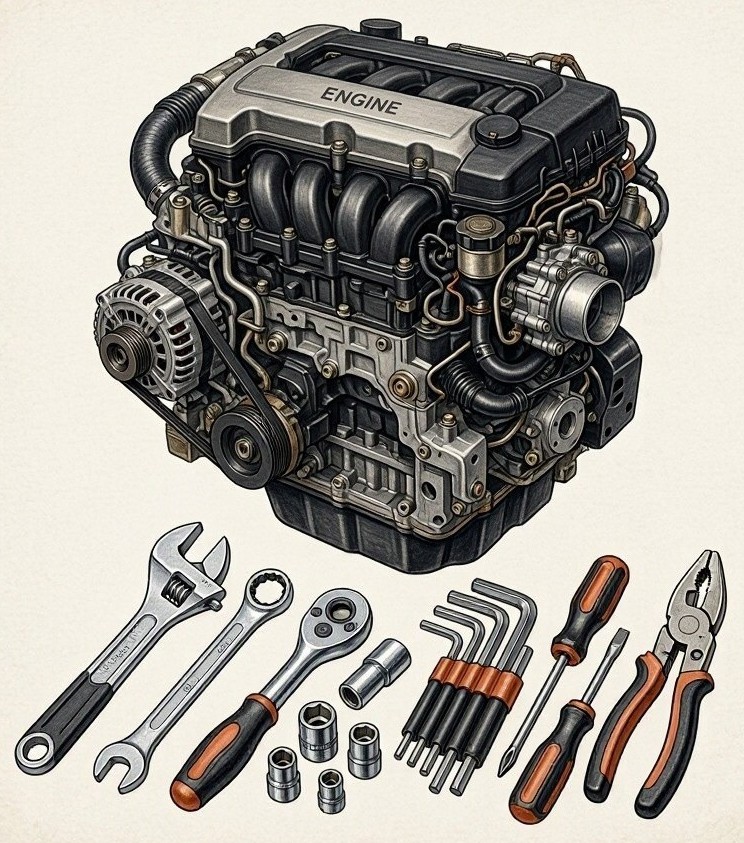
The Diesel Exhaust Fluid (DEF) Heater / Sender Unit is a critical component within the Selective Catalytic Reduction (SCR) system, which is part of your vehicle’s Turbo & Exhaust subsystem. Its primary functions are twofold: first, to heat the DEF in cold ambient temperatures to prevent it from freezing (DEF freezes at approximately 12°F or -11°C), ensuring the SCR system can operate effectively; and second, to accurately measure the DEF fluid level and sometimes its quality within the tank. A malfunctioning heater can lead to a frozen DEF system, preventing proper NOx emissions reduction and potentially triggering a check engine light, limp mode, or even a no-start condition in severe cold. A faulty sender unit will cause inaccurate DEF level readings, leading to incorrect low-level warnings or system malfunctions. Timely replacement is essential for maintaining emissions compliance and reliable vehicle operation. This procedure is rated at a Difficulty Level: Intermediate with an Estimated Time: 1.5-3 hours.
Safety Precautions
- Always disconnect the negative (-) battery terminal before beginning any electrical or component replacement work to prevent accidental electrical shorts or system damage.
- Allow the engine and entire exhaust system, including the DEF tank area, to cool completely. DEF tanks are often located near hot exhaust components. Wear appropriate Personal Protective Equipment (PPE), including safety glasses to protect against splashes and chemical-resistant gloves (e.g., nitrile) as DEF can be corrosive and irritating to skin and eyes.
Tools and Materials Needed
- Hand and Specialty Tools:
- Metric socket set (typically 10mm, 13mm, 15mm, 17mm) and ratchet with extensions.
- Torque wrench (capable of low ft-lbs or Nm settings).
- Flat-head and Phillips screwdrivers.
- Panel/trim removal tools (plastic pry tools).
- Fluid drain pan (at least 5-liter capacity).
- Funnel.
- Small brush or shop rags for cleaning.
- Consumables and Replacement Parts:
- New DEF Heater / Sender Unit (ensure it’s the correct part number for your vehicle).
- New O-rings and/or gaskets (typically included with the new unit; verify before starting).
- Fresh DEF fluid (if needing to top off after replacement).
- Clean shop rags.
- Distilled water (for rinsing DEF spills).
- Dielectric grease (for electrical connectors).
Pre-Replacement Verification
Before commencing the replacement procedure, confirm the DEF Heater / Sender Unit is indeed the faulty component. Utilize an OBD-II scanner to retrieve any stored Diagnostic Trouble Codes (DTCs). Common codes associated with this unit include P205B (DEF Tank Temperature Sensor Circuit Range/Performance), P205C (DEF Tank Temperature Sensor Circuit Low), P205E (DEF Tank Temperature Sensor Circuit High), P203F (DEF Level Sensor Circuit Low), P204F (DEF System Performance), or P20BA/P20BD (DEF Heater Performance). Visually inspect the DEF tank and the visible portion of the unit for obvious damage, fluid leaks, or corroded electrical connections. While a multimeter can check heater element resistance, the integrated nature of the sender and heater often necessitates replacing the complete unit when any of its functions fail.
Step-by-Step Replacement Guide
- Preparation and Access:
Locate the DEF tank. Depending on your vehicle model, it may be under the vehicle (often near the spare tire well), in the trunk/bed area, or within the chassis frame. You will likely need to remove plastic underbody splash shields or other access panels. Use trim removal tools to carefully pry plastic fasteners. Position a drain pan beneath the DEF tank if a drain plug is accessible, or be prepared for spillage during unit removal. Consider draining 1-2 liters of DEF fluid to minimize spillage.
- Disconnection and Removal:
Once the DEF tank is accessible, locate the DEF Heater / Sender Unit, which is typically mounted directly into the top or side of the tank. Disconnect the electrical connectors by carefully pressing release tabs and pulling them straight off. Avoid pulling on the wires. If DEF fluid lines attach directly to the unit, use appropriate quick-disconnect tools or techniques to detach them, being mindful of residual pressure and fluid spillage. Using a suitable wrench or specialized tool, loosen and remove the large plastic retaining ring or a series of bolts/fasteners that secure the unit to the tank. Carefully withdraw the entire unit, noting its orientation. Expect some DEF fluid to spill from the tank opening and the removed unit itself; have your drain pan and rags ready.
- Surface Preparation and Inspection:
Thoroughly clean the mating surface and opening of the DEF tank, removing any dirt, debris, or dried DEF residue. Inspect the tank opening for cracks or damage. This step is critical: Keep DEF fluid off electrical connectors as it corrodes copper wiring rapidly. If any DEF fluid spills onto the wiring harness or electrical connectors, immediately rinse the affected area with distilled water and dry it completely with compressed air or a clean cloth. Do not use tap water as its mineral content can leave corrosive residue. Inspect the wiring harness for any signs of corrosion or damage and repair as necessary. Prior to installing the new unit, apply a small amount of dielectric grease to the pins of the new electrical connectors; this helps prevent moisture ingress and future corrosion.
- Installation and Torque:
Ensure the new O-rings or gasket for the replacement DEF Heater / Sender Unit are properly seated in their grooves on the new unit. You may lightly lubricate the O-rings with clean water or a very small amount of fresh DEF fluid to aid in installation and prevent pinching. Carefully insert the new unit into the DEF tank opening, aligning it precisely with any indexing tabs or marks. Secure the unit with the retaining ring or fasteners. Tighten the retaining ring by hand initially, then use a wrench or tool to snug it down. If fasteners are used, tighten them evenly in a cross-pattern to the manufacturer’s specified torque, which is often low for plastic components (e.g., 5-10 ft-lbs or 7-14 Nm). Over-tightening can crack the tank or the new unit.
- Reassembly:
Reconnect all DEF fluid lines (if applicable), ensuring they click securely into place. Reattach all electrical connectors, listening for a positive “click” to confirm they are fully seated. Reinstall any underbody shields, access panels, or other components that were removed. Double-check that all tools are clear of the work area. Finally, reconnect the negative (-) battery terminal.
Common Mistakes to Avoid
- Damaging Electrical Connectors: Forcing electrical connectors or attempting to disconnect them without pressing the release tab can break fragile plastic clips and damage the wiring harness, leading to intermittent electrical faults. Always be gentle and ensure DEF fluid does not come into contact with the pins.
- Improper O-ring Seating and Torque: Failing to properly seat the O-rings or over/under-tightening the retaining ring/fasteners will result in DEF fluid leaks from the tank, which can cause corrosion to surrounding components and system malfunction. Always check for proper O-ring position and adhere to torque specifications.
- Insufficient Cleaning of DEF Spills: DEF fluid, particularly when dried, can be very corrosive to electrical contacts and certain metals. Neglecting to thoroughly clean up any spills with distilled water and drying the area completely can lead to premature failure of electrical components, including the new unit’s connectors or the vehicle’s wiring harness.
Post-Repair Check and Testing
Once the replacement is complete, refill the DEF tank with fresh fluid to the appropriate level. Perform a thorough visual inspection around the new DEF Heater / Sender Unit for any signs of fluid leaks. Clear any stored Diagnostic Trouble Codes (DTCs) from the vehicle’s engine control unit (ECU) using an OBD-II scanner. Turn the ignition to the “ON” position (without starting the engine) for at least 30 seconds to allow the SCR system to perform initial self-checks and for the new sender unit to register. Then, start the engine and allow it to idle for several minutes, monitoring for any new warning lights, unusual odors, or visible DEF leaks. Finally, perform a road test under various driving conditions to ensure the SCR system operates correctly, DEF level readings are accurate, and no new fault codes related to the DEF system reappear. Pay particular attention to heater function if ambient temperatures are low enough to trigger its operation.