
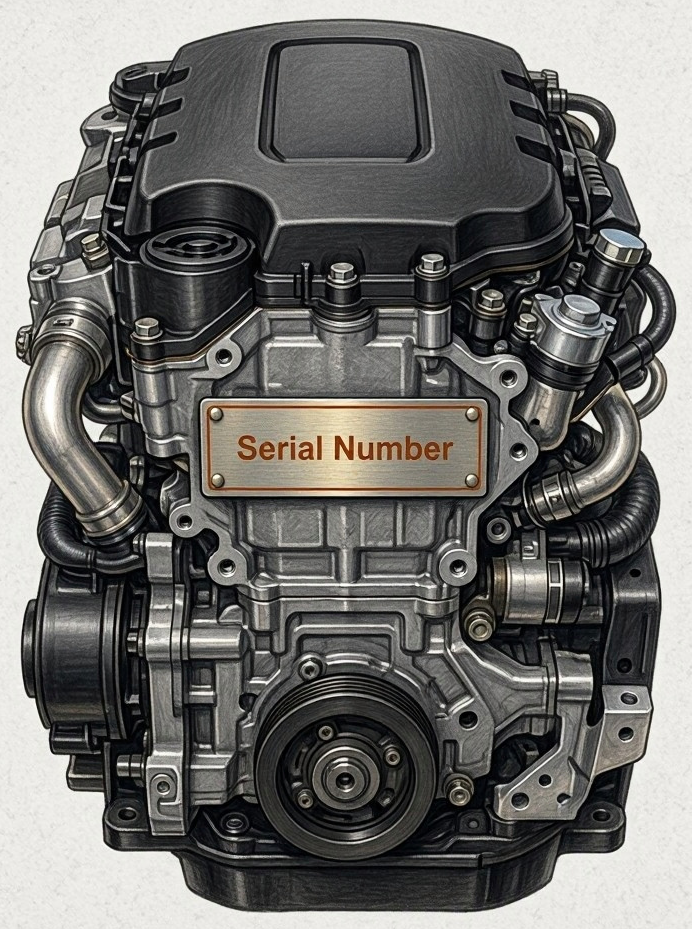
Accurately identifying the precise engine code and serial number on any Acura vehicle is a fundamental requirement for a myriad of essential automotive processes. This critical alphanumeric sequence serves as the unique fingerprint of an engine, providing indispensable information for mechanics, parts specialists, insurance adjusters, and prospective vehicle owners. Without this exact identification, the procurement of correct Original Equipment Manufacturer (OEM) replacement parts becomes a high-risk endeavor, often leading to costly errors and delays. Furthermore, the engine code and serial number are vital for verifying a vehicle’s historical service records, checking for the applicability of technical service bulletins (TSBs) or safety recalls, and confirming the originality or replacement status of the powertrain during pre-purchase inspections of used vehicles or standalone engine assemblies. This comprehensive guide will equip you with the knowledge to confidently locate, interpret, and decode Acura engine identification markings, ensuring accuracy in all your automotive endeavors.
Where to Find the Engine Serial Number and Code on Acura Engines
| Engine Series / Layout | Physical Stamp Location | Secondary Sticker / Plate |
|---|---|---|
| B-series (Inline 4) (e.g., B16A, B18B, B18C) |
Typically located on a flat machined pad on the front-left side of the engine block, near the transmission bellhousing seam. The engine code is on the upper line, with the 7-digit serial number directly below it. | May have a white barcode sticker on the valve cover or a small metal data plate riveted to the firewall in some older models, often mirroring VIN details. |
| H/F-series (Inline 4) (e.g., H22A, F20B) |
Stamped on a machined pad located on the front-left of the engine block, adjacent to the transmission bellhousing. The top line displays the engine code, and the bottom line contains the 7-digit serial number. | Service sticker or label on the timing belt cover or valve cover, though less reliable for direct engine identification than the block stamp. |
| K-series (Inline 4) (e.g., K20A, K20Z, K24A, K24Z, K20C4 Turbo) |
Found on a distinct flat, machined pad on the front-left side of the engine block, positioned close to the transmission bellhousing seam. The engine code is presented on the upper line, followed by the 7-digit serial number on the lower line. | Often features a barcode sticker on the valve cover or intake manifold, and sometimes a smaller emission control label (VECI) with partial engine data. |
| J-series V6 (e.g., J30A, J32A, J35A, J35Y, J37A) |
Located on a machined pad on the front-left face of the engine block, adjacent to the transmission bellhousing mounting surface. The engine code is on the upper line, with the 7-digit serial number directly below. | A small metal tag or label may be affixed to the rear valve cover or the intake manifold. Earlier models might have a VECI label on the hood underside. |
| C-series V6 (e.g., C27A, C30A, C32B, JNC1 Hybrid) |
Stamped into a flat, machined pad on the front-left side of the engine block, in close proximity to the transmission bellhousing interface. The engine code occupies the upper line, and the 7-digit serial number is on the lower line. | Typically, a barcode sticker can be found on the intake manifold or the valve cover. Early models might also have a firewall-mounted VIN/engine code plate. |
To accurately locate and read the engine code and serial number on an Acura engine, careful inspection of the cylinder block is required. Regardless of the specific engine series or layout, the primary identification is consistently stamped or laser-etched onto a flat, machined pad. This pad is almost universally situated on the front-left side of the engine block, positioned near the transmission bellhousing seam. This strategic placement ensures a permanent, tamper-resistant identifier. When viewing this pad, you will observe two distinct lines of alphanumeric characters: the upper line displays the engine code (e.g., B18C1, K24A2), and the lower line presents the unique 7-digit sequential serial number. Accessing this area may require a flashlight, a mirror, and potentially some cleaning. Automotive degreaser and a soft brush or rag can be used to remove accumulated road grime, oil, or rust that might obscure the shallow markings. Exercise caution to avoid abrasive cleaning methods, such as wire brushes, which can damage or erase the delicate stampings. Always ensure the engine is cool to the touch before attempting to clean or inspect these areas. For transverse-mounted engines (most Acura FWD models), this pad is typically visible when looking down from above, between the engine block and the transmission case, often requiring a bit of maneuvering around hoses and wiring. For longitudinally mounted engines, access can sometimes be easier from underneath the vehicle.
How to Decode Acura Engine Codes and Serial Numbers
Acura engine model codes and their accompanying serial numbers follow a highly structured, alphanumeric logic designed to convey specific engineering and production details. Understanding this structure is crucial for accurate identification.
- Engine Family & Generation Prefix: The initial one or two letters (e.g., ‘B’, ‘H’, ‘K’, ‘J’, ‘C’) fundamentally identify the engine’s overarching architectural family, block material (e.g., iron, aluminum), and general design generation. This prefix categorizes engines by their basic layout and often indicates their primary application era.
- Displacement & Cylinder Configuration: The subsequent two digits typically denote the approximate engine displacement in deciliters (e.g., ’18’ for 1.8 liters, ’24’ for 2.4 liters, ’35’ for 3.5 liters). For V-configuration engines (like the J-series or C-series), this implicitly also confirms the V6 layout.
- Fuel System, Aspiration & Valvetrain: The characters immediately following the displacement often provide critical information about the engine’s induction and valvetrain technology. This can include identifiers for fuel injection type (e.g., multi-port, direct injection), aspiration (naturally aspirated, turbocharged, supercharged), and variable valve timing systems (e.g., ‘A’ for VTEC, ‘C’ or ‘Z’ for i-VTEC, or direct injection/turbo indicators in later models like K20C).
- Power Output, Revision & Emissions Spec: Trailing numerical digits (e.g., ‘1’, ‘2’, ‘8’, ‘4’) typically signify specific power output levels, internal technical revisions within that engine family, or distinctions based on regional emissions standards (e.g., California vs. Federal, or different international markets). A higher number often indicates a more performance-oriented or revised variant.
- Sequential Serial Number String: The 7-digit serial number is a unique identifier assigned sequentially during manufacturing. While primarily a production sequence number, the initial digit or two might sometimes indirectly hint at the manufacturing plant or a broader production batch, though this is less explicitly encoded than in some other manufacturers’ systems. Its primary purpose is to distinguish individual engines for tracking, warranty, and recall purposes.
Real-World Acura Engine Code Examples
Let’s break down some common Acura engine codes and their associated serial numbers to illustrate the decoding process character by character, providing practical context for each element.
- B18C1-1004521:
- B: Identifies this as a B-series engine, a highly regarded inline 4-cylinder architecture primarily from the 1990s and early 2000s, known for its performance potential.
- 18: Indicates an approximate displacement of 1.8 liters (1797cc to be precise).
- C: Denotes that this is a DOHC (Dual Overhead Camshaft) engine equipped with VTEC (Variable Valve Timing and Lift Electronic Control). This ‘C’ variant is distinct from the non-VTEC ‘B’ or ‘A’ variants.
- 1: Specifies a particular revision or market application. For the B18C1, this typically signifies the US-market DOHC VTEC engine found in the 1994-2001 Acura Integra GS-R.
- 1004521: This is the unique 7-digit sequential serial number, indicating the production order of this specific B18C1 engine.
- K24A2-2301845:
- K: Designates this as a K-series engine, a modern inline 4-cylinder architecture featuring DOHC and i-VTEC (intelligent Variable Valve Timing and Lift Electronic Control), introduced in the early 2000s.
- 24: Points to an approximate displacement of 2.4 liters (2354cc).
- A: Implies a naturally aspirated i-VTEC engine, common across various Acura and Honda applications.
- 2: Signifies a specific tuning, power output level, and market for this 2.4L i-VTEC engine. The K24A2 is famously associated with the high-output version found in the 2004-2008 Acura TSX (CL9 chassis) for the North American market, known for 200-205 horsepower.
- 2301845: This is the unique 7-digit sequential serial number assigned to this particular K24A2 engine during production.
- J35A8-4012934:
- J: Identifies this as a J-series engine, Honda/Acura’s widely used V6 engine architecture, featuring a 60-degree V-angle and SOHC (Single Overhead Camshaft) with VTEC or VCM (Variable Cylinder Management).
- 35: Indicates an approximate displacement of 3.5 liters (3471cc).
- A: Denotes a VTEC-equipped engine, typically naturally aspirated.
- 8: Specifies a high-output, performance-oriented variant within the J35A family. The J35A8 was a prominent engine in the 2005-2008 Acura RL and 2007-2008 Acura TL Type-S, recognized for its increased horsepower and rev limit compared to other J35A variants.
- 4012934: This is the unique 7-digit sequential serial number for this specific J35A8 engine.
- K20C4-1482910:
- K: Designates this as a K-series engine, specifically a newer generation inline 4-cylinder.
- 20: Indicates an approximate displacement of 2.0 liters (1996cc).
- C: In the context of newer K-series engines (post-2015), ‘C’ combined with the subsequent digit typically signifies direct injection and often turbocharging. This is a departure from older K-series ‘A’ or ‘Z’ designations which primarily indicated i-VTEC.
- 4: Represents a specific power output, tuning, and market application for this turbocharged direct-injection 2.0L K-series engine. The K20C4 is the powerhouse found in the 2017+ Acura TLX A-Spec 2.0T and Acura RDX, delivering robust turbocharged performance.
- 1482910: This is the unique 7-digit sequential serial number for this particular K20C4 engine.
How to Identify Production Year and Manufacturing Plant
While the 7-digit serial number primarily serves as a sequential production identifier, determining the precise manufacturing year and plant often requires cross-referencing or analyzing subtle characteristics. The serial number itself does not typically contain explicit year or plant codes in an easily decipherable format like some VINs. For Acura engines, the most reliable methods include: 1. Cross-referencing with the Vehicle Identification Number (VIN): The vehicle’s VIN, usually found on the dashboard (visible through the windshield), driver’s side door jamb, or under the hood, contains the manufacturing year and plant code for the vehicle itself. OEM service documentation and dealership systems can often link a specific engine serial number to the VIN of the vehicle it was originally installed in. 2. Casting Date Clocks: Many major engine components (block, cylinder head, transmission case) have small “casting clocks” or date stamps. These are typically circular dials with an arrow pointing to the month and a two-digit year code. While not the engine serial number itself, these dates indicate when the component was cast, usually preceding the final engine assembly by a few weeks or months. 3. Emission Control Labels (VECI): Under the hood, there is often a Vehicle Emission Control Information (VECI) label. This label will list the engine code, displacement, and sometimes a manufacturing date or applicable model year range. 4. Part Number Revisions: Over an engine’s lifespan, part numbers for components may change with engineering revisions. While not directly giving a year, identifying the revision level of specific components can narrow down the production period. 5. Dealership Databases: For official recall or warranty checks, an Acura dealership service department can often use the engine serial number to access internal databases and retrieve the original vehicle’s VIN and production details.
Common Mistakes When Checking Acura Engine Numbers
- Confusing Casting Numbers with the Serial Number: A frequent error is misinterpreting the raised, rough-textured alphanumeric characters found on various parts of the engine block or cylinder head. These are foundry casting numbers or part numbers, used for component identification during manufacturing, not the unique engine serial number. The actual engine code and serial number are always stamped or laser-etched onto a smooth, flat, machined pad, distinct from the rougher casting surfaces.
- Corrosion, Paint, and Road Grime Obscuration: The shallow nature of stamped or laser-etched markings makes them highly susceptible to obscuration by years of accumulated road salt, rust, oil, dirt, or even aftermarket paint. Attempting to read through heavy grime without proper cleaning can lead to misinterpretation. Always gently clean the area with a degreaser and a soft cloth or brush, ensuring not to abrade the markings.
- Short-Block or Remanufactured Engine Swaps: When an engine has been replaced with a factory short-block, a remanufactured unit, or a used engine from a different vehicle, the engine code and serial number will no longer match the vehicle’s original VIN data. Replacement short-blocks sometimes come with a blank or different serial number from the original complete engine. It is crucial to verify if the engine is original to the vehicle or if a replacement has occurred, which can impact vehicle history and value.
- Misreading Similar Alphanumeric Characters: The stamping fonts used by manufacturers can sometimes lead to confusion between visually similar characters. Common culprits include mistaking ‘0’ (zero) for ‘O’ (letter O), ‘1’ (one) for ‘I’ (letter I), ‘5’ (five) for ‘S’ (letter S), or ‘8’ (eight) for ‘B’ (letter B). Always double-check and, if uncertain, compare with known examples or use multiple angles of inspection.