
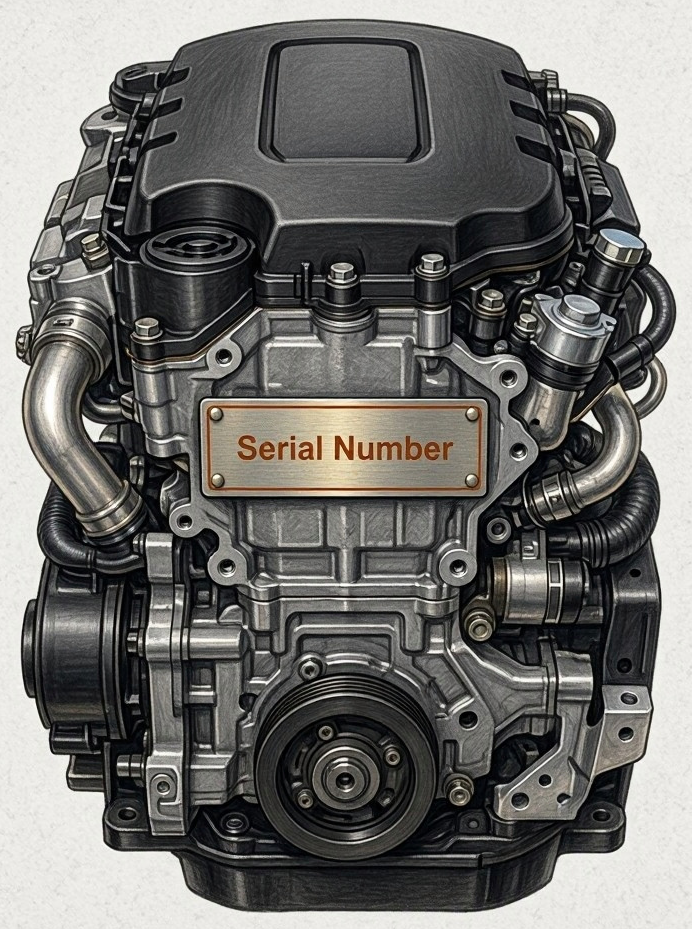
Identifying the exact engine code and serial number on an Alfa Romeo is a critical process for anyone involved with these vehicles. As an automotive engineer, vehicle identification specialist, or master powertrain technician, precise identification is paramount for several reasons: it ensures the correct OEM parts are ordered, preventing costly errors and fitment issues; it allows for accurate verification of a vehicle’s history, crucial for valuations and pre-purchase inspections; it dictates the applicability of technical service bulletins (TSBs) and recall campaigns, vital for maintaining safety and performance; and it is indispensable when inspecting a used vehicle or a replacement engine to confirm authenticity, specifications, and compliance. This comprehensive guide will equip you with the knowledge to accurately locate and decode Alfa Romeo engine identification markings, spanning generations of their iconic powertrains.
Where to Find the Engine Serial Number and Code on Alfa Romeo Engines
| Engine Series / Layout | Physical Stamp Location | Secondary Sticker / Plate |
|---|---|---|
| Nord Twin Cam (e.g., 105/115 series) | Stamped on a machined pad on the exhaust side of the cylinder block, typically near the gearbox flange or towards the front of the block below the cylinder head. | Often a small metallic plate or sticker affixed to the timing cover or valve cover, sometimes cross-referenced on the vehicle’s VIN plate. |
| Twin Spark (8V/16V – e.g., AR 32xxx series) | Stamped on a machined pad on the exhaust side of the cylinder block, commonly near the gearbox bell housing flange or below the cylinder head junction. | Barcode stickers or labels may be found on the timing cover, intake manifold, or sometimes on the engine control unit (ECU). |
| Boxer (e.g., 33, 145/146) | Stamped on a machined flat surface on the front of the engine block, often below the cylinder head on the passenger side (RH drive) or driver side (LH drive). | Labels on the timing cover, air filter housing, or sometimes a small data plate riveted to the strut tower in the engine bay. |
| Busso V6 (12V & 24V – e.g., AR 16102, AR 34301, 936A000) | Older 12V V6 engines: Stamped on the rear bank cylinder head edge, facing upwards or towards the firewall. Newer 24V V6 engines: Stamped on a machined pad on the exhaust side of the front bank cylinder block, often near the gearbox flange. | A factory label or metallic tag may be present on the intake plenum, valve cover, or cross-referenced on the vehicle’s VIN plate. |
| JTS Direct Injection (e.g., 159 2.2/3.2 JTS) | Stamped on a machined pad on the exhaust side of the cylinder block, typically located near the gearbox bell housing flange or the engine mounting bracket. | Barcode stickers or identification labels are common on the valve cover, intake manifold, or the front of the cylinder head. |
| JTD / JTDm Multijet Diesel (e.g., 1.3/1.6/1.9/2.0/2.4) | Stamped on a machined pad on the exhaust side of the cylinder block, often adjacent to the gearbox flange or beneath the exhaust manifold. | Identification labels with engine type and sometimes serial number often located on the timing cover, cam cover, or an information plate near the injector rail. |
| TBI 1750 (e.g., 159, Giulietta, 4C) | Stamped on a machined pad on the exhaust side of the cylinder block, typically close to the gearbox flange. | A barcode sticker or data label is usually found on the plastic engine cover, valve cover, or near the turbocharger assembly. |
| Giulia/Stelvio 2.0T GME & 2.9L V6 Bi-Turbo (690T) | Laser-etched or stamped on a machined flat surface on the exhaust side of the cylinder block, typically near the bell housing flange or adjacent to the oil filter housing. | A dedicated data plate or sticker may be present on the engine’s plastic cover, cam cover, or integrated into the vehicle’s main VIN plate for cross-reference. |
To physically locate, clean, and accurately read the stamped or laser-etched markings on Alfa Romeo cylinder blocks, cylinder heads, and flywheel housings, a methodical approach is required. The primary identification for most Alfa Romeo engines from the 1970s onwards is a series of characters stamped on a machined pad on the exhaust side of the cylinder block, frequently found near the gearbox flange or the timing cover. This location can be challenging to access due to ancillary components, hoses, and wiring. For older Busso V6 engines, specifically the 12-valve variants, the engine code and serial number are uniquely stamped on the rear bank cylinder head edge, often requiring a mirror and a flashlight for clear visibility due to its proximity to the firewall.
Begin by ensuring the engine is cool to prevent burns. Use a strong flashlight and, if necessary, an inspection mirror to identify the machined pad. This pad will typically be a clean, flat surface, distinct from the rough texture of the cast iron or aluminum block. Once located, it is common to find it obscured by layers of road grime, oil, or even old paint. Gently clean the area using a suitable degreaser and a sturdy rag. For stubborn build-up, a plastic scraper or a brass wire brush can be used, but always exercise caution to avoid damaging the delicate stampings. Never use abrasive sandpaper or aggressive steel wire brushes, as these can permanently obscure or remove the critical identification marks. Once clean, use the flashlight to illuminate the characters at various angles to ensure all digits and letters are legible, paying close attention to potential ambiguities like ‘0’ and ‘O’, ‘1’ and ‘I’, or ‘5’ and ‘S’.
How to Decode Alfa Romeo Engine Codes and Serial Numbers
Alfa Romeo engine model codes and serial number sequences follow a structured logic designed to convey specific information about the engine’s design, specifications, and production. While the exact format can vary slightly across different generations and partnerships (e.g., Fiat Group engines), the fundamental principles remain consistent.
- Engine Family & Generation Prefix: The initial letters or digits typically identify the fundamental engine architecture, material (e.g., aluminum, cast iron), or the design series within the Alfa Romeo catalog. Older engines often started with “AR” (Alfa Romeo) followed by a three-digit series number (e.g., AR005xx for Nord, AR32xxx for Twin Spark). Newer engines, especially those shared with the wider Fiat/FCA group, might use numerical codes that align with internal project numbers or platform identifiers.
- Displacement & Cylinder Configuration: Characters within the code often directly indicate the engine’s nominal displacement in liters or cubic centimeters, and sometimes its cylinder count or layout (e.g., 2.0, 2.4, V6). This information helps differentiate between variants within the same engine family.
- Fuel System, Aspiration & Valvetrain: Specific letters or numerical sequences are used to denote the fuel delivery system (e.g., JTS for Jet Thrust Stoichiometric direct injection gasoline, JTD/JTDm for Jet Turbo Diesel Multijet), aspiration method (e.g., turbo, naturally aspirated), and valvetrain configuration (e.g., 16V for 16-valve, MultiAir technology).
- Power Output, Revision & Emissions Spec: Trailing letters or digits frequently denote different power output tiers (e.g., a specific horsepower variant), minor technical revisions to the engine design, or its compliance with regional emissions standards (e.g., Euro 4, Euro 5, Euro 6).
- Sequential Serial Number String: Following the engine model code, a unique sequential serial number string is stamped. This is a unique production identifier for that specific engine block, often consisting of 6 to 9 digits. In some cases, characters within the serial number might also encode the manufacturing plant, the year, or even the month of production, though this is less common in a consistently readable format for owners.
Real-World Alfa Romeo Engine Code Examples
Understanding the theory is one thing; applying it to real-world examples solidifies the knowledge. Here’s a character-by-character breakdown of actual Alfa Romeo engine codes and serial numbers:
- AR 32301 *0148293*:
- AR: Denotes an engine manufactured by Alfa Romeo.
- 323: This is a specific engine family identifier, closely associated with the 2.0L Twin Spark 16-valve engine generation.
- 01: Indicates a specific variant or revision within the 323 family, typically for the 2.0L 16V Twin Spark engine producing around 155 PS (153 hp).
- *0148293*: This is the unique sequential serial number assigned to that specific engine block during manufacturing. This string identifies the individual engine within its production run.
- Typical Vehicle Applications: Alfa Romeo 145, 146, 147, 156, and GT models equipped with the 2.0L Twin Spark 16V engine.
- 939A5000:
- 939: This numerical prefix often refers to the vehicle platform or an internal project code related to the engines used in the Alfa Romeo 159, Brera, and Spider (all on the 939 platform). It signifies a later generation of engines, often shared within the Fiat Group.
- A: Within this context, ‘A’ typically denotes a diesel engine.
- 5000: This specific four-digit sequence identifies the 2.4 JTDm 20-valve Multijet diesel engine, specifically the high-output variant. This engine typically produced between 200 hp (147 kW) and 210 hp (154 kW) depending on the vehicle application and revision.
- Typical Vehicle Applications: Alfa Romeo 159, Brera, and Spider (939 platform) equipped with the 2.4L JTDm 20V diesel engine.
- 55273835:
- 5527: This is part of a larger numerical sequence identifying the Global Medium Engine (GME) family, an architecture developed under FCA (Fiat Chrysler Automobiles).
- 3835: This specific suffix identifies the 2.0L MultiAir Turbo gasoline engine, specifically the high-output version tuned to produce 280 PS (276 hp / 206 kW).
- Typical Vehicle Applications: Alfa Romeo Giulia 2.0T (280 hp variant) and Alfa Romeo Stelvio 2.0T (280 hp variant).
- 670050436:
- 670: This is the internal engine family code for the Ferrari-derived V6 engine used in the Quadrifoglio models. It signifies a high-performance, bespoke powertrain.
- 050: This sequence further specifies the variant within the 670 family.
- 436: This final numerical sequence explicitly identifies the 2.9L V6 Bi-Turbo engine, known internally as the 690T. This engine produces 510 PS (503 hp / 375 kW) in its standard Quadrifoglio tune.
- Typical Vehicle Applications: Alfa Romeo Giulia Quadrifoglio and Alfa Romeo Stelvio Quadrifoglio.
How to Identify Production Year and Manufacturing Plant
Determining the exact manufacturing year, month, and sometimes even the assembly plant for an Alfa Romeo engine requires a combination of methods, as this information is not always explicitly coded within the serial number itself in a universal format for all generations. However, several clues can be pieced together:
- Casting Date Clocks and Stamps: Many engine blocks, cylinder heads, and other major cast components feature “date clocks” or direct date stamps (e.g., YY MM DD) indicating when that specific component was cast. These are usually raised markings on the raw casting and are distinct from the machined serial number pad. While not the assembly date of the complete engine, they provide a strong indication of the earliest possible production date for that engine.
- VIN-to-Engine Cross-Reference: The vehicle’s 17-character Vehicle Identification Number (VIN) often contains embedded information about the vehicle’s manufacturing year (typically the 10th character). While the VIN identifies the vehicle’s production year, factory documentation or service manuals can cross-reference the installed engine type/code with specific VIN ranges and production periods. Some Alfa Romeo VIN plates also explicitly list the engine type (Tipo Motore) which can be cross-referenced with production data.
- Factory Labels and Stickers: Modern Alfa Romeo engines, particularly those from the Fiat Group era, frequently have barcode stickers or data plates affixed to the timing cover, valve cover, or other visible locations. These stickers often contain the full engine code, serial number, and sometimes a production date in an accessible format, which can be in Julian date code (e.g., YYDDD, where YY is the year and DDD is the day of the year) or a standard date format.
- Alfa Romeo Service Documentation: Official Alfa Romeo Electronic Parts Catalogs (EPC) and workshop manuals are invaluable resources. By inputting the vehicle’s VIN, these systems can often retrieve the original engine type and even the specific serial number installed at the factory, confirming the production year of the engine in relation to the vehicle. These databases also detail engineering revisions and their associated production date ranges.
- Serial Number Interpretation (Less Common): While not a universal rule for Alfa Romeo, some manufacturers embed date or plant codes within certain digits of their sequential serial numbers. For Alfa, this is less common as a direct, easily decipherable string for the average user. However, deep factory-level documentation might reveal such patterns for specific engine families.
Common Mistakes When Checking Alfa Romeo Engine Numbers
Accurate engine identification is critical, but several pitfalls can lead to incorrect readings or misinterpretations. Being aware of these common mistakes can save significant time and effort.
- Confusing Casting Numbers with the Serial Number: A frequent error is mistaking raised, roughly textured numbers and letters found on the raw cast surfaces of the cylinder block or head for the official engine serial number. These are foundry part numbers, mold numbers, or material codes, designed for internal manufacturing processes. The actual engine code and serial number are always stamped, etched, or dot-peen marked onto a specific, smooth, machined pad. These stamped characters are typically shallower and more precisely aligned than casting marks.
- Corrosion, Paint, and Road Grime Obscuration: Engine identification numbers are often located in exposed areas, making them susceptible to corrosion, layers of old paint, accumulated road grime, and oil sludge. Attempting to read through these obstructions inevitably leads to misidentification. Improper cleaning, such as using aggressive abrasive tools like steel wire brushes or sandpaper, can permanently damage or erase the delicate stampings, rendering the number illegible and potentially causing legal issues. Always use a proper degreaser, a plastic scraper, and a soft brass wire brush, working carefully and methodically.
- Short-Block or Remanufactured Engine Swaps: It is common for vehicles to have had their original engines replaced with factory-supplied short-blocks, long-blocks, or third-party remanufactured units. Factory replacement short-blocks often come with a new serial number or, in some cases, a specific replacement code that indicates its service status rather than the original production serial. Third-party remanufacturers might stamp their own codes or leave the pad blank. In such scenarios, the engine number will not match the vehicle’s original VIN-linked engine data, which can complicate history checks, parts ordering, and emissions compliance verification. Always check service records for engine replacement history.
- Misreading Similar Alphanumeric Characters: The specific font used for stamping engine numbers, combined with the effects of corrosion or shallow etching, can make certain alphanumeric characters appear very similar. Common confusions specific to Alfa Romeo stamping fonts include ‘0’ (zero) and ‘O’ (letter O), ‘1’ (one) and ‘I’ (letter I), ‘5’ (five) and ‘S’ (letter S), or ‘8’ (eight) and ‘B’ (letter B). Always double-check by viewing the numbers from different angles, using good lighting, and cross-referencing with other available documentation if possible. Taking a clear photograph can help with later verification.