
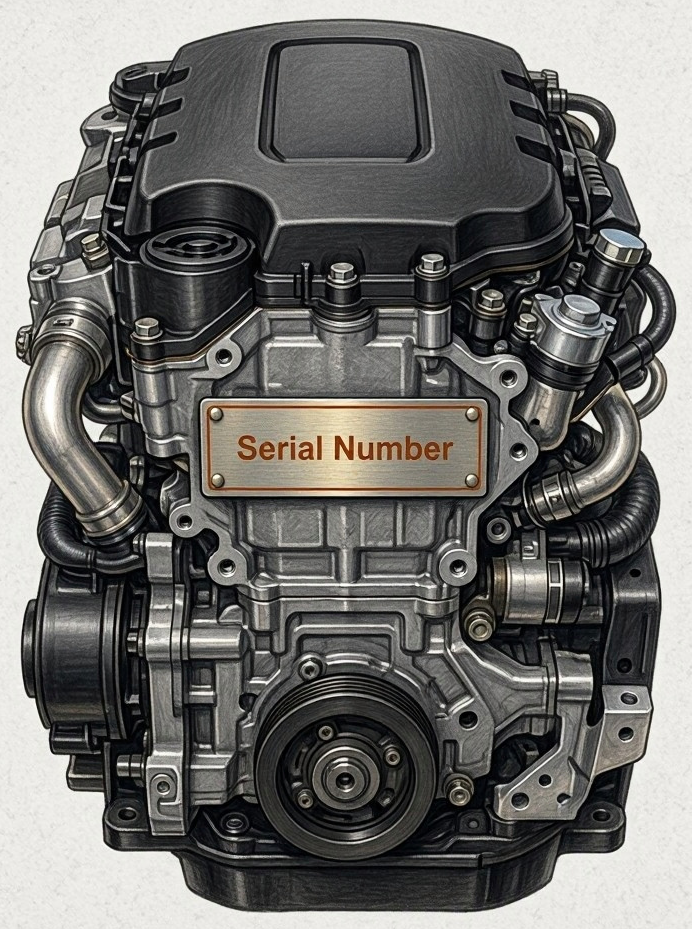
Accurately identifying the precise engine code and serial number on any Audi vehicle is a foundational requirement for a multitude of critical automotive tasks. For the seasoned technician, parts specialist, or discerning vehicle owner, this seemingly minor detail serves as the definitive key to unlocking correct OEM part specifications, ensuring seamless compatibility, and avoiding costly errors. It is indispensable for verifying a vehicle’s historical service records, assessing the applicability of technical service bulletins (TSBs) and recall campaigns, and meticulously inspecting a used vehicle or replacement engine for authenticity and correct fitment. An engine’s unique identity dictates its internal components, external auxiliaries, software calibrations, and often its entire performance envelope. Without this definitive identification, the risks of procuring incorrect components, misdiagnosing issues, or compromising vehicle integrity escalate dramatically. This guide provides an exhaustive, authoritative methodology for locating, interpreting, and decoding Audi engine codes and serial numbers.
Where to Find the Engine Serial Number and Code on Audi Engines
| Engine Series / Layout | Physical Stamp Location | Secondary Sticker / Plate |
|---|---|---|
| EA113 / EA888 (1.8L/2.0L TFSI I4) | Upper front face of the engine block, near the cylinder head-to-block mating surface, often on the block-to-transmission mating flange on the driver’s side. May also be found on a machined flat boss below the exhaust manifold or near the oil filter housing. | White barcode sticker typically located on the upper timing belt or timing chain cover (plastic or metal), visible from the front or top of the engine compartment. |
| EA211 (1.2L/1.4L/1.5L TFSI I4) | On a machined pad on the front or left side of the cylinder block, close to the transmission bellhousing mating flange or near the intake manifold. Often laser-etched. | Barcode sticker on the upper plastic timing belt cover or on the engine’s main identification sticker often affixed to the front cross member or inside the hood. |
| EA855 (2.5L TFSI I5) | Machined flat surface on the driver’s side of the engine block, adjacent to the transmission bellhousing flange. Also possible on a small boss near the crankshaft position sensor or exhaust side. | White adhesive label on the upper front timing cover or on the valve cover. Often includes a QR code alongside the alphanumeric data. |
| EA837 / EA839 (2.9L/3.0L TFSI V6) | On a machined pad on the cylinder block, typically on the left (driver’s side) bank, close to the transmission bellhousing mounting flange. May be dot-peen stamped. | Barcode sticker on the engine’s upper timing chain cover (often plastic), visible from the top when looking down into the engine bay, or on the intake manifold. |
| 4.2L FSI V8 / EA824 / EA825 (4.0L TFSI V8) | Machined flat surface on the engine block, usually on the left (driver’s side) cylinder bank, near the transmission bellhousing. Some earlier 4.2L engines may have it on the rear of the block, below the cylinder head. | Adhesive label on the upper intake manifold, or a metal plate/sticker on one of the valve covers, or the upper plastic engine cover. |
| 5.2L FSI V10 | On a dedicated machined pad on the engine block, typically on the driver’s side bank, close to where the block mates with the transmission. Due to engine compartment density, access can be challenging. | Barcode sticker on the upper engine cover, or a durable label on one of the valve covers, often on the left bank. |
| EA188 / EA189 / EA288 (1.9L/2.0L TDI I4) & EA897 (3.0L TDI V6) | For I4 TDI engines, look on the front or left side of the cylinder block, near the transmission mating flange or below the exhaust manifold. For V6 TDI engines, it’s typically on the left (driver’s side) bank of the engine block, close to the transmission bellhousing. | White barcode sticker on the upper plastic timing cover (belt or chain side) or on the valve cover. For some models, it might be on the main engine cover itself. |
Locating the engine serial number and code on an Audi engine requires meticulous attention due to the precise and often subtle nature of their application. The primary identification mark, which includes both the engine code and the sequential serial number, is almost universally found as a laser-etched or dot-peen stamped inscription directly onto a machined flat surface of the engine block. This critical location is most commonly found on the block-to-transmission mating flange, often on the driver’s side of the vehicle when viewed from the front. This specific placement ensures that the engine’s unique identity is indelibly linked to its core structure. Due to its exposure to heat, road grime, oil, and coolant, these markings can become obscured. Before attempting to read, carefully clean the area using a non-abrasive degreaser and a soft brush or cloth. Avoid aggressive scraping or wire brushing which can damage the delicate etching. Once cleaned, a bright flashlight and a mirror may be necessary to view the characters clearly, especially in cramped engine compartments. Alongside this permanent stamping, Audi typically duplicates this vital information on a white barcode sticker. This sticker is commonly affixed to the upper timing belt or timing chain cover, providing a more accessible, albeit less permanent, reference point. Always cross-reference the sticker information with the physical block stamping if possible, especially when evaluating a used engine or vehicle, to ensure consistency and authenticity. Some engines may also have casting numbers (raised alphanumeric characters from the foundry mold) on the block or cylinder head; these are manufacturing part numbers, not the engine code or serial number, and should not be confused.
How to Decode Audi Engine Codes and Serial Numbers
Audi engine codes and serial numbers follow a structured logic, providing a compact yet comprehensive identifier for each power unit. Understanding this structure is paramount for accurate interpretation.
- Engine Family & Generation Prefix: The initial letters or digits typically denote the fundamental engine architecture, such as EA (for ‘Entwicklungsauftrag’ or Development Order, a common designation for modular platforms like EA888, EA211), or a series code like “CD”, “CR”, “DA”. These codes provide insight into the block material (e.g., cast iron vs. aluminum), fundamental design series, and evolutionary generation of the engine platform.
- Displacement & Cylinder Configuration: Subsequent characters or groups of characters often subtly encode the engine’s displacement (e.g., 1.8, 2.0, 3.0 liters) and its cylinder configuration (e.g., inline-4, V6, V8, inline-5). While not always explicitly numerical within the code, certain letter combinations are historically tied to specific displacements and layouts.
- Fuel System, Aspiration & Valvetrain: Characters within the code frequently indicate critical engine technologies. For instance, “TFSI” (Turbocharged Fuel Stratified Injection) or “FSI” (Fuel Stratified Injection) denotes gasoline direct injection and usually turbocharging. “TDI” signifies a Turbocharged Direct Injection diesel engine. Other indicators might relate to supercharging, variable valve timing (VVT), or variable valve lift (VVL) systems.
- Power Output, Revision & Emissions Spec: Trailing letters or digits often serve to differentiate various tuning tiers (horsepower output), minor technical revisions, or specific regional emissions standards (e.g., Euro 5, Euro 6, ULEV). An engine code can have multiple suffixes, each denoting a slightly different variant or calibration, making precise identification crucial for parts compatibility.
- Sequential Serial Number String: Following the alphanumeric engine code, a series of digits forms the unique sequential serial number. This string typically represents the engine’s unique production sequence, often incorporating embedded information such as the manufacturing plant code, the year of production, or even the day of manufacture, though the exact encoding varies by generation and factory. This ensures no two engines share the exact same identifier.
Real-World Audi Engine Code Examples
To illustrate the decoding process, let’s break down several common Audi engine codes and their associated serial numbers.
- CDNC 184920:
- CDNC: This is a highly common engine code for the EA888 Gen2 2.0L TFSI.
- CD: Identifies it as part of the EA888 family, specifically a 2.0L gasoline engine.
- N: Often denotes a specific power output variant or calibration, typically around 211 PS (208 hp).
- C: Represents a further revision or emissions specification, differentiating it from earlier ‘A’ or ‘B’ variants.
- Typical applications: Audi A4 B8, A5 8T, Q5 8R, A6 C7 (early models).
- 184920: This is the sequential production serial number, indicating it was the 184,920th engine of this type produced in its series or at its specific plant.
- CDNC: This is a highly common engine code for the EA888 Gen2 2.0L TFSI.
- CREC 045192:
- CREC: This code identifies an EA839 3.0L TFSI V6 engine.
- CR: Designates it as a 3.0L V6 gasoline engine, part of the newer EA839 family, which features a “hot V” turbocharger layout.
- E: Signifies a particular power output or technical configuration, typically found in models like the Audi A6/A7 (C7/C8), A4/A5 (B9), Q7 (4M), and Q8. It usually denotes the 333 PS (328 hp) or 340 PS (335 hp) variant.
- C: Denotes a specific emissions standard or revision, for example, Euro 6 compliance.
- Typical applications: Audi A4 B9, A5 F5, A6 C7/C8, A7 4G/4K, Q7 4M, Q8 4M.
- 045192: This is the unique sequential serial number, indicating its production order.
- CREC: This code identifies an EA839 3.0L TFSI V6 engine.
- DAZA 008412:
- DAZA: This iconic code identifies the EA855 Evo 2.5L TFSI 5-cylinder engine.
- DA: Confirms it as a 2.5L 5-cylinder gasoline engine.
- Z: Represents a high-performance variant, specifically the 400 PS (395 hp) iteration of the 5-cylinder engine.
- A: Denotes a specific emissions or technical revision, often associated with Euro 6 standards. This is the most recent and powerful iteration of the 5-cylinder.
- Typical applications: Audi RS3 8V (facelift), TT RS FV, RS Q3 F3.
- 008412: This is the sequential production serial number, reflecting its place in the manufacturing run.
- DAZA: This iconic code identifies the EA855 Evo 2.5L TFSI 5-cylinder engine.
- CRCA 112940:
- CRCA: This code is for an EA897 3.0L TDI V6 engine.
- CR: Indicates it is a 3.0L V6 diesel engine from the EA897 family.
- C: Designates a specific power output or calibration, typically a 245 PS (242 hp) or 272 PS (268 hp) variant.
- A: Denotes a particular technical revision or emissions standard (e.g., Euro 5 or early Euro 6).
- Typical applications: Audi A4 B8, A5 8T, A6 C7, A7 4G, Q5 8R, Q7 4L/4M, Macan (VW Group applications).
- 112940: This is the sequential production serial number.
- CRCA: This code is for an EA897 3.0L TDI V6 engine.
- CDUC 294018:
- CDUC: This code also represents an EA897 Gen1 3.0L TDI V6 engine, slightly earlier than CRCA.
- CD: Identifies it as a 3.0L V6 diesel, part of the first generation EA897 platform.
- U: Indicates a specific power output or calibration, often the 245 PS (242 hp) version, slightly different from the ‘C’ in CRCA.
- C: Represents a revision or emissions specification.
- Typical applications: Audi A4 B8, A5 8T, A6 C7, A7 4G, Q5 8R. (Overlap with CRCA, emphasizing the importance of the full code for specific component compatibility.)
- 294018: This is the sequential production serial number for this specific engine.
- CDUC: This code also represents an EA897 Gen1 3.0L TDI V6 engine, slightly earlier than CRCA.
How to Identify Production Year and Manufacturing Plant
While the full engine serial number typically contains thousands or hundreds of thousands of units, specific digits within the sequential string or external markings can often provide clues regarding the manufacturing date and location. On many Audi engines, the serial number string itself might embed a manufacturing year and month code. For instance, the first few digits after the engine code might directly correlate to the year and week/month of production, or a specific character within the sequence could represent the plant. However, this encoding is not universally standardized across all Audi engine generations and can vary significantly. A more reliable method for determining the exact manufacturing year and month is often to cross-reference the vehicle’s VIN (Vehicle Identification Number) with the engine code. The 10th character of the VIN denotes the model year, which provides a strong indication of the engine’s likely production year. Additionally, many Audi components, including engine blocks and cylinder heads, feature “casting date clocks” or date stamps. These are usually small circular dials or simple date markings (e.g., “12/15” for December 2015) cast into the metal during the foundry process. While these indicate the date the raw component was cast, not necessarily when the engine was fully assembled, they provide a very close approximation of the manufacturing period. Some engines may also have small metal data plates or dedicated factory labels that contain explicit production date information. For detailed plant information, official Audi parts catalogs and service information systems, which cross-reference engine codes and serial ranges with production data, are the most definitive sources.
Common Mistakes When Checking Audi Engine Numbers
- Confusing Casting Numbers with the Serial Number: A prevalent error is mistaking the raised, often rough, alphanumeric characters found on various parts of the engine block or cylinder head for the actual engine code and serial number. These are casting numbers or foundry part numbers, indicating the specific mold or design of the component itself, not the unique identity of the assembled engine. The true engine code and serial number are always found on a flat, machined surface, either stamped, engraved, or laser-etched, and will appear as a crisp, distinct series of characters.
- Corrosion, Paint, and Road Grime Obscuration: The locations where engine codes are typically stamped are exposed to harsh engine bay conditions. Over time, rust, layers of old paint, baked-on oil, and general road grime can completely obscure the shallow laser-etched or dot-peen markings. Attempting to read through these layers often leads to misinterpretation. When cleaning, use a non-corrosive, automotive-safe degreaser and a soft cloth or plastic brush. Avoid abrasive tools like wire brushes or sandpaper, which can permanently damage or obliterate the delicate markings, rendering the engine unidentifiable.
- Short-Block or Remanufactured Engine Swaps: When an engine has been replaced with a factory short-block, a remanufactured unit, or an unnumbered service block, the engine code and serial number originally associated with the vehicle’s VIN may no longer match the physical engine. Factory replacement short-blocks often come with new identification, or sometimes a “service” serial number. Remanufactured engines from third parties may have their own serial numbers or no identifiable OEM marking. This discrepancy can complicate parts ordering, historical verification, and resale value. Always verify any replacement engine’s documentation.
- Misreading Similar Alphanumeric Characters: The specific font used for stamping or etching can sometimes lead to confusion between similar-looking characters. Common misinterpretations include: “0” (zero) versus “O” (letter O), “1” (one) versus “I” (letter I), “5” versus “S”, “8” versus “B”, or “2” versus “Z”. A careful, well-lit inspection, possibly with a magnifying glass, is essential to differentiate these characters correctly, as a single mistaken character can lead to an entirely different engine variant.