
From 2002 to 2005, the company assembled the Mazda RF5C 2.0-liter turbo diesel engine, which was exclusive to European versions of the 6 series models and the well-liked MPV minivan. This power unit was given a new RF7J index in 2005 following a minor modernization.
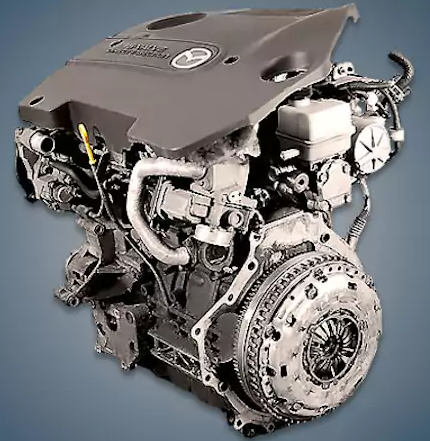
The RF7J and R2AA diesel engines are also part of the MZR-CD family.
The engine was mounted on:
- Mazda 6 I (GG) in 2002 – 2005;
- Mazda MPV LW in 2002 – 2005.
Specifications
| Production years | 2002-2005 |
| Displacement, cc | 1998 |
| Fuel system | Common Rail |
| Power output, hp | 120 – 135 |
| Torque output, Nm | 310 |
| Cylinder block | cast iron R4 |
| Block head | aluminum 16v |
| Cylinder bore, mm | 86 |
| Piston stroke, mm | 86 |
| Compression ratio | 18.3 |
| Features | SOHC |
| Hydraulic lifters | no |
| Timing drive | belt |
| Phase regulator | no |
| Turbocharging | IHI VJ32 |
| Recommended engine oil | 5W-30 |
| Engine oil capacity, liter | 4.8 |
| Fuel type | diesel |
| Euro standards | EURO 3 |
| Fuel consumption, L/100 km (for Mazda 6 2004) — city — highway — combined |
8.3 5.5 6.5 |
| Engine lifespan, km | ~270 000 |
| Weight, kg | 195 |
Disadvantages of the Mazda RF5C engine
Burnout of the sealing washers beneath the nozzles is this diesel engine’s most well-known issue.
Additionally, the injectors’ return may leak, allowing the oil to start combining with the fuel.
The vacuum lines’ solenoid valves frequently malfunction in the motor.
The vacuum pump, the mass air flow sensor, and the SCV valve in the high pressure fuel pump are additional engine weaknesses.
Diesel fuel frequently gets into the oil while burning in models with a particulate filter.