What Does Code P0035 Mean?
DTC P0035 signifies “Turbocharger/Supercharger Bypass Valve Control Circuit High.” This code is set when the Engine Control Module (ECM) or Powertrain Control Module (PCM) detects an electrical signal in the bypass valve control circuit that is outside the specified operating parameters and consistently higher than expected. The turbocharger/supercharger bypass valve, also known as a diverter valve or blow-off valve, is a critical component for boost pressure regulation. Its primary function is to relieve excess boost pressure in the intake system, typically when the throttle plate closes rapidly, to prevent compressor surge and protect the turbocharger/supercharger, throttle body, and other engine components. The ECM/PCM controls this valve through a dedicated electrical circuit, which often involves a solenoid or an electric motor. A “high” circuit condition generally indicates an open circuit, a short to voltage (e.g., a short to the battery positive), or an internal fault within the solenoid/motor causing excessively high resistance or an absence of current draw, leading to an abnormally high voltage reading across the circuit from the ECM’s perspective. This condition directly affects the vehicle’s boost control subsystem, potentially leading to incorrect boost pressure, reduced engine performance, or damage if not addressed.
Common Symptoms
- Illumination of the Check Engine Light (MIL).
- Reduced engine power or loss of acceleration, particularly under load.
- Noticeable turbo lag or hesitation during throttle input changes.
- Abnormal whooshing or hissing sounds from the engine bay, indicative of improper boost control or a potential boost leak if the valve is stuck open.
- Engine entering “limp home” mode, limiting RPM and power output to prevent further damage.
- Poor fuel economy as the engine attempts to compensate for improper boost pressure.
What Causes the Code P0035?
- Faulty Turbocharger/Supercharger Bypass Valve Solenoid/Actuator: The electrical solenoid or motor responsible for actuating the bypass valve may have an internal open circuit, short to voltage, or excessively high internal resistance, preventing proper operation and causing the ECM to detect a high circuit voltage.
- Wiring Harness Issues: An open circuit (break) in the power supply or ground wire leading to the bypass valve solenoid, or a short to a voltage source (e.g., a bare wire touching a 12V supply wire) within the bypass valve control circuit.
- Corroded or Loose Electrical Connections: Poor contact at the bypass valve solenoid connector or at the ECM/PCM connector due to corrosion, bent pins, or insufficient terminal tension, leading to an intermittent or constant high resistance condition.
- Faulty Engine Control Module (ECM/PCM): While less common, an internal fault within the ECM/PCM itself could cause it to improperly control the bypass valve circuit or misinterpret the feedback signal, leading to the erroneous detection of a high circuit condition.
How to Diagnose and Troubleshoot
Diagnosing P0035 requires a systematic approach, focusing on the electrical integrity of the bypass valve control circuit:
- Visual Inspection: Begin with a thorough visual inspection of the entire bypass valve control circuit. Look for any signs of physical damage to the wiring harness, such as chafing, cuts, or rodent damage, from the bypass valve connector back to the ECM/PCM. Inspect the bypass valve solenoid connector and the ECM/PCM connector for bent pins, corrosion, or looseness.
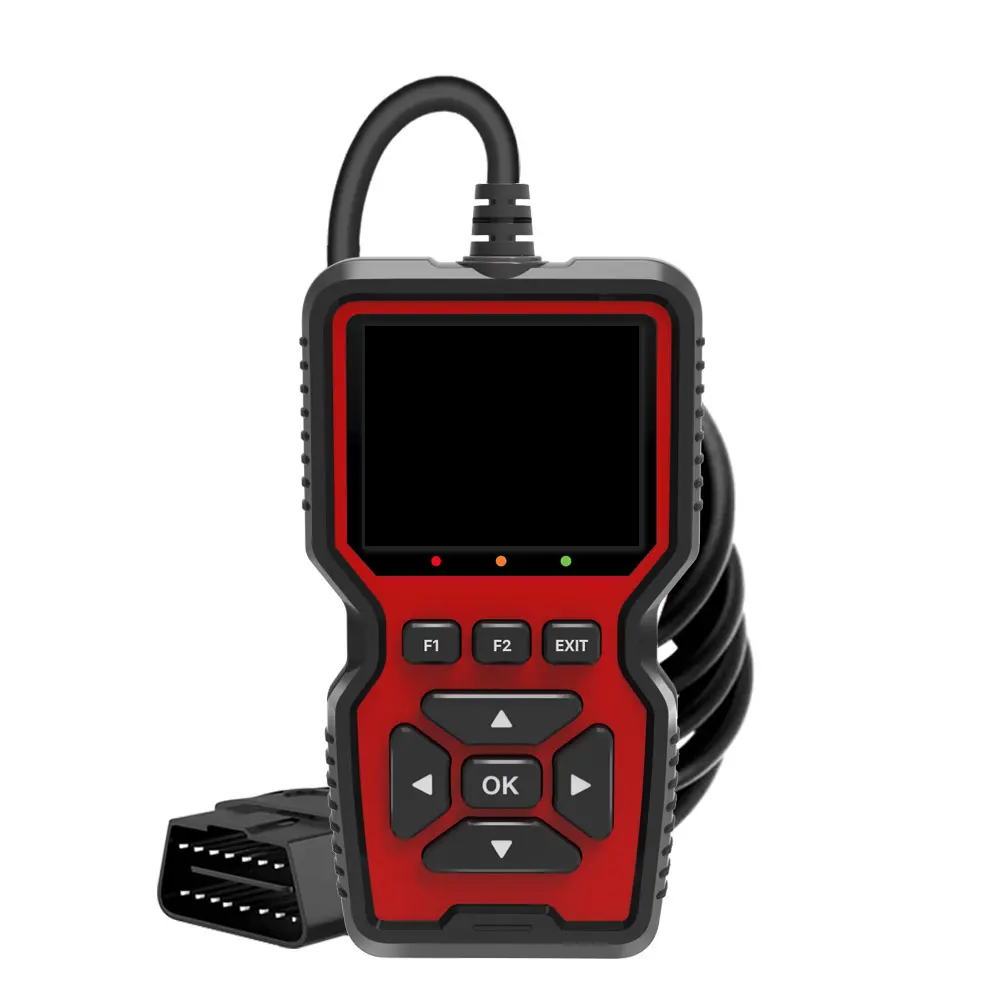
- OBD-II Scanner Data Analysis: Connect an OBD-II scanner and retrieve any pending or historical DTCs. Monitor live data parameters related to the bypass valve, if available. Look for the commanded state of the bypass valve and any feedback voltage or duty cycle signals. A bidirectional scanner can be used to command the bypass valve open and closed while observing electrical responses. Note if the code immediately returns after clearing, indicating a hard fault.
- Digital Multimeter (DMM) Testing at the Bypass Valve Solenoid/Actuator:
- Resistance Test (Ohm Check): Disconnect the bypass valve solenoid connector. Using a DMM, measure the resistance across the two terminals of the solenoid/actuator. Compare this reading to the manufacturer’s specifications. An open circuit (displaying “OL” or infinite resistance) or a resistance significantly higher than specified indicates an internal fault within the solenoid/actuator.
- Power and Ground Check: With the key ON (engine OFF) and the bypass valve solenoid disconnected, use the DMM to check for proper power supply voltage (typically 12V) and a good ground at the wiring harness connector that leads to the solenoid. This verifies the ECM is providing power and ground as expected. Be aware that some bypass valves are pulse-width modulated (PWM) and may require a scope to observe the signal effectively, but a DMM can still confirm basic power and ground.
- Wiring Harness Continuity and Short Test: Disconnect both ends of the bypass valve control circuit wiring (at the bypass valve and at the ECM/PCM). Use the DMM to perform the following:
- Continuity Test: Check for continuity on both wires in the circuit from end to end. An open circuit indicates a broken wire.
- Short to Ground Test: With one DMM lead on each wire, touch the other lead to a known good chassis ground. Any resistance reading other than “OL” (open loop) indicates a short to ground.
- Short to Voltage Test: Visually inspect for any signs of contact with other power wires. While difficult to test directly without an active short, an open circuit that also exhibits a high voltage when probed with a DMM can suggest a short to a power source.
- ECM/PCM Output Verification (Advanced): If all wiring and the bypass valve solenoid test good, the fault might lie within the ECM/PCM. This requires specific diagnostic procedures outlined in the factory service manual, often involving monitoring the ECM’s output signal to the bypass valve with an oscilloscope or specialized diagnostic tools to confirm it is within specifications.
Recommended Repairs and Solutions
Based on diagnostic findings, the following repairs are typically recommended:
- Repair or Replace Wiring Harness: If diagnostic tests identify damaged wires, corroded terminals, or open/short circuits within the wiring harness, perform precise repairs using appropriate connectors and wire, or replace the entire affected section of the harness. Ensure all connections are secure and weatherproof.
- Replace Turbocharger/Supercharger Bypass Valve Solenoid/Actuator: If the bypass valve solenoid or actuator fails the resistance test or shows signs of internal damage, replace the component. In some cases, the bypass valve assembly may need to be replaced as a complete unit if the solenoid/actuator is not serviceable separately. Always use high-quality OEM or equivalent aftermarket parts.
- Clean and Secure Electrical Connectors: If the issue is due to corrosion or loose connections, clean the affected terminals using electrical contact cleaner and a small brush. Ensure connectors are fully seated and latched, and that terminal tension is adequate to provide a solid electrical connection.
- ECM/PCM Replacement: Only consider replacing the ECM/PCM as a last resort, after all other components and wiring have been thoroughly tested and confirmed to be functioning correctly. ECM replacement often requires programming or flashing to match the vehicle’s VIN and options, which should be performed by a dealership or a specialized independent shop with the necessary tools.
Mechanics’ Tips: Always clear the DTCs after performing a repair and conduct an extended test drive under various engine loads and speeds to confirm the issue is resolved and the code does not return. Pay close attention to any changes in engine performance or boost pressure during the test drive. Check for any Technical Service Bulletins (TSBs) related to P0035 for the specific vehicle make and model, as manufacturers sometimes release known issues or revised parts that address this problem. Verify the specific design of the bypass valve on the vehicle; some are vacuum-actuated with an electric solenoid control, while others are purely electronic actuators. Understanding the system is key to accurate diagnosis.