What Does Code P0159 Mean?
DTC P0159, “O2 Sensor Circuit Slow Response (Bank 2 Sensor 2),” indicates that the Engine Control Module (ECM), also known as the Powertrain Control Module (PCM), has detected that the downstream oxygen sensor on Bank 2 is responding too slowly to changes in the exhaust gas oxygen content. Bank 2 refers to the cylinder bank that does not contain cylinder #1, and Sensor 2 refers to the oxygen sensor located after the catalytic converter on that bank. Unlike upstream oxygen sensors, which cycle rapidly between high and low voltage to facilitate precise fuel trim adjustments, downstream sensors are primarily tasked with monitoring the efficiency of the catalytic converter. A healthy catalytic converter should store oxygen, causing the downstream sensor to output a relatively stable, high voltage (typically 0.6 to 0.9 volts) under steady-state conditions. When the ECM performs a diagnostic monitor for this sensor, it expects a certain response rate if it commands a fuel rich or lean condition or if actual exhaust gas composition changes slightly. If the sensor’s voltage signal does not transition from rich to lean or lean to rich, or settle to a stable voltage, within a predefined timeframe set by the manufacturer, the ECM interprets this as a “slow response” and sets code P0159. This signifies that the sensor is not accurately or promptly reporting the oxygen levels in the post-catalytic converter exhaust stream, potentially leading to inaccurate catalytic converter efficiency monitoring and compromised emissions control.
Common Symptoms
- Check Engine Light (MIL) Illumination: This is the most direct and common symptom, as the ECM immediately illuminates the MIL upon detecting the fault.
- Reduced Fuel Economy: While the downstream sensor primarily monitors catalyst efficiency, a sluggish sensor can, in some rare cases, indirectly influence fuel trim strategies if the ECM enters a compensatory mode, potentially leading to slightly decreased fuel efficiency.
- Failed Emissions Test: A malfunctioning downstream O2 sensor or a compromised catalytic converter (which the sensor is failing to accurately report) can directly lead to a vehicle failing an emissions inspection.
- No Noticeable Drivability Concerns: In many instances, especially initially, the vehicle may exhibit no discernible performance issues, as the upstream O2 sensors primarily manage air-fuel mixture for performance.
What Causes the Code P0159?
- Degraded or Aging Oxygen Sensor (Bank 2 Sensor 2): This is the most frequent cause. Over time, O2 sensors accumulate deposits and their internal chemical properties degrade, causing them to become sluggish and respond slowly.
- Exhaust Leaks: Leaks in the exhaust system upstream of or near Bank 2 Sensor 2 can allow ambient air to be drawn into the exhaust stream, diluting the exhaust gas and skewing sensor readings, making the sensor appear to respond slowly or incorrectly.
- Wiring and Connector Issues: Damaged, corroded, or loose wiring and electrical connectors in the Bank 2 Sensor 2 circuit can interrupt the signal or introduce resistance, hindering proper sensor operation.
- Sensor Contamination: Exposure to contaminants like silicone from RTV sealants, oil, antifreeze, or certain fuel additives can foul the sensor element, reducing its sensitivity and response time.
- Faulty Catalytic Converter (Indirectly): While P0159 usually points to the sensor itself, a severely degraded catalytic converter can present unusual exhaust gas compositions that the sensor struggles to accurately report, potentially contributing to a slow response, though P0430 would typically be set alongside or instead.
- PCM/ECM Fault: Although rare, an internal fault within the Engine Control Module can misinterpret sensor signals or fail to process them correctly, leading to a false P0159 code.
How to Diagnose and Troubleshoot
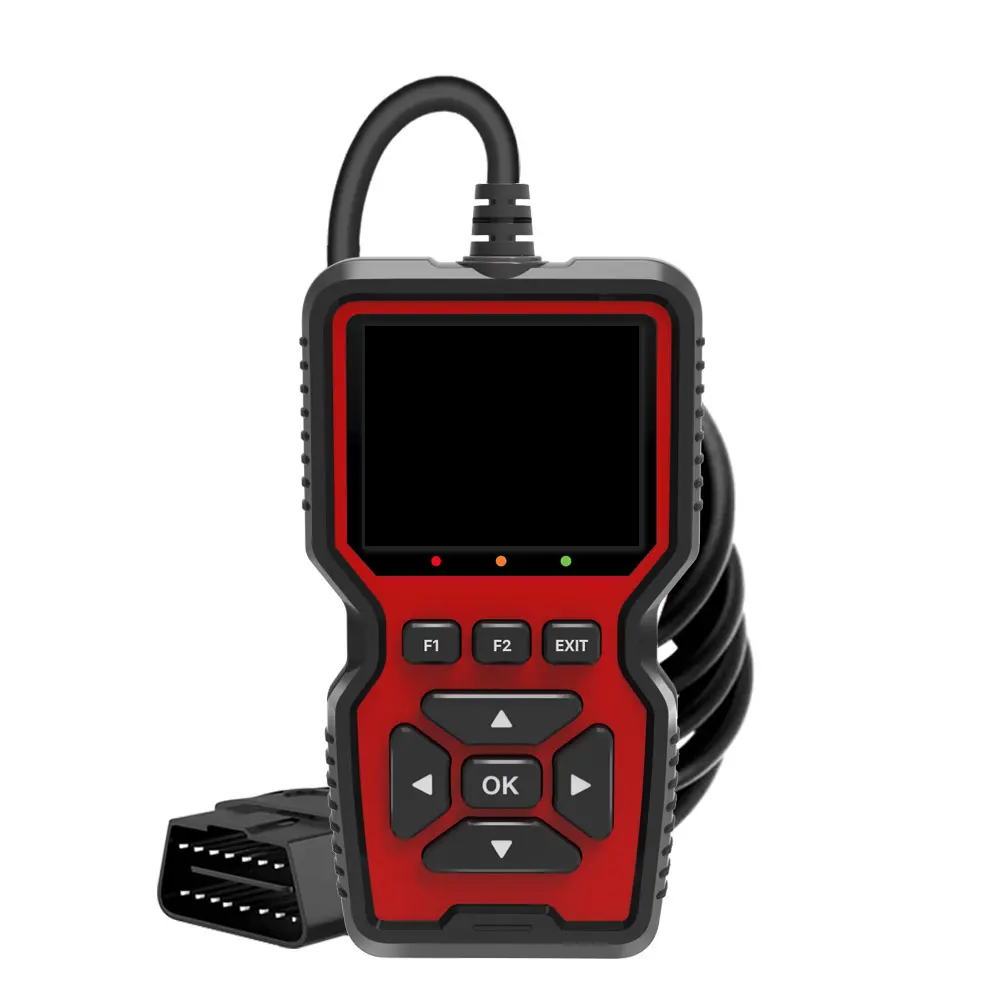
Diagnosing P0159 requires a systematic approach using a capable OBD-II scanner, a digital multimeter (DMM), and visual inspection.
- Visual Inspection: Begin by visually inspecting the Bank 2 Sensor 2 and its wiring harness. Look for obvious signs of damage, fraying, cuts, or corrosion on the wires and connector. Inspect the exhaust system for any leaks, particularly upstream of the sensor. Check for any exhaust system modifications that might affect sensor readings.
- OBD-II Scanner Live Data Analysis:
- Connect an OBD-II scanner and monitor live data for Bank 2 Sensor 2 voltage. Compare its behavior to Bank 1 Sensor 2 (if equipped and healthy). A healthy downstream sensor typically shows a relatively stable voltage (e.g., 0.6-0.9V) once the engine and catalyst are warm. If it’s slow, its voltage trace on a graph will lag significantly behind expected changes, or it might not react at all to commanded rich/lean conditions.
- Observe upstream O2 sensor (Bank 2 Sensor 1) voltage activity. A downstream sensor should typically show significantly less oscillation than an upstream sensor if the catalytic converter is functioning correctly. A slow downstream sensor may fail to exhibit even these reduced, slow oscillations.
- Check Freeze Frame Data to understand the engine operating conditions (engine speed, load, coolant temperature, etc.) when the P0159 code was set. This provides valuable context for diagnosis.
- Digital Multimeter (DMM) Testing:
- Heater Circuit Test: With the ignition OFF and the sensor unplugged, use the DMM to check the resistance of the heater element pins (usually two white wires, or specific manufacturer-designated pins). Refer to service specifications for the expected resistance (typically 5-15 ohms). An open circuit (infinite resistance) or excessively high resistance indicates a faulty heater. Then, with the ignition ON (engine OFF), check for 12V supply to the heater circuit at the vehicle’s harness connector. Lack of power indicates a wiring issue or fuse problem.
- Sensor Signal Test (Back-probing): With the engine at operating temperature and running, carefully back-probe the signal wire of Bank 2 Sensor 2 (often a black or blue wire, consult wiring diagrams). While monitoring the voltage, manually create a rich condition (e.g., momentarily introduce propane into the intake) and then a lean condition (e.g., create a small vacuum leak). A good sensor should respond by transitioning from low voltage (lean) to high voltage (rich) and back within approximately 100-300 milliseconds. A sluggish sensor will take several seconds to react, or may not react fully.
- Ground Circuit Continuity: Verify good ground continuity for the sensor circuit from the sensor connector to the engine or chassis ground.
- Exhaust System Integrity Check: Use a smoke machine to pressurize the exhaust system and identify any leaks that could be affecting sensor readings.
- Compare with Bank 1 Sensor 2: If available, comparing the live data and DMM test results of Bank 2 Sensor 2 with Bank 1 Sensor 2 can provide a useful baseline for expected behavior.
Recommended Repairs and Solutions
Once the root cause of P0159 has been accurately identified, the following repairs are typically recommended:
- Replace Bank 2 Sensor 2: In the majority of cases, the P0159 code is caused by a physically degraded or failing oxygen sensor. Replace the Bank 2 Sensor 2 with a new, high-quality, OEM-equivalent sensor. After replacement, clear the DTCs and perform a drive cycle, monitoring live data to confirm proper sensor operation and ensure the code does not return.
- Repair or Replace Damaged Wiring/Connectors: If the diagnosis points to issues with the sensor wiring harness or connectors, carefully repair any damaged sections using appropriate automotive-grade connectors and soldering techniques, or replace the entire harness section if damage is extensive. Ensure all connections are clean, secure, and weatherproof.
- Repair Exhaust Leaks: Any detected exhaust leaks upstream of or near the Bank 2 Sensor 2 must be sealed. This may involve welding a crack, replacing a gasket, or replacing a section of the exhaust pipe.
- Address Contamination Source: If sensor contamination (e.g., by silicone from RTV sealants used on exhaust components, or by oil/coolant from internal engine leaks) is suspected, identify and rectify the source of contamination before replacing the sensor. Failure to do so will likely lead to rapid degradation of the new sensor as well.
- PCM/ECM Replacement/Reprogramming (Rare): If all other components test good and wiring is confirmed to be intact, a PCM/ECM fault could be considered, though this is a very rare occurrence for this specific code. Consult with manufacturer-specific diagnostic procedures and consider professional ECM testing or reprogramming.
Mechanic’s Tip: Always use a specialized oxygen sensor wrench for removal and installation to avoid damaging the sensor or its wiring. Apply anti-seize compound to the threads of the new sensor to facilitate future removal. After any repair, clear the DTCs and complete the manufacturer’s specified drive cycle to ensure all readiness monitors reset and the repair is validated.