What Does Code P0164 Mean?
DTC P0164 signifies that the Engine Control Module (ECM), also known as the Powertrain Control Module (PCM), has detected a voltage reading from the Bank 2 Sensor 3 Oxygen (O2) sensor circuit that is consistently higher than its expected operational range. For a typical zirconia-type O2 sensor, normal operating voltage cycles between approximately 0.1 volts (lean condition) and 0.9 volts (rich condition). A “circuit high voltage” condition, often exceeding 1.2 to 1.5 volts, generally indicates an open circuit within the sensor’s signal wire or a short to a voltage source. Bank 2 refers to the cylinder bank that does not contain cylinder #1, while Sensor 3 denotes the third oxygen sensor in the exhaust stream for that bank. This sensor is typically located further downstream than the primary catalytic converter, often after a secondary catalytic converter or as part of a specialized emissions monitoring system, and is primarily used by the ECM for monitoring catalyst efficiency or specific exhaust gas components, rather than direct fuel control.
Common Symptoms
- Check Engine Light (MIL) Illumination: This is the most common and often only immediate symptom.
- No Noticeable Driveability Issues: Since Sensor 3 is typically a monitoring sensor, its failure may not directly impact engine performance or fuel mixture control, leading to an absence of overt driving symptoms.
- Increased Fuel Consumption: In some cases, the ECM might default to a less efficient fuel strategy if it perceives a fault in the emissions system, although this is less common for a monitoring sensor.
- Failed Emissions Inspection: The persistent P0164 code will cause the vehicle to fail an emissions readiness test.
What Causes the Code P0164?
- Faulty Oxygen Sensor (Bank 2 Sensor 3): An internal failure within the O2 sensor itself, causing it to output a constant high voltage signal or act as an open circuit.
- Wiring Harness Issues:
- Open Circuit: A break in the signal wire between the Bank 2 Sensor 3 and the ECM. The ECM typically uses an internal pull-up resistor on the O2 sensor input, which will cause a high voltage reading if the circuit is open.
- Short to Voltage: The sensor’s signal wire may be chafed or damaged, causing it to short to a 12V power source within the vehicle’s wiring harness.
- Corrosion or Damage: Deterioration or physical damage to the O2 sensor electrical connector or the associated wiring can lead to an intermittent or constant high voltage condition.
- Exhaust Leaks: While less common for a “circuit high voltage” DTC, a severe exhaust leak upstream of Sensor 3 could potentially introduce ambient air, affecting sensor readings, though it more commonly leads to a perceived lean condition (low voltage). However, for a high voltage circuit fault, an electrical issue is more probable.
- ECM Malfunction: Although relatively rare, a defective Engine Control Module could be misinterpreting the sensor signal or have an internal fault within its O2 sensor input circuit.
How to Diagnose and Troubleshoot
Diagnosing P0164 requires a systematic approach using specialized tools. Prioritize electrical circuit integrity before considering sensor replacement.
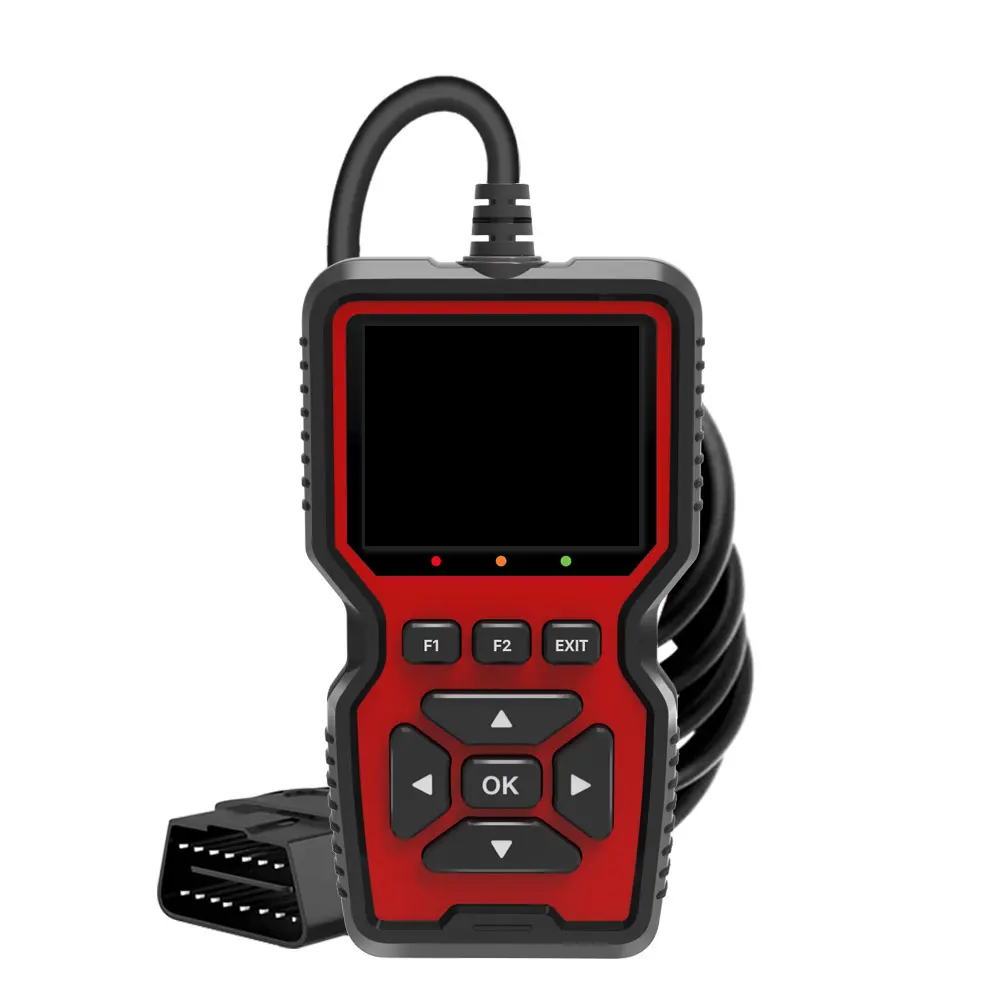
- Verify and Record DTCs: Connect an OBD-II scanner to confirm P0164. Note any other related diagnostic trouble codes (DTCs) that may be present, as they could offer additional diagnostic direction. Clear the codes and perform a brief road test under varying conditions to determine if P0164 immediately returns.
- Visual Inspection:
- Locate Bank 2 Sensor 3. Consult the vehicle’s service manual for precise location, as “Sensor 3” is less common and its placement can vary significantly by manufacturer and engine configuration (e.g., after a secondary catalytic converter). Bank 2 is typically the cylinder bank opposite to the one containing cylinder #1.
- Thoroughly inspect the O2 sensor and its wiring harness for any signs of physical damage, chafing, melting, corrosion, or signs of rodent damage. Pay close attention to the electrical connector for bent pins, loose connections, or ingress of moisture/debris.
- Inspect the exhaust system for any leaks near Bank 2 Sensor 3 that could affect sensor readings.
- Live Data Analysis (OBD-II Scanner):
- With the engine running at operating temperature, access live data parameters for Bank 2 Sensor 3.
- Monitor the voltage output from this specific sensor. A persistent reading above the normal operating range (e.g., constantly above 1.2V-1.5V) confirms the ECM’s detection of the fault. Note if the voltage fluctuates at all or remains entirely static.
- Electrical Circuit Testing (Digital Multimeter – DMM):
- Sensor Disconnection: Disconnect the electrical connector for Bank 2 Sensor 3.
- Check Signal Wire (Harness Side):
- With the ignition ON (engine OFF), use a DMM to measure voltage between the sensor’s signal wire terminal on the vehicle’s harness side connector and a known good chassis ground. If the DMM reads a high voltage (e.g., 5V or 12V), it indicates a short to voltage in the wiring harness between the ECM and the sensor.
- If the DMM reads close to 0V (or the ECM’s specific pull-down voltage), this suggests the harness is not shorted to power, and an open circuit or faulty sensor is more likely. The ECM’s internal pull-up resistor will interpret an open circuit as a high voltage input.
- Check Sensor Heater Circuit: Most O2 sensors have a heater circuit to help them reach operating temperature quickly. Identify the heater circuit wires (typically two wires of the same color, often white) and test for ~12V (from the fuse block/relay) and a good ground when the ignition is ON or engine is running. While a heater circuit fault wouldn’t directly cause “circuit high voltage,” it can affect sensor operation.
- Test Sensor Output (if accessible): If safe and feasible, back-probe the signal wire with the sensor connected and the engine running. Observe the voltage fluctuations. A constant high reading further confirms the sensor or its internal connection is faulty.
- Continuity Test: With the ignition OFF and the ECM connector disconnected (refer to service manual for pinouts), perform a continuity test on the signal wire between the sensor connector and the ECM connector. Any break indicates an open circuit. Test for shorts to ground and shorts to power wires within the harness as well.
Recommended Repairs and Solutions
Based on the diagnostic findings, the following repairs are typically recommended:
- Repair or Replace Damaged Wiring Harness: If diagnostic testing identifies an open circuit, a short to voltage, or physical damage in the Bank 2 Sensor 3 wiring harness, the wiring must be professionally repaired or the affected section replaced. Ensure all repairs are properly insulated, sealed, and secured to prevent future issues.
- Replace Faulty O2 Sensor (Bank 2 Sensor 3): If the wiring harness tests confirm integrity and the ECM’s input is found to be correct, the Bank 2 Sensor 3 itself is the most probable cause. Replace the sensor with a new, high-quality OEM or equivalent aftermarket unit specifically designed for your vehicle’s make, model, and engine configuration. Ensure proper torque specifications are met during installation to prevent exhaust leaks or sensor damage.
- Address Exhaust Leaks: If any exhaust leaks were identified during the visual inspection, repair them by replacing gaskets, clamps, or sections of the exhaust pipe. While less common for P0164, a fully sealed exhaust system is crucial for accurate O2 sensor operation.
- ECM Software Update/Replacement (Rare): In very rare instances, an ECM software glitch or internal hardware failure could lead to P0164. This should only be considered after all other diagnostic avenues have been exhausted and verified. ECM replacement is costly and often requires reprogramming.
After any repair, clear the DTCs from the ECM and perform a comprehensive drive cycle to allow the vehicle’s monitors to run. Re-check for DTCs and monitor live data for Bank 2 Sensor 3 to ensure its voltage output is now cycling correctly within the specified range, indicating a successful repair.