What Does Code P0236 Mean?
DTC P0236 indicates a Turbocharger/Supercharger Boost Sensor “A” Circuit Range/Performance malfunction. The Engine Control Module (ECM) or Powertrain Control Module (PCM) monitors the voltage or frequency signal from the Boost Pressure Sensor (BPS) to determine the amount of boost pressure generated by the forced induction system. This code is triggered when the PCM detects that the signal from sensor “A” falls outside the expected operating range or exhibits erratic performance inconsistent with other correlated sensor inputs (such as Manifold Absolute Pressure (MAP) sensor, Barometric Pressure (BARO) sensor, Throttle Position Sensor (TPS), engine RPM, and load calculations). Unlike a “circuit high” or “circuit low” code which often points to a direct electrical fault, a “range/performance” code suggests the sensor is active but its output is either irrational, too slow to respond to changes, or out of calibration compared to the engine’s current operating parameters and commanded boost levels. This directly impacts the PCM’s ability to accurately control boost pressure and fuel delivery, potentially leading to detrimental engine performance or damage.
Common Symptoms
- Check Engine Light (CEL) Illumination: The primary indicator, usually accompanied by other symptoms.
- Reduced Engine Power / Limp Mode: The PCM may limit engine output to prevent damage dueating to uncontrolled boost.
- Hesitation or Poor Acceleration: Lack of proper boost results in a noticeable reduction in the vehicle’s ability to accelerate.
- Excessive Black Smoke from Exhaust: Often due to an overly rich fuel mixture if the PCM incorrectly estimates air charge.
- Abnormal Turbocharger Noise: Whining, whistling, or groaning sounds could indicate turbocharger stress or wastegate issues.
- Engine Over-boosting or Under-boosting: The turbocharger may produce too much or too little pressure for the commanded conditions.
- Decreased Fuel Economy: The engine may operate less efficiently due to incorrect air-fuel ratio management.
What Causes the Code P0236?
- Faulty Turbocharger/Supercharger Boost Pressure Sensor (A): The sensor itself may be internally defective, providing inaccurate, slow, or inconsistent readings to the PCM.
- Wiring Harness or Connector Issues:
- Open circuits in the sensor’s signal, reference voltage, or ground wires.
- Short circuits to voltage or ground within the Boost Pressure Sensor (A) circuit.
- Corroded, loose, or damaged terminals at the sensor or PCM connectors.
- Frayed, chafed, or damaged wiring causing intermittent connections.
- Intake System/Charge Air Cooler (CAC) Leaks: Leaks in the post-turbocharger intake tract (e.g., intercooler, charge pipes, hoses, clamps) can cause the actual boost pressure to differ significantly from the commanded boost, leading to an irrational sensor reading.
- Malfunctioning Turbocharger/Supercharger Components:
- Stuck or faulty wastegate actuator (vacuum or electronic).
- Damaged turbocharger impeller or bearings.
- Issues with the turbocharger bypass or blow-off valve.
- Restricted Air Intake or Exhaust System: Clogged air filter, restricted catalytic converter, or exhaust piping can impede proper boost generation or flow, affecting sensor readings.
- Powertrain Control Module (PCM) / Engine Control Module (ECM) Fault: While less common, an internal PCM/ECM fault could cause misinterpretation of the sensor signal or improper boost control.
How to Diagnose and Troubleshoot
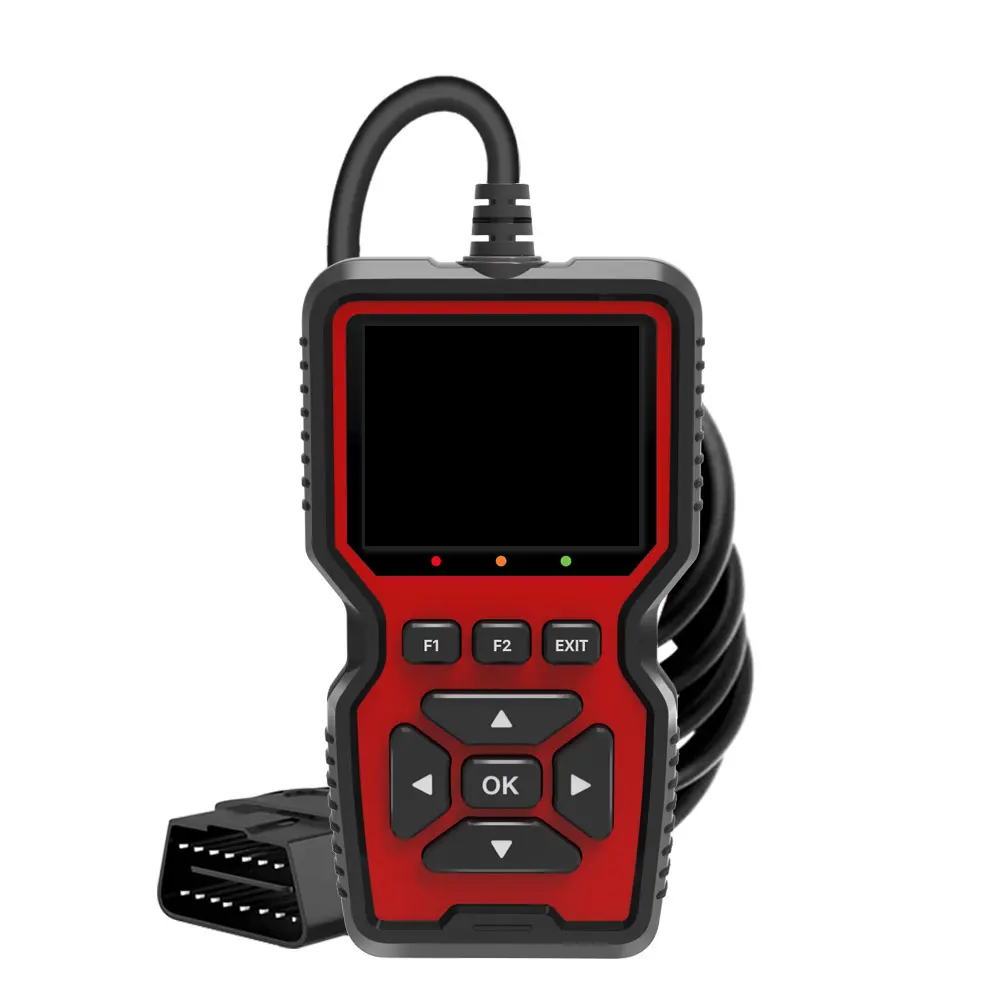
Diagnosis of P0236 requires a systematic approach using specialized tools. Always begin with retrieving all stored diagnostic trouble codes (DTCs) and freeze frame data using an OBD-II scanner.
- Visual Inspection:
- Carefully inspect the Turbocharger Boost Sensor (A) and its electrical connector for signs of damage, corrosion, or loose connections.
- Trace the sensor’s wiring harness for any obvious signs of chafing, cuts, or rodent damage.
- Thoroughly inspect the entire intake system, including charge pipes, intercooler, and all associated hoses and clamps, for any signs of leaks, cracks, or loose connections. Pay close attention to areas where components might rub against each other.
- Check the turbocharger wastegate actuator and linkage for freedom of movement and proper operation.
- OBD-II Scanner Live Data Analysis:
- With the key ON, engine OFF (KOEO), compare the Boost Pressure Sensor (A) reading with the Manifold Absolute Pressure (MAP) sensor and Barometric Pressure (BARO) sensor readings. All three should be very close to ambient atmospheric pressure. Significant discrepancies here can indicate a faulty BPS (A) or MAP sensor, or a circuit issue.
- Start the engine and monitor live data parameters for the Boost Pressure Sensor (A), MAP sensor, engine RPM, throttle position, and calculated engine load.
- Perform a road test under various load conditions, carefully observing if the Boost Pressure Sensor (A) reading responds smoothly and proportionally to changes in engine load and commanded boost. Look for erratic jumps, drop-outs, or slow updates in the sensor’s voltage/pressure readings.
- Compare the “Actual Boost” (from sensor A) with “Commanded Boost” (PCM’s target boost) in the scanner data. Large, sustained differences suggest a mechanical issue with the turbocharger system or an inaccurate sensor.
- Digital Multimeter (DMM) Testing:
- Power and Ground: With KOEO, back-probe the BPS (A) electrical connector. Verify a stable 5-volt reference voltage and a solid ground signal from the PCM. If these are absent or incorrect, inspect the wiring back to the PCM.
- Signal Circuit: Back-probe the signal wire of the BPS (A). While carefully applying vacuum/pressure to the sensor (if possible, or observing during engine operation), monitor the voltage output. The voltage should change smoothly and proportionally to the pressure changes. Consult the vehicle’s service manual for specific voltage ranges at different pressure levels. Erratic voltage readings or no change indicate a faulty sensor or circuit issue.
- Continuity and Shorts: Disconnect both the BPS (A) and PCM connectors. Use the DMM to check for continuity on each wire (signal, reference, ground) between the sensor connector and the PCM connector. Also, check each wire for shorts to ground and shorts to power. A high resistance or open circuit indicates a wiring issue.
- Component-Specific Testing:
- If the wiring and power/ground supplies are confirmed good, and the live data points to erratic readings, the Boost Pressure Sensor (A) itself is highly suspect and should be tested using a vacuum/pressure pump or considered for replacement.
- Verify proper operation of the wastegate actuator and turbocharger bypass valve. Ensure no vacuum lines are cracked or disconnected if vacuum-actuated, or check electrical solenoid operation if electronically controlled.
Recommended Repairs and Solutions
Once the root cause of P0236 has been accurately identified through thorough diagnostics, the appropriate repair can be made:
- Repair or Replace Wiring and Connectors: If the diagnostic process reveals damaged wiring, corroded terminals, or loose connections in the Boost Pressure Sensor (A) circuit, the primary step is to repair or replace the affected sections of the harness or connector. Always ensure secure and weather-tight connections after repair.
- Replace Faulty Boost Pressure Sensor (A): If the sensor itself is confirmed to be providing inaccurate, erratic, or slow-responding data, replacement is necessary. Use an OEM (Original Equipment Manufacturer) quality replacement part to ensure proper compatibility and reliability.
- Repair Intake/Charge Air Cooler (CAC) Leaks: Any detected leaks in the charge air system must be sealed. This may involve replacing cracked hoses, tightening loose clamps, repairing the intercooler, or replacing damaged O-rings or gaskets. Smoke testing the intake system can be highly effective for pinpointing elusive leaks.
- Address Turbocharger/Wastegate Issues:
- If the wastegate actuator is faulty (stuck, leaking, or damaged), it should be repaired or replaced.
- Problems with the turbocharger itself, such as damaged impellers, bearing play, or sticking bypass valves, will require specialized turbocharger repair or replacement. This is often a more complex and costly repair.
- Clear DTCs and Validate Repair: After any repair, clear the DTCs from the PCM using an OBD-II scanner. Perform a comprehensive test drive under varying load conditions, similar to the conditions observed in the freeze frame data. Monitor live data for the Boost Pressure Sensor (A) and other relevant parameters to ensure stable, accurate readings and proper boost control. Confirm that the code does not return and that the vehicle’s readiness monitors are successfully completing.
- PCM/ECM Replacement/Reprogramming: Only as a last resort, after all other components and wiring have been thoroughly tested and ruled out, consider a PCM/ECM issue. This often requires professional dealership-level diagnostic and programming tools.