What Does Code P0274 Mean?
The diagnostic trouble code P0274 signifies that the Engine Control Module (ECM), also commonly referred to as the Powertrain Control Module (PCM), has detected an abnormal electrical condition within the control circuit of the fuel injector for cylinder #5. Specifically, “Circuit High” indicates that the ECM is observing a voltage on the injector’s control circuit that is higher than expected when it attempts to activate the injector, or it detects an open circuit condition where continuity should exist. Modern ECMs utilize a driver circuit to ground the positive voltage supply of the injector, thereby completing the circuit and causing the injector to open. When the ECM commands the cylinder 5 injector to fire, it expects to see a rapid voltage drop as the circuit is completed. If it instead detects a continuously high voltage (near battery voltage) or an open circuit, it interprets this as a fault, illuminating the Check Engine Light (CEL) and setting P0274. This condition directly impairs the ECM’s ability to precisely control fuel delivery to cylinder #5, leading to a combustion inefficiency within that specific cylinder.
Common Symptoms
- Engine Misfire: The most prevalent symptom, specifically affecting cylinder #5, due to improper or absent fuel delivery.
- Rough Idling: Irregular engine operation, often accompanied by noticeable vibrations, particularly at idle speeds.
- Reduced Engine Performance: Diminished power output, poor acceleration, and overall sluggishness as the engine struggles to compensate for the missing cylinder’s contribution.
- Illuminated Check Engine Light (CEL): The primary indicator, signaling a detected fault within the engine management system.
- Increased Fuel Consumption: The ECM may attempt to compensate for the misfiring cylinder by enriching fuel mixture for other cylinders, or due to general inefficiency.
- Hesitation or Stalling: The engine may momentarily hesitate under load or even stall, especially when cold or at low RPMs.
- Strong Fuel Odor: In some cases, if the injector is stuck open or leaking, excess raw fuel may be detected in the exhaust or engine compartment, though this is less common for a “circuit high” code which typically implies an open or short to voltage.
What Causes the Code P0274?
- Faulty Fuel Injector (Cylinder 5): An internal open circuit, short to voltage, or excessive resistance within the injector coil itself can prevent proper operation and cause the ECM to register a “high” condition.
- Wiring Harness Issues:
- Open Circuit: A break in the injector’s power supply wire or its dedicated control wire, preventing current flow.
- Short to Voltage: The injector’s control wire (or less commonly, its power supply wire) has chafed and is making contact with a constant 12V source (e.g., another power wire), keeping the voltage high when the ECM expects it to drop.
- Corrosion or Loose Connections: Degraded terminals or a poor connection at the injector connector or within the main engine wiring harness leading to the ECM can introduce excessive resistance or an intermittent open circuit.
- Faulty Engine Control Module (ECM/PCM): Although less common, an internal failure within the ECM’s injector driver circuit for cylinder #5 can prevent it from properly grounding the injector, leading to a constant high voltage reading.
How to Diagnose and Troubleshoot
Diagnosis of P0274 requires methodical electrical testing. Always begin with a safe working environment and ensure the vehicle’s battery is adequately charged.
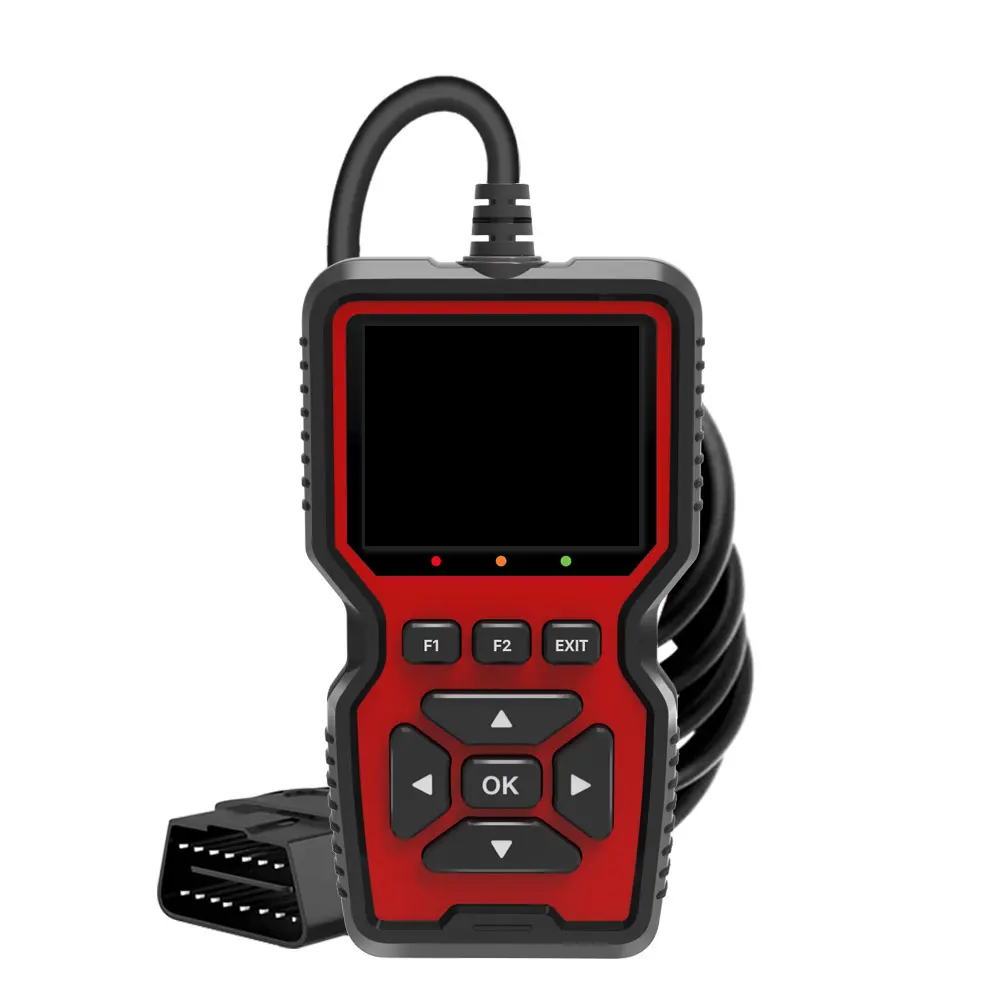
- Retrieve Freeze Frame Data: Use an OBD-II scanner to confirm the presence of P0274 and check for any related misfire codes (e.g., P0305). Analyze freeze frame data to understand engine conditions (RPM, load, temperature) when the fault occurred, which can provide valuable context.
- Visual Inspection:
- With the ignition OFF, carefully inspect the wiring harness leading to cylinder #5 fuel injector. Look for any signs of chafing, cuts, bare wires, or heat damage.
- Examine the injector connector itself for corrosion, bent pins, or a loose fit. Follow the harness back towards the ECM, checking for any compromised sections.
- Digital Multimeter (DMM) Tests:
- Injector Resistance Test: Disconnect the electrical connector from cylinder #5 fuel injector. Using a DMM set to ohms, measure the resistance across the two terminals of the injector itself. Compare this reading to manufacturer specifications (typically 10-16 ohms for high-impedance injectors, 1-4 ohms for low-impedance). An “open circuit” (OL on the DMM) or significantly high resistance indicates an internal fault within the injector.
- Power Supply Voltage Check: Reconnect the injector connector. With the ignition ON (engine OFF), backprobe the power supply wire at the injector connector (usually the wire shared among all injectors). You should measure near battery voltage (e.g., 12.0-12.6V). If no voltage is present, troubleshoot the power supply circuit (fuse, relay, wiring).
- Control Circuit Continuity and Short Tests: Disconnect the ECM connector and the cylinder #5 injector connector.
- Continuity: Set the DMM to ohms. Measure continuity between the injector control wire pin at the injector connector and the corresponding injector control wire pin at the ECM connector. Resistance should be very low (typically less than 0.5 ohms). High resistance indicates an open circuit in the wire.
- Short to Ground: With the DMM set to ohms, test for continuity between the injector control wire at the injector connector and a known good chassis ground. There should be infinite resistance (OL). A low resistance reading indicates a short to ground, though this would typically cause a “circuit low” code, not “high.”
- Short to Voltage/Power: With the DMM set to ohms, test for continuity between the injector control wire and other power wires or battery positive. There should be infinite resistance (OL). A low resistance reading indicates a short to voltage, which is a common cause for a “circuit high” code.
- ECM Driver Test (Advanced): Using a lab scope, connect to the injector control wire and observe the waveform while cranking or running the engine. A functioning circuit will show a voltage drop from battery voltage to near 0V during the injector pulse, followed by a characteristic inductive kick. If the voltage remains high, or the waveform is absent, it further points to an open circuit, short to voltage, or an ECM driver issue.
Recommended Repairs and Solutions
Based on diagnostic findings, the following repairs are typically recommended:
- Replace Fuel Injector (Cylinder 5): If the injector resistance test confirms an open circuit or excessively high resistance, or if other tests definitively point to an internal injector fault, replace the cylinder #5 fuel injector. Always use OEM-quality replacement parts for reliability and proper fitment.
- Repair or Replace Wiring Harness: If visual inspection or DMM continuity/short tests reveal damaged, chafed, or corroded wiring or connectors, perform precise repairs. For wiring, use professional splicing techniques with solder and heat-shrink tubing. Replace severely damaged sections of the harness or the entire connector if terminals are compromised. Ensure all connections are clean, tight, and secure.
- ECM/PCM Replacement: This should be considered a last resort, only after all other possibilities for the “circuit high” condition have been exhaustively ruled out. ECM replacement often requires specialized programming or flashing to match the vehicle’s specific configuration. Verify that the ECM is providing proper ground pulses to other injectors before condemning it for a single injector circuit fault.
- Post-Repair Verification: After completing any repairs, clear the diagnostic trouble codes using an OBD-II scanner. Start the engine and perform an extended test drive under various operating conditions to confirm that the P0274 code does not return and that engine performance has normalized.