What Does Code P0357 Mean?
DTC P0357 indicates an “Ignition Coil G Primary/Secondary Circuit Malfunction.” In the automotive diagnostic standard, the letter “G” is assigned by the vehicle manufacturer to a specific cylinder, typically referring to cylinder #7 in engines with eight or more cylinders (e.g., V8, V10). This code signifies that the Powertrain Control Module (PCM), also referred to as the Engine Control Module (ECM), has detected an electrical fault within the primary or secondary circuit of the ignition coil responsible for igniting the fuel-air mixture in cylinder #7.
The PCM continuously monitors the ignition system for proper operation. Specifically, it monitors the primary circuit of each ignition coil, which includes the battery voltage supply, the coil driver circuit (typically an integrated circuit within the PCM), and the ground path. When the PCM commands the coil to fire, it expects to see a specific voltage drop and current flow across the primary winding. If the PCM detects an unexpected voltage signal, an open circuit, a short to ground, or a short to voltage within the primary circuit for ignition coil G, it interprets this as a malfunction and sets code P0357. While the code specifies “Primary/Secondary Circuit,” the PCM primarily monitors the primary side directly for electrical integrity. A secondary circuit issue (e.g., spark plug or spark plug wire fault) often manifests as a misfire, which the PCM detects via crankshaft speed variations (P0307), but severe secondary issues can sometimes overload or backfeed into the primary circuit, contributing to this code.
Common Symptoms
- Engine Misfire: The most prevalent symptom, often felt as a stumble, hesitation, or lack of power, especially under load.
- Rough Idling: Irregular engine operation when stationary, indicating incomplete combustion in cylinder G.
- Reduced Engine Performance: Noticeable loss of acceleration and overall power output due to one cylinder not contributing to combustion.
- Check Engine Light (CEL) Illumination: The Malfunction Indicator Lamp (MIL) will illuminate. In cases of severe, continuous misfires, the CEL may flash, indicating a condition that could damage the catalytic converter due to unburnt fuel.
- Decreased Fuel Economy: The engine management system may attempt to compensate for the misfire, leading to increased fuel consumption.
- Increased Exhaust Emissions: Unburnt fuel passing into the exhaust system can lead to higher emissions and potentially catalytic converter damage over time.
- Smell of Unburnt Fuel: A distinct odor of raw gasoline may be present from the exhaust tailpipe.
What Causes the Code P0357?
- Faulty Ignition Coil G: The most common cause. This includes internal short circuits, open circuits in either the primary or secondary windings, or an internal breakdown of insulation within the coil, preventing proper high-voltage generation.
- Damaged Wiring Harness:
- Open Circuit: A broken wire in the coil’s power supply (B+) or control signal wire from the PCM.
- Short Circuit: A wire shorted to ground or to another power source, either in the power supply or control wire.
- Corrosion or Loose Connections: Degraded terminals or improper seating at the ignition coil connector or the PCM connector.
- Faulty Spark Plug G: While not a direct circuit malfunction, a severely fouled, damaged, or incorrectly gapped spark plug can significantly increase the resistance in the secondary ignition circuit. This excessive load can overstress the ignition coil, leading to premature coil failure or an abnormal current draw that the PCM interprets as a circuit fault.
- Faulty Powertrain Control Module (PCM/ECM): Although rare, a damaged coil driver circuit within the PCM specifically for cylinder G can fail to send the correct switching signal or improperly monitor the coil circuit, thus setting this code.
How to Diagnose and Troubleshoot
Diagnosis of P0357 requires a systematic approach using specialized tools and an understanding of ignition system electronics.
- Initial Scan and Data Analysis:
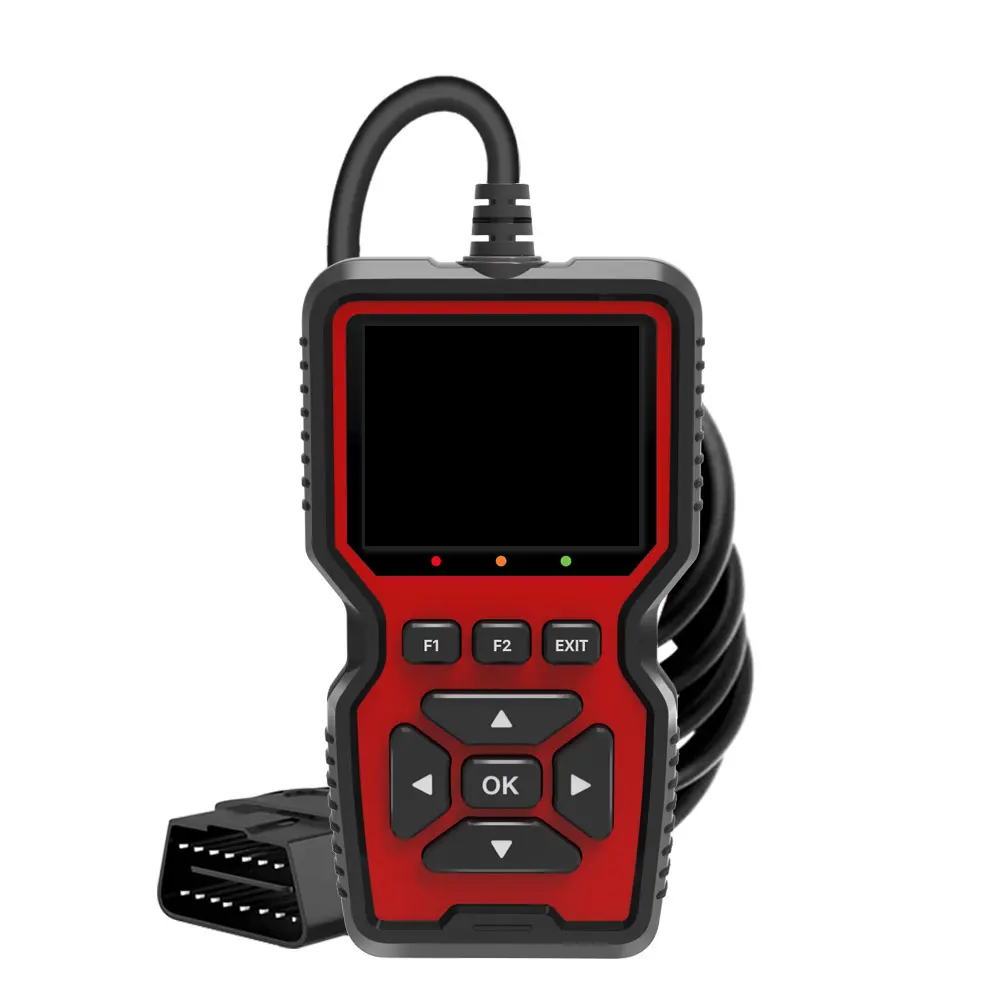
- Connect an OBD-II scanner and confirm the presence of P0357.
- Check for any accompanying misfire codes (e.g., P0307 for cylinder 7) or other ignition-related DTCs.
- Review freeze frame data for P0357 to determine engine operating conditions (RPM, load, temperature) when the fault was first detected. This can provide clues about intermittent issues.
- Visual Inspection:
- Carefully inspect ignition coil G and its connector for any obvious physical damage, cracks, signs of overheating, oil contamination, or corrosion.
- Trace the wiring harness leading to ignition coil G. Look for any signs of chafing, cuts, pinches, or melted insulation that could indicate a short circuit or open wire.
- Inspect the spark plug boot for cracks, carbon tracking, or damage that could lead to spark leakage.
- Component Swapping (Confirmation Test):
- If accessible, swap ignition coil G with an adjacent, known-good cylinder’s coil (e.g., cylinder 6 or 8).
- Clear the DTCs and start the engine. If the misfire or the P0357 code follows the coil to the new cylinder (e.g., P0356 or P0358), then the original ignition coil G is confirmed faulty.
- If P0357 persists for cylinder G, the issue lies elsewhere (wiring or PCM).
- Digital Multimeter (DMM) Tests:
- Power Supply Test: With the ignition ON (engine OFF), disconnect the coil G connector. Using a DMM, check for battery voltage at the coil’s B+ (power supply) terminal (usually one of the larger gauge wires) with respect to chassis ground. If no voltage, check the relevant fuse and wiring back to the power distribution center.
- Ground Circuit Test: Check for continuity (low resistance, typically < 0.5 ohms) between the coil’s ground terminal and a known good chassis ground point. An open circuit indicates a wiring issue.
- Control Circuit Test (PCM Signal):
- Using a lab scope (preferred method): Connect to the coil’s control wire (signal wire from PCM). Crank the engine and observe the waveform. A healthy control circuit should show a clean square wave signal indicating the PCM switching the coil ON and OFF. An erratic signal, no signal, or a constant voltage (0V or B+) indicates an issue with the wiring or the PCM driver.
- Using a DMM (less precise): Connect the DMM to the control wire and ground. With the ignition ON, engine OFF, you should typically read near battery voltage (pull-up resistor in PCM). When cranking, the voltage should fluctuate, but a DMM may not capture the rapid switching. If it consistently reads 0V or battery voltage while cranking, suspect an open/short in the wire or a faulty PCM driver.
- Coil Primary Winding Resistance Test: Disconnect the coil. Measure the resistance across the primary input terminals (power and control) of the ignition coil itself. Compare the reading to manufacturer specifications (typically very low, <2 ohms). An open circuit (OL on DMM) or a dead short (near 0 ohms) indicates an internal coil fault. (Note: Not all coils are designed for this direct resistance test due to internal electronics.)
- Wiring Continuity and Short Test: Disconnect both the PCM connector and the ignition coil G connector. Test for continuity of the B+ wire and the control wire from the PCM connector pin to the coil connector pin. Any high resistance (above ~1 ohm) or open circuit indicates a break. Also, test for shorts to ground and shorts to voltage on both wires by checking continuity between each wire and chassis ground, and between each wire and other power sources.
- Spark Plug Inspection: Remove spark plug G. Inspect its condition: check for fouling (carbon, oil, fuel), excessive electrode wear, damage to the insulator, or incorrect gap. While not directly a circuit fault, a bad plug can be a secondary cause or consequence.
Recommended Repairs and Solutions
Once the diagnostic steps have pinpointed the root cause, the following repairs are typically performed:
- Replace Faulty Ignition Coil G: This is the most frequent repair. Always opt for an OEM quality or reputable aftermarket ignition coil to ensure longevity and proper function. It is often recommended to also replace the spark plug for that cylinder at the same time, especially if it’s due for maintenance.
- Repair or Replace Damaged Wiring Harness: If damaged wires or corroded connectors are identified, the affected section of the wiring harness should be repaired using proper automotive wiring repair techniques (e.g., soldering, heat-shrink tubing, appropriate gauge wire) or replaced if the damage is extensive. Ensure all connectors are clean, secure, and fully seated.
- Replace Faulty Spark Plug G: If the spark plug is found to be fouled, damaged, or beyond its service life, replace it. It’s often good practice to replace all spark plugs if they are at or near their recommended service interval, as a healthy spark plug contributes to coil longevity.
- PCM Replacement: In rare cases, if all other components (coil, wiring, spark plug) test good, and diagnostics definitively point to an internal PCM driver failure for cylinder G, the PCM may require replacement and reprogramming. This should be considered a last resort after thorough verification of all other possibilities.
Mechanic’s Tips:
- When replacing an ignition coil, always check the condition of the spark plug and spark plug boot for that cylinder. A degraded boot can cause spark to arc externally, and a worn spark plug increases the load on the coil.
- Use dielectric grease sparingly on the inside of the spark plug boot to prevent moisture intrusion and facilitate future removal.
- Ensure all electrical connectors are clean, dry, and fully latched after any repair to prevent future intermittent issues.
- After completing any repair, clear the DTCs with an OBD-II scanner and perform a comprehensive test drive under varying conditions to confirm the fix and allow the PCM to complete its diagnostic monitors.