What Does Code P0416 Mean?
DTC P0416 indicates a detected open circuit within the electrical control pathway of the Secondary Air Injection (SAI) System Switching Valve “B.” The SAI system is an integral component of the vehicle’s emission control strategy, primarily active during cold engine starts. Its function is to inject fresh, ambient air directly into the exhaust manifold or upstream of the catalytic converter(s). This additional oxygen facilitates an earlier and more rapid light-off of the catalytic converters by promoting a more complete combustion of unburnt hydrocarbons (HC) and carbon monoxide (CO) that are prevalent in the exhaust stream during the engine’s warm-up phase.
The Engine Control Module (ECM), also commonly referred to as the Powertrain Control Module (PCM), is responsible for monitoring and controlling the SAI system’s components. The “Switching Valve B” typically refers to an electrically actuated solenoid valve that controls the flow of secondary air, either from an electric air pump or a vacuum-controlled system. When the ECM commands this valve to open or close, it expects to see a specific electrical resistance or current flow through its circuit. An “open circuit” condition signifies a complete break in this electrical pathway—meaning infinite resistance—preventing current from flowing to the solenoid. This can be due to a disconnected wire, a physically broken wire, a corroded connection, or an internal electrical failure within the solenoid coil itself. Upon detecting this anomaly, the ECM records the P0416 diagnostic trouble code and illuminates the Malfunction Indicator Lamp (MIL), commonly known as the Check Engine Light.
Common Symptoms
- Illumination of the Malfunction Indicator Lamp (MIL): The Check Engine Light will be on.
- Failed Emissions Inspection: Due to the SAI system’s role in cold-start emissions reduction, a fault can lead to increased tailpipe emissions, resulting in a failed smog check or similar inspection.
- No Noticeable Driveability Issues: In many cases, the SAI system only operates for a brief period during cold starts. Therefore, an open circuit in one of its valves may not present any noticeable symptoms during normal engine operation once the engine is warm.
- Potential Rough Idle on Cold Start: While less common for a circuit open (unless the valve is mechanically stuck open or a vacuum leak is introduced due to system compromise), this symptom could theoretically arise if the system’s integrity is severely compromised.
What Causes the Code P0416?
- Faulty Secondary Air Injection Switching Valve “B”: The solenoid coil within the valve may have an internal open circuit, preventing electrical activation.
- Damaged Wiring Harness: An open circuit or break in the electrical wires leading to the SAI Switching Valve B. This can be caused by chafing, cuts, corrosion, or rodent damage.
- Corroded or Loose Electrical Connector: Poor electrical contact at the valve’s connector or the ECM connector due to corrosion, bent pins, or insufficient connection tension.
- Blown Fuse: A dedicated fuse protecting the SAI system’s electrical circuit may have blown, creating an open circuit condition for the valve.
- Faulty Engine Control Module (ECM/PCM): While less common, an internal fault within the ECM’s driver circuit for the SAI Switching Valve B can lead to an open circuit condition.
How to Diagnose and Troubleshoot
Diagnosis of P0416 requires a systematic approach, focusing on the electrical integrity of the SAI Switching Valve B circuit:
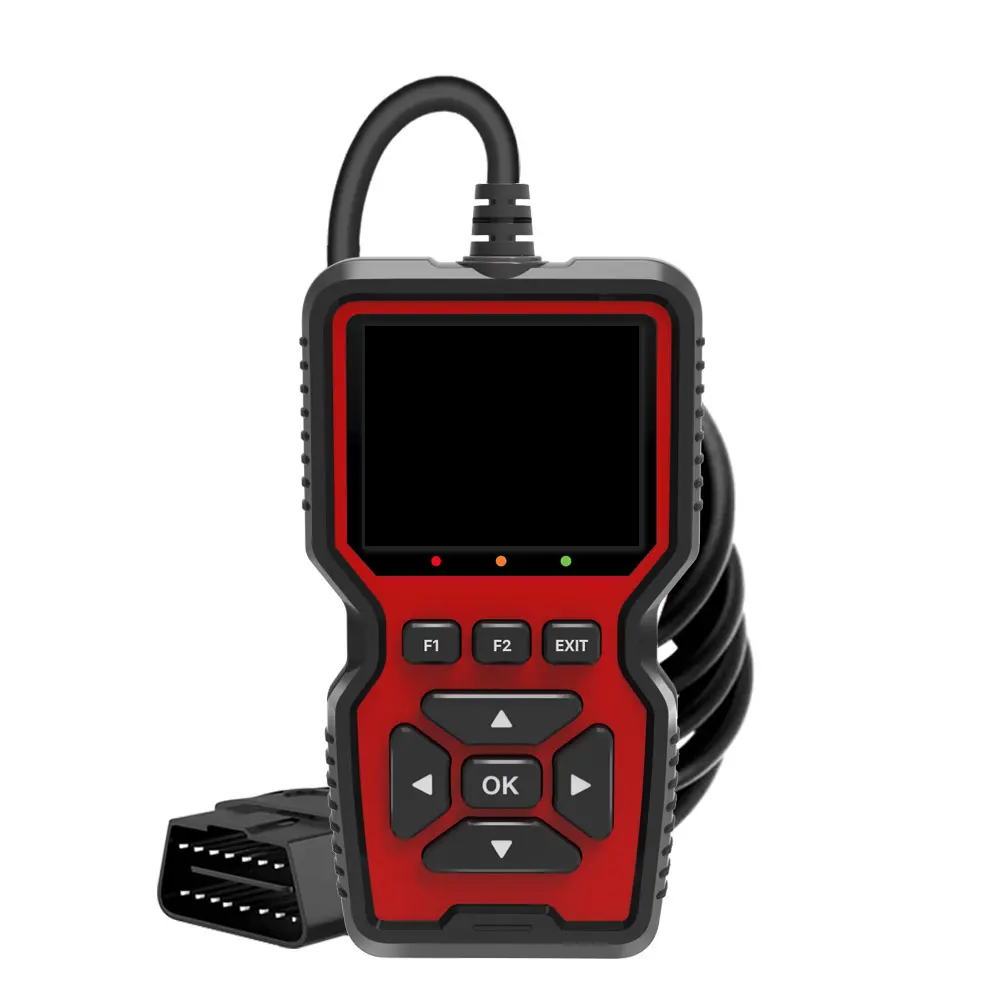
- Initial Scan and Data Review: Connect an OBD-II scanner to confirm P0416. Review freeze frame data to understand the engine operating conditions when the code was set. Check for any other related or concurrent DTCs that might provide additional diagnostic clues.
- Visual Inspection:
- Locate the SAI Switching Valve B (refer to vehicle-specific service information for its exact location). Inspect the valve and its electrical connector for obvious signs of damage, corrosion, or disconnected wiring.
- Trace the wiring harness leading to the valve. Look for any signs of chafing, cuts, pinching, or heat damage. Pay close attention to areas where the harness passes through firewalls or near hot engine components.
- Check all associated fuses in the under-hood and/or interior fuse boxes. A blown fuse for the SAI system will create an open circuit.
- Electrical System Testing (Digital Multimeter – DMM):
- Valve Resistance Test: Disconnect the electrical connector from the SAI Switching Valve B. Using a DMM set to ohms, measure the resistance across the two terminals of the valve’s solenoid. Compare this reading to the manufacturer’s specifications (typically 10-30 ohms). An infinite resistance reading (open circuit) confirms an internal fault within the valve’s solenoid coil, necessitating valve replacement.
- Power Supply Check: With the ignition key in the ON position and the valve’s electrical connector disconnected, use the DMM (set to DC Volts) to test for battery voltage at one of the connector terminals (refer to the wiring diagram to identify the power supply wire). If no voltage is present, investigate the power supply circuit, including fuses and relays.
- Ground Circuit Integrity Check: If the ECM switches the ground side of the circuit to activate the valve, disconnect the ECM connector and the valve connector. Use the DMM (set to ohms) to check for continuity between the ground-side terminal at the valve connector and the corresponding terminal at the ECM connector. An open circuit here indicates a break in the wiring. Also, check for unintended short circuits to ground or power.
- Wiring Harness Continuity Test: Perform a continuity test on both the power and ground/control wires of the harness, from the valve connector back to their respective connection points (e.g., fuse box, relay, ECM). This helps pinpoint any breaks or high resistance within the wiring itself.
- Bi-directional Control (Advanced Scanner): If the electrical circuit appears sound, and your scanner supports bi-directional control, attempt to command the SAI Switching Valve B ON/OFF. Listen for an audible click from the valve. If no click is heard despite proper power and ground, the valve is likely faulty.
Recommended Repairs and Solutions
Once the root cause of the P0416 code has been identified, the following repairs are typically performed:
- Replace Secondary Air Injection Switching Valve “B”: If the valve’s internal solenoid is confirmed to have an open circuit through resistance testing, replace the entire valve assembly. Ensure to use an OEM or equivalent quality aftermarket part.
- Repair or Replace Damaged Wiring Harness: If physical damage or an open circuit is found within the wiring harness, repair the affected section. Use proper automotive wiring repair techniques, including soldering and heat-shrink tubing for durable connections. If extensive damage is present, replacing the harness section may be more practical.
- Clean or Repair Electrical Connectors: If corrosion or poor contact is identified at the valve or ECM connectors, carefully clean the terminals using electrical contact cleaner and a small brush. Inspect for bent or loose pins and correct them as necessary. Apply a small amount of dielectric grease to prevent future corrosion.
- Replace Blown Fuse: If a blown fuse was the cause, replace it with a fuse of the correct amperage. It is crucial to investigate why the fuse blew in the first place, as a persistent short circuit elsewhere in the system could cause the new fuse to blow again immediately.
- ECM/PCM Replacement (Rare): Only consider ECM/PCM replacement as a last resort, after meticulously ruling out all other possible causes and confirming an internal ECM driver fault. This repair typically requires specialized programming and calibration.
After any repair, clear the DTCs from the ECM and perform several drive cycles, including cold starts, to verify that the code does not return and that the SAI system operates correctly. Monitoring live data for SAI system status or component activation can aid in verification.