What Does Code P0505 Mean?
DTC P0505 indicates a detected malfunction within the Engine Control Module (ECM) or Powertrain Control Module (PCM)’s idle control system. The ECM/PCM is responsible for precisely regulating the engine’s idle speed to maintain stability under varying conditions such as electrical load, air conditioning operation, or power steering input. In vehicles equipped with an Idle Air Control (IAC) valve, this component controls the amount of air bypassing the closed throttle plate. In modern drive-by-wire systems, idle control is integrated into the Electronic Throttle Body (ETB) by adjusting the throttle plate angle. When the ECM/PCM commands a specific idle speed or IAC/ETB position and subsequently observes an actual engine RPM that deviates significantly and persistently from the target RPM range for a calibrated period, P0505 is set. This signifies that the ECM/PCM has lost its ability to effectively manage engine idle speed, leading to unstable or incorrect idle conditions.
Common Symptoms
- Rough or Unstable Idle: The engine RPM may fluctuate erratically at idle.
- Engine Stalling: The engine may stall frequently, particularly when coming to a stop or during initial startup.
- High or Low Idle RPM: The engine may idle significantly higher or lower than its specified range, failing to settle into a stable RPM.
- Hesitation or Surging: Inconsistent idle control can sometimes manifest as minor hesitation during off-idle acceleration.
- Illuminated Check Engine Light (CEL): The Malfunction Indicator Lamp (MIL) will be illuminated on the dashboard.
- Increased Fuel Consumption: Inconsistent idle and potential rich/lean conditions due to uncontrolled airflow can reduce fuel efficiency.
What Causes the Code P0505?
- Faulty Idle Air Control (IAC) Valve: Carbon buildup causing the plunger to stick, a failed internal solenoid winding (open or short circuit), or a damaged pintle, preventing the valve from accurately controlling airflow.
- Vacuum Leaks: Unmetered air entering the intake manifold downstream of the mass airflow sensor (MAF) or manifold absolute pressure (MAP) sensor. Common sources include cracked vacuum hoses, a leaking intake manifold gasket, a faulty PCV valve or hose, or a leaking brake booster diaphragm.
- Dirty or Sticking Throttle Body: Excessive carbon deposits accumulating around the throttle plate and in the throttle bore, preventing the throttle plate from fully closing or causing it to stick slightly open, leading to uncontrolled air intake.
- Electrical Circuit Malfunctions: Open circuits, short circuits, or high resistance in the wiring harness or connectors leading to the IAC valve or Electronic Throttle Body (ETB) motor/sensors.
- Faulty Electronic Throttle Body (ETB) Assembly: For vehicles without a separate IAC valve, issues with the ETB motor, gears, or integrated throttle position sensors can compromise idle control.
- ECM/PCM Malfunction: While less common, an internal fault within the ECM/PCM, such as a damaged driver circuit for the IAC valve or ETB, can directly cause P0505.
How to Diagnose and Troubleshoot
Diagnosis of P0505 requires a systematic approach, often involving a combination of visual inspection, OBD-II scanner data analysis, and digital multimeter (DMM) testing:
- Visual Inspection: Begin with a thorough visual inspection of the entire intake system. Look for cracked or disconnected vacuum hoses, loose intake manifold bolts, evidence of oil leaks around gaskets, and proper seating of air intake ducts. Inspect the IAC valve (if applicable) and its electrical connector for corrosion or physical damage.
- OBD-II Scanner Live Data Analysis:
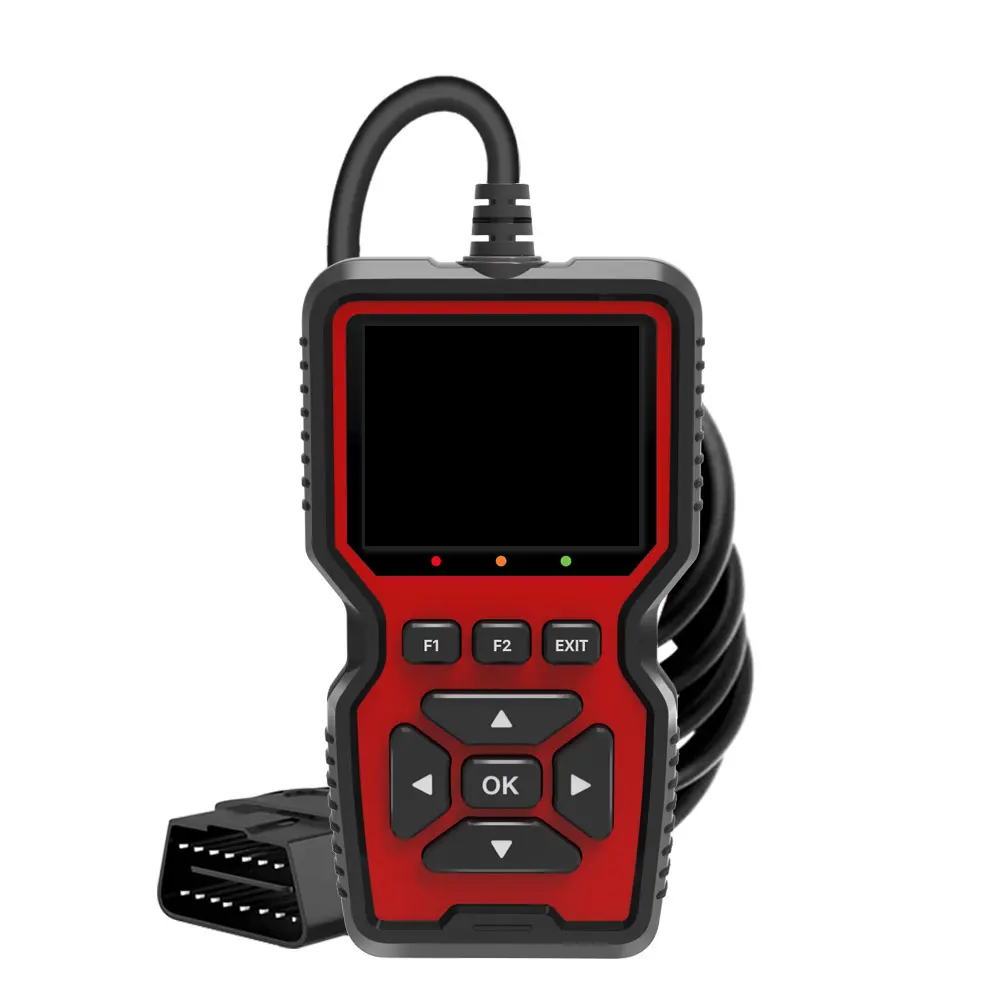
- Connect a professional OBD-II scanner and access Live Data parameters with the engine at idle.
- Monitor Engine RPM, Throttle Position Sensor (TPS) percentage (should be near 0% at idle, varying slightly), and Idle Air Control (IAC) Position/Duty Cycle (if equipped).
- Pay close attention to Short Term Fuel Trim (STFT) and Long Term Fuel Trim (LTFT). Significantly positive fuel trims (STFT + LTFT consistently above +10-15% at idle) are a strong indicator of unmetered air entering the engine (vacuum leak).
- If your scanner supports bi-directional controls, attempt to command the IAC valve (if present) through its full range of motion. Observe if the engine RPM responds as expected. A lack of response suggests an issue with the IAC valve or its circuit.
- Vacuum Leak Testing:
- With the engine running, carefully spray non-flammable carburetor cleaner or propane around suspected vacuum leak areas (vacuum lines, intake manifold gaskets, PCV system components). A temporary change in engine RPM indicates a leak location.
- For a more precise and safer method, utilize a smoke machine connected to the intake manifold (e.g., via a vacuum port). Smoke escaping from any component reveals the exact location of the leak.
- Throttle Body Inspection and Cleaning: Remove the air intake boot and visually inspect the throttle body bore and throttle plate for heavy carbon buildup. If present, thoroughly clean the throttle body using a dedicated throttle body cleaner and a clean rag, ensuring the throttle plate moves freely and seats properly when closed.
- Digital Multimeter (DMM) Testing (for IAC valve systems):
- With the ignition OFF and the IAC valve electrical connector disconnected, measure the resistance across the IAC valve’s coil terminals. Consult the vehicle’s specific service information for the expected resistance values (typically 10-50 ohms per coil depending on design). An open circuit (infinite resistance) or a short circuit (near zero resistance) indicates a faulty IAC valve.
- With the ignition ON, back-probe the IAC valve connector to test for proper voltage supply (B+) and control signals (ECM/PCM ground pulses).
- Perform continuity and resistance checks on the wiring harness between the IAC connector and the ECM/PCM connector to rule out circuit issues.
- Electronic Throttle Body (ETB) Diagnostics: For drive-by-wire systems, monitor the TPS1 and TPS2 sensor voltages via live data. They should mirror each other (often one increases while the other decreases) and move smoothly. If issues are suspected with the ETB motor, specific diagnostic routines or waveform analysis may be required, often pointing to ETB replacement rather than repair.
Recommended Repairs and Solutions
Once the root cause of P0505 is identified through systematic diagnosis, the following repairs are commonly performed:
- Replace Idle Air Control (IAC) Valve: If diagnostics confirm the IAC valve is faulty (e.g., failed resistance test, no response to scanner commands, or visible damage/sticking), replacement is necessary. After installation, an idle relearn procedure may be required as per manufacturer specifications.
- Repair Vacuum Leaks: Replace any cracked, brittle, or disconnected vacuum hoses, PCV valves, PCV hoses, or intake manifold gaskets that were identified as sources of vacuum leaks. After repairs, clear the DTC and monitor fuel trims to confirm the leak has been resolved.
- Clean Throttle Body: If carbon buildup was the primary issue, thoroughly cleaning the throttle body is often sufficient. Ensure all carbon deposits are removed from the throttle plate and bore, allowing the plate to close fully and move freely. An idle relearn might be necessary.
- Repair Wiring or Connectors: If electrical testing reveals an open, short, or high-resistance circuit to the IAC valve or ETB, repair or replace the affected wiring harness section or corroded connector. Always use appropriate repair techniques and solder connections where necessary, protecting them with heat shrink tubing.
- Replace Electronic Throttle Body (ETB) Assembly: For vehicles with integrated idle control, if the ETB motor, gears, or internal sensors are determined to be at fault, the entire ETB assembly usually needs to be replaced. This typically requires a subsequent throttle body relearn or reprogramming procedure using a factory-level scan tool.
- ECM/PCM Replacement/Reprogramming: This is a last resort. If all other components and wiring test good and symptoms persist, a faulty ECM/PCM driver for the idle control system may be the cause. This often necessitates a new or remanufactured ECM/PCM, which must then be programmed to the vehicle’s specific VIN and immobilizer system.
- Mechanic’s Tip: After any repair related to idle control or airflow, it is crucial to clear the DTCs and perform an idle relearn procedure if specified by the manufacturer. This allows the ECM/PCM to re-adapt to the new component or airflow characteristics, preventing lingering idle issues. Always check for pending codes and monitor live data after repairs to confirm complete resolution.