
Only the popular fourth-generation 80 model in the B4 body was equipped with the 2.0-liter mono-injection Audi ABT engine, which was built at the factory between 1991 and 1996. The Mono-Motronic fuel injection system on this power unit was rather erratic.
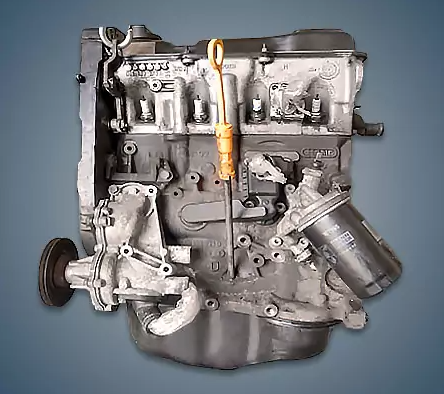
The EA827 2.0l series includes: 2E, AAD, AAE, ABT, ABK, ADY, AGG, ABF, ACE.
Specifications
| Production years | 1991-1996 |
| Displacement, cc | 1984 |
| Fuel system | Mono-Motronic |
| Power output, hp | 90 |
| Torque output, Nm | 148 |
| Cylinder block | cast iron R4 |
| Block head | aluminum 8v |
| Cylinder bore, mm | 82.5 |
| Piston stroke, mm | 92.8 |
| Compression ratio | 8.9 |
| Features | SOHC |
| Hydraulic lifters | yes |
| Timing drive | belt |
| Phase regulator | no |
| Turbocharging | no |
| Recommended engine oil | 5W-30 |
| Engine oil capacity, liter | 3.0 |
| Fuel type | petrol |
| Euro standards | EURO 1 |
| Fuel consumption, L/100 km (for Audi 80 1993) — city — highway — combined |
10.5 6.2 7.5 |
| Engine lifespan, km | ~360 000 |
The engine was installed on:
- Audi 80 B4 (8C) in 1991 – 1995.
Disadvantages of the Audi ABT engine
The Mono-Motronic system’s whims are mostly to blame for this engine’s issues.
Air leaks or a problem with one of the sensors are typically the cause of malfunctions.
The ignition system’s component failures rank second in terms of popularity.
The timing belt resource is roughly 90,000 km, but the valves typically do not bend when it breaks.
An oil burner frequently appears after 200,000 kilometers, and hydraulic lifters make a loud knock.