
Overview & Design Features
The Acura J35A4 is a prominent iteration of Honda’s acclaimed J-series V6 engine family, manufactured by Acura and Honda. Introduced in the early 2000s, this 3.5-liter (3471 cc) naturally aspirated, single overhead camshaft (SOHC) V6 powerplant was engineered for versatility and robust performance in larger vehicles. Its introduction marked a significant step in offering a refined, powerful, and reliable engine solution for the burgeoning SUV and minivan segments, establishing a reputation for smooth operation and longevity.
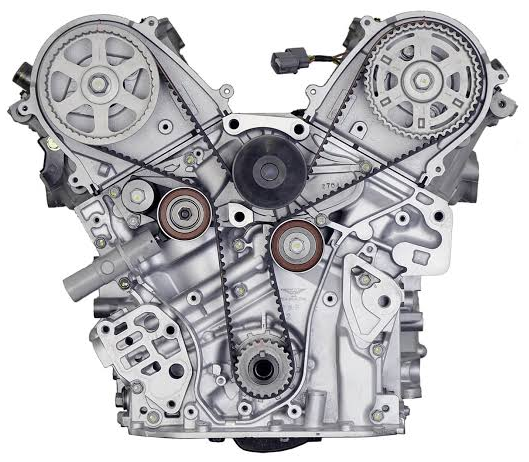
At its core, the J35A4 features an all-aluminum cylinder block and cylinder heads, contributing to its relatively light weight and efficient heat dissipation. Fuel delivery is managed by Honda’s multi-point Programmed Fuel Injection (PGM-FI) system, ensuring precise fuel metering. A key technological highlight is the incorporation of Honda’s Variable Valve Timing and Lift Electronic Control (VTEC) system. In this SOHC configuration, VTEC primarily optimizes intake valve operation across varying RPMs, enhancing both fuel efficiency at lower engine speeds and power output under higher load conditions.
The J35A4 engine was primarily deployed in several key models across the Acura and Honda lineups. Its applications include the 2001-2002 Acura MDX, where it delivered strong performance for the luxury SUV segment. It also powered the 2002-2004 Honda Odyssey minivan, known for its family-friendly attributes, and the 2003-2004 Honda Pilot SUV, offering a blend of utility and comfort. These deployments underscored the engine’s capability to meet diverse vehicle demands with consistent power delivery and refinement.
Technical Specifications
| Specification | Value |
|---|---|
| Displacement | 3471 cc (3.5L) |
| Max Power | 240 hp (179 kW) @ 5800 RPM |
| Max Torque | 328 Nm (33.5 kg*m) @ 4500 RPM |
| Fuel Type | Unleaded Gasoline (87 Octane Recommended) |
| Fuel Consumption (Combined) | ~13.5 L/100 km (depending on vehicle and driving conditions) |
| Engine Type | Naturally Aspirated, SOHC V6, VTEC, PGM-FI |
| Compression Ratio | 10.0:1 |
| Cylinder Bore | 89 mm |
| Piston Stroke | 93 mm |
| Valvetrain | SOHC, 4 Valves per Cylinder, VTEC |
| Valves per Cylinder | 4 |
| Additional Info | Aluminum Block and Heads, Timing Belt Driven |
Common Problems & Reliability
- Timing Belt & Water Pump Service: The J35A4 utilizes a timing belt, which is a critical maintenance item. Neglecting its replacement at recommended intervals (typically 105,000 miles or 7 years) can lead to catastrophic engine damage if the belt breaks. The water pump, tensioner, and idler pulleys are typically replaced concurrently as preventative measures.
- Oil Leaks: As the engine ages, oil leaks can develop. Common sources include the VTEC solenoid gasket, valve cover gaskets, and the oil pressure switch. While generally not catastrophic, these leaks can lead to reduced oil levels if ignored and require proactive sealing.
- Exhaust Manifold Cracks: Over extended periods of thermal cycling, the exhaust manifolds can develop cracks. This issue typically manifests as an audible exhaust leak, particularly noticeable during cold starts, and can affect exhaust gas sensor readings, potentially triggering a “Check Engine” light.
- Oil Consumption: Some higher-mileage J-series engines, including the J35A4, may exhibit increased oil consumption. This can be attributed to worn piston rings or valve stem seals. Regular monitoring of oil levels and timely top-offs are recommended.
With diligent and consistent maintenance, the Acura J35A4 is known for its robust design and exceptional durability. It is not uncommon for these engines to exceed 250,000 to 300,000 miles (400,000-480,000 km) before requiring a major overhaul, underscoring its reputation for longevity.
Maintenance Tips & Service Schedule
- Engine Oil & Filter: Replace every 5,000-7,500 miles (8,000-12,000 km) or 6 months, whichever comes first. Use a high-quality 5W-20 or 5W-30 full synthetic or synthetic blend motor oil to ensure optimal lubrication and VTEC operation.
- Timing Belt Service: Absolutely critical. Replace the timing belt, water pump, and associated tensioner/idler pulleys every 105,000 miles (168,000 km) or 7 years. This is a non-interference engine, but failure of the belt will cause the engine to stop operating.
- Spark Plugs: Replace iridium-tipped spark plugs every 105,000 miles (168,000 km).
- Coolant Flush: Perform a coolant flush every 60,000 miles (96,000 km) or 5 years using Honda’s Type 2 long-life coolant to prevent corrosion and maintain cooling system efficiency.
- Valve Clearance Inspection/Adjustment: Inspect and adjust valve clearances every 105,000 miles (168,000 km) or as needed if excessive valvetrain noise is present.
- Transmission Fluid: Drain and fill the automatic transmission fluid every 30,000-60,000 miles (48,000-96,000 km) using genuine Honda DW-1 ATF for optimal transmission longevity.
- Air Filter & Cabin Filter: Inspect and replace the engine air filter every 15,000-30,000 miles (24,000-48,000 km) and the cabin air filter annually or as needed to maintain air quality and engine performance.
Conclusion
The Acura J35A4 stands as a testament to Honda’s engineering prowess, offering a compelling blend of power, smoothness, and remarkable reliability. For a used vehicle buyer, an automobile equipped with the J35A4 engine generally represents a safe and robust choice. Its established track record for high mileage capability, coupled with accessible parts and knowledgeable service availability, makes it a desirable option. Provided that its critical maintenance items, particularly the timing belt service, have been diligently addressed or are factored into the purchase, this engine offers excellent long-term value and dependable performance.