
Overview & Design Features
The Acura K20A2 is a highly revered naturally aspirated 2.0-liter inline four-cylinder engine produced by Honda, making its debut in the early 2000s. Renowned for its high-revving character, robust construction, and innovative valve control system, it quickly became a benchmark for compact performance engines. This engine is a cornerstone of Honda’s performance heritage, offering a blend of daily drivability and thrilling top-end power, establishing a loyal following among automotive enthusiasts globally.
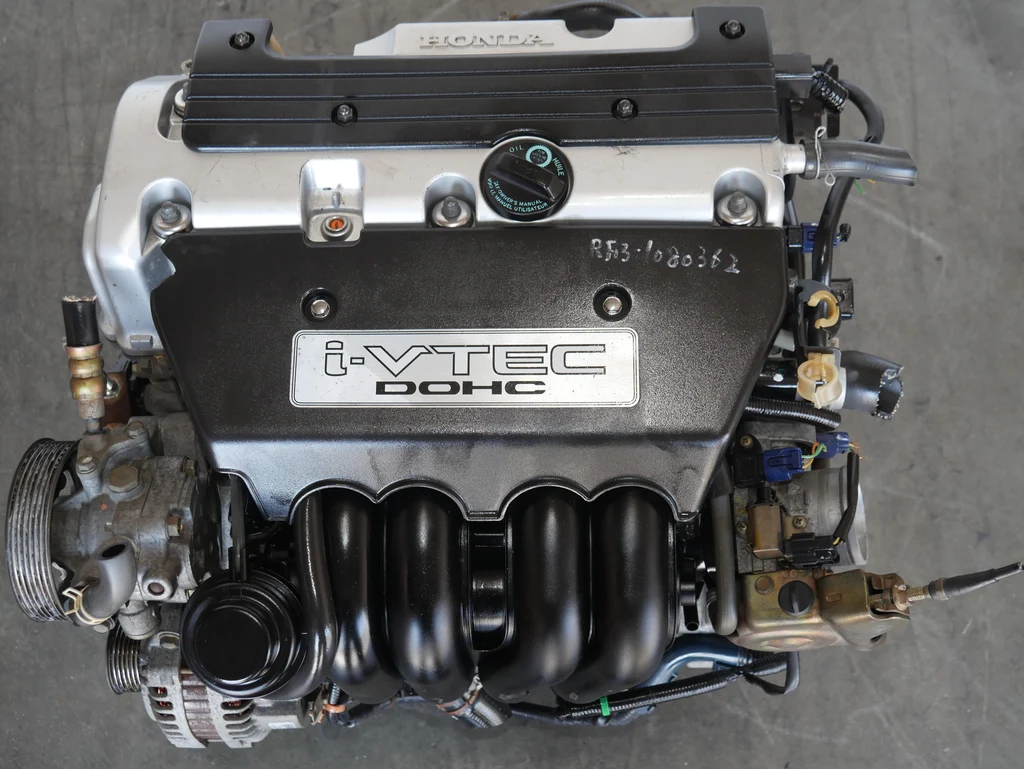
Engineered with performance in mind, the K20A2 features a lightweight yet rigid all-aluminum open-deck cylinder block and an aluminum alloy DOHC cylinder head. It utilizes a multi-port fuel injection system, delivering precise fuel delivery. The engine’s signature technology is Honda’s i-VTEC (Intelligent Variable Valve Timing and Lift Electronic Control) system, which dynamically adjusts valve timing and lift on both intake and exhaust camshafts. This system, combined with a high compression ratio and individual coil-on-plug ignition, allows for exceptional volumetric efficiency across the RPM range, resulting in a broad powerband and impressive specific output for a naturally aspirated engine.
The K20A2 engine was primarily deployed in the North American market in the 2002-2006 Acura RSX Type-S. Its direct Japanese Domestic Market (JDM) equivalent, the K20A, was found in the 2001-2006 Honda Integra Type R (DC5) and the 2002-2005 Honda Civic Type R (EP3) in European markets, although specific power outputs and minor ancillaries could vary by region. The K20A2 represents a peak of Honda’s non-turbocharged four-cylinder engineering for its era.
Technical Specifications
| Specification | Value |
|---|---|
| Displacement (cc) | 1,998 |
| Max Power (hp (kW) @ RPM) | 200 (147) @ 7,400 |
| Max Torque (Nm (kg*m) @ RPM) | 192 (19.6) @ 6,000 |
| Fuel Type | Premium Unleaded (91+ RON) |
| Fuel Consumption (l/100 km) | Approximately 9.8 (Combined) |
| Engine Type | Inline 4-cylinder, DOHC i-VTEC, Naturally Aspirated |
| Compression Ratio | 11.0:1 |
| Cylinder Bore (mm) | 86.0 |
| Piston Stroke (mm) | 86.0 |
| Valvetrain | DOHC, Chain-driven |
| Valves per Cylinder | 4 |
| Additional Info | Aluminum block & head, Multi-port fuel injection, Electronic throttle control |
Common Problems & Reliability
The K20A2 is largely considered a highly reliable engine, a testament to Honda’s engineering. However, specific areas warrant attention over time. One common issue involves the VTEC solenoid screen, which can become clogged with oil sludge, impeding proper VTEC engagement and potentially triggering a “Check Engine” light. Regular oil changes with quality lubricants are crucial to prevent this.
Another area of concern, particularly on higher-mileage examples, is wear in the timing chain tensioner. A failing tensioner can lead to timing chain rattle, especially on cold starts, and if left unaddressed, could result in more severe engine damage. Instances of minor oil consumption can also occur in older units, though generally not to a critical degree. With proper and consistent maintenance, the K20A2 is known to achieve service lives well over 250,000 kilometers (150,000 miles) and frequently exceeding 300,000 kilometers (180,000 miles) before requiring significant overhaul.
Maintenance Tips & Service Schedule
Proactive maintenance is key to preserving the K20A2’s performance and longevity. Engine oil and filter changes should be performed every 5,000 to 7,500 kilometers (3,000 to 5,000 miles) using a high-quality synthetic 5W-30 or 5W-40 oil, adhering to manufacturer specifications. This is vital for the proper function of the VTEC system and timing chain components.
Spark plugs (iridium type) should be replaced every 100,000 kilometers (60,000 miles). The engine features a timing chain, which does not have a set replacement interval; however, the tensioner and guides should be inspected every 150,000 kilometers (90,000 miles), and replaced if noise or excessive slack is detected. Valve clearances should be inspected and adjusted every 100,000 to 150,000 kilometers (60,000 to 90,000 miles) to ensure optimal engine efficiency and prevent valve train wear. Coolant flushes with Honda-approved Type 2 coolant are recommended every 3-5 years or 60,000 kilometers (36,000 miles).
Conclusion
The Acura K20A2 engine remains an exceptionally desirable and reliable powerplant. Its blend of high performance, mechanical durability, and relatively straightforward maintenance makes it an excellent choice for a used vehicle buyer seeking an engaging and robust driving experience. Provided a consistent and diligent maintenance history is evident, vehicles equipped with the K20A2 are a safe and rewarding investment, continuing to offer significant enthusiast appeal and dependable service for many years and miles to come.