
Overview & Design Features
The Acura D16A1 is a naturally aspirated 1.6-liter (1590 cc) inline-four engine, manufactured by Honda Motor Co. Ltd. for its premium Acura division. It represents a significant historical point as the first D-series engine in the North American market to feature a dual overhead camshaft (DOHC) valvetrain, distinguishing it from the single overhead camshaft (SOHC) D-series engines that would become more prevalent. This engine was celebrated for its free-revving nature and relatively high specific output for its era, laying foundational performance expectations for subsequent Honda and Acura sport compact models.
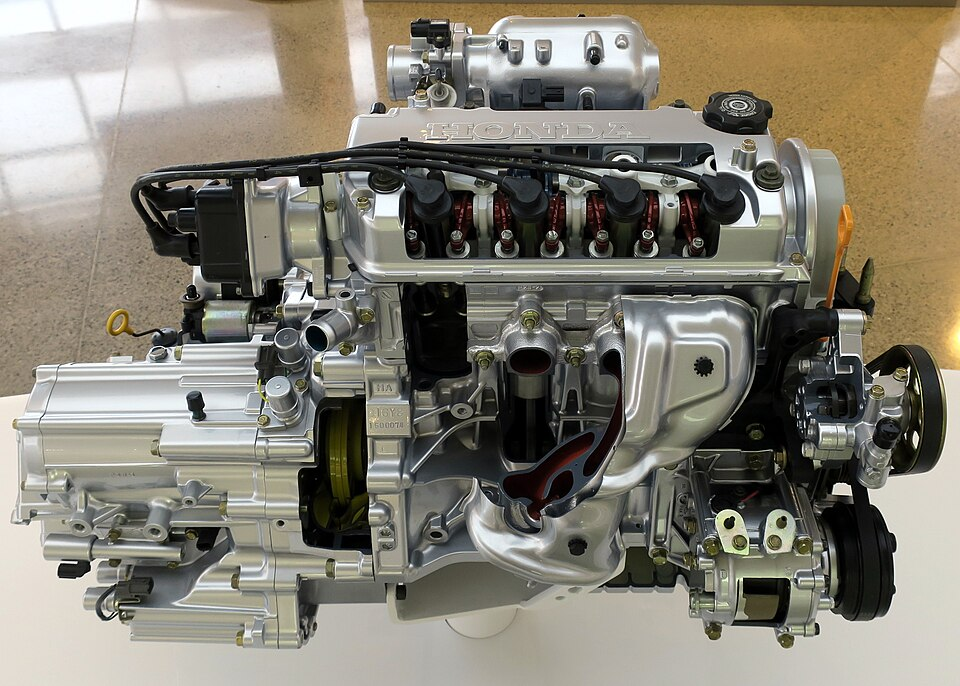
Engineered with a robust cast-iron block for durability and an aluminum cylinder head to minimize weight, the D16A1 utilizes a cross-flow design to enhance breathing efficiency. Fuel delivery is managed by Honda’s Programmed Fuel Injection (PGM-FI) multi-point electronic fuel injection system, ensuring precise fuel metering and improved responsiveness over carbureted systems. Unlike later Honda performance engines, the D16A1 predates and does not incorporate VTEC variable valve timing technology, relying instead on a fixed-duration DOHC setup with mechanical tappets for precise valve actuation.
This specific D16A1 variant, often colloquially referred to as the “Brown Top” or “Black Top” depending on valve cover color, was primarily deployed in the first-generation Acura Integra. It powered the DA1 and DA3 chassis codes, specifically in the LS, RS, and GS trim levels. Production years for models featuring the D16A1 ranged from 1986 through 1989, making it a hallmark engine of the early Acura performance identity.
Technical Specifications
| Specification | Value |
|---|---|
| Displacement | 1590 cc |
| Max Power | 118 hp (88 kW) @ 6500 RPM |
| Max Torque | 134 Nm (13.7 kg*m) @ 5500 RPM |
| Fuel Type | Unleaded gasoline (minimum 87 Octane / RON 91) |
| Fuel Consumption | Approx. 7.8-9.0 l/100 km (combined cycle, varies by vehicle) |
| Engine Type | Inline 4-cylinder, DOHC 16-valve |
| Compression Ratio | 9.5:1 (1988-1989 models) |
| Cylinder Bore | 75 mm |
| Piston Stroke | 90 mm |
| Valvetrain | Dual Overhead Camshaft (DOHC), Belt-driven |
| Valves per Cylinder | 4 |
| Additional Info | Multi-point PGM-FI, Non-VTEC |
Common Problems & Reliability
The D16A1 is widely regarded for its exceptional durability, a testament to Honda’s engineering principles of the era. However, like any engine of its vintage, certain common issues may arise with age and mileage. A frequent complaint involves oil leaks, particularly from the distributor O-ring and valve cover gasket. These seals can harden and shrink over time, leading to minor but noticeable oil seepage. Another area of concern for older units is the potential for cracking in the cast iron exhaust manifold, often exacerbated by heat cycling and vibrations; this can lead to exhaust leaks and increased noise.
Less common but possible at extremely high mileages, especially if maintenance has been neglected, is wear to the main and rod bearings. This typically manifests as a knocking sound from the bottom end. Given proper and consistent maintenance, including regular oil changes with the correct viscosity, a D16A1 engine can reliably exceed 250,000 kilometers (approximately 155,000 miles) before requiring significant internal attention or a major overhaul, with many examples surpassing 300,000 kilometers.
Maintenance Tips & Service Schedule
Maintaining the Acura D16A1 is straightforward, focusing on routine checks and timely replacements. Engine oil and filter changes are critical; a high-quality 5W-30 or 10W-30 synthetic or semi-synthetic oil is recommended every 5,000 to 7,500 kilometers (3,000-4,500 miles). Spark plugs (refer to OEM heat range) should be inspected and replaced approximately every 60,000 kilometers (37,500 miles) to ensure optimal combustion and fuel efficiency.
As the D16A1 utilizes a timing belt, its replacement is a fundamental service item. The timing belt, along with the water pump and tensioner, should be replaced every 100,000 kilometers (60,000 miles) or every five years, whichever comes first, to prevent catastrophic engine damage. Coolant flushes are recommended every 2-3 years or 50,000 kilometers (30,000 miles). Due to its mechanical tappets, valve clearance inspection and adjustment are also necessary, typically every 100,000 kilometers or if unusual valvetrain noise is detected.
Conclusion
The Acura D16A1 stands as a testament to Honda’s engineering prowess, offering a blend of performance, simplicity, and remarkable longevity. For a used vehicle buyer, this engine generally represents a safe and reliable choice, particularly if a pre-purchase inspection confirms good health and past maintenance records are available. Its robust design, while lacking modern variable valve timing, provides a straightforward and enjoyable driving experience. With diligent adherence to its relatively simple maintenance schedule, the D16A1 continues to deliver dependable service and remains a cherished powerplant among enthusiasts of classic Acura and Honda vehicles.