
Overview & Design Features
The Acura K20A3 engine is a prominent member of Honda’s K-series engine family, produced from 2001 to 2006. This 2.0-liter (1998 cc) inline-four cylinder engine was engineered by Honda as a balanced powerplant, emphasizing a blend of fuel efficiency, low emissions, and respectable daily driving performance. It represents a significant evolution from previous Honda four-cylinder designs, incorporating advanced technologies that set new standards for its class and contributing to the K-series’ reputation for reliability and engineering excellence.
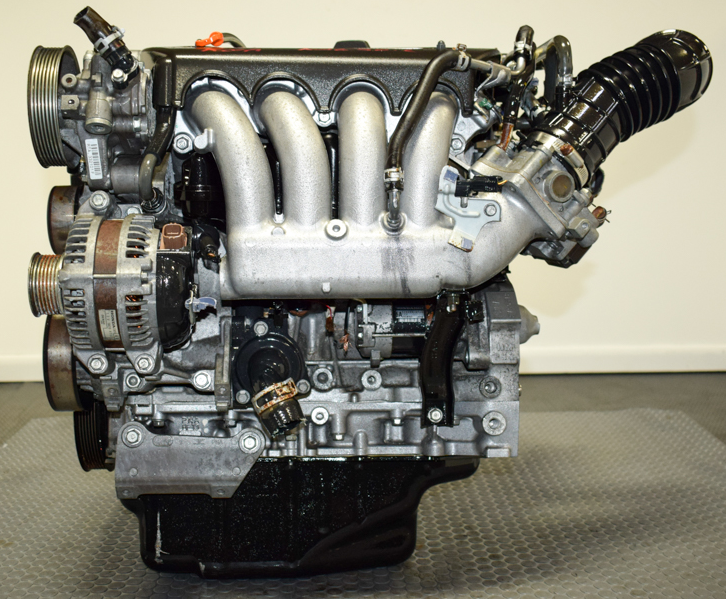
Central to the K20A3’s design is its all-aluminum construction, featuring a lightweight aluminum alloy cylinder block and cylinder head. This configuration contributes to better heat dissipation and reduced overall vehicle weight. The engine utilizes a dual overhead camshaft (DOHC) valvetrain with 16 valves (four per cylinder) and incorporates Honda’s intelligent Variable Valve Timing and Lift Electronic Control (i-VTEC) system. Unlike the performance-oriented i-VTEC found in K20A/A2 engines, the K20A3’s i-VTEC system primarily operates on the intake camshaft, optimizing valve timing and lift for improved fuel economy and reduced emissions at lower RPMs, while providing a mild performance boost at higher RPMs. Fuel delivery is managed by a sequential multi-port fuel injection system, and many variants feature roller rocker arms to reduce valvetrain friction.
The K20A3 engine found its primary applications in several key Honda and Acura models. It was notably deployed in the 2002-2006 Acura RSX Base model in North America, serving as the standard engine for the entry-level coupe. Across the Atlantic, it powered the 2001-2005 Honda Civic Si (EP3 chassis) in North America and the European Honda Civic Type S (EP3). Its versatility also saw it used in other Honda vehicles, including some versions of the Honda CR-V (RD4/RD5) and the Honda Element, typically in markets outside North America for certain trims.
Technical Specifications
| Specification | Value |
|---|---|
| Displacement (cc) | 1998 |
| Max Power (hp (kW) @ RPM) | 160 hp (118 kW) @ 6500 RPM |
| Max Torque (Nm (kg*m) @ RPM) | 193 Nm (19.7 kg*m) @ 5000 RPM |
| Fuel Type | Regular Unleaded (87+ Octane) |
| Fuel Consumption (l/100 km) | ~8.7 (Combined, varies by vehicle) |
| Engine Type | Inline 4, DOHC, i-VTEC |
| Compression Ratio | 9.8:1 |
| Cylinder Bore (mm) | 86 |
| Piston Stroke (mm) | 86 |
| Valvetrain | DOHC, Chain-driven |
| Valves per Cylinder | 4 |
| Additional Info | Aluminum block and head, Sequential Multi-Port Fuel Injection |
Common Problems & Reliability
The K20A3, like most engines in the Honda K-series, is largely renowned for its robust reliability and longevity. However, specific issues can arise, typically at higher mileage or due to neglected maintenance. A common concern across the K-series is the potential for the VTEC solenoid screen to clog with oil sludge or debris. This can impede oil pressure flow to the VTEC actuator, causing intermittent or complete failure of VTEC engagement, often indicated by a check engine light. Regular oil changes with quality oil are crucial to mitigate this.
Another issue that can manifest with age and mileage is elevated oil consumption. While not as severe as some other Honda engines, K20A3 engines may begin to consume oil due to piston ring wear or valve stem seal degradation. Regular monitoring of oil levels and timely top-ups are necessary. Lastly, the timing chain, while designed for the life of the engine, can experience stretch over very high mileage (e.g., beyond 150,000-200,000 miles or 240,000-320,000 km), leading to a rattling noise from the timing cover area, especially on cold start, and potentially affecting engine timing. This typically necessitates timing chain, tensioner, and guide replacement. Under proper care and adherence to maintenance schedules, the K20A3 engine is realistically expected to achieve service lives exceeding 250,000 to 300,000 miles (approximately 400,000 to 480,000 km) before requiring a major overhaul.
Maintenance Tips & Service Schedule
Proactive maintenance is key to maximizing the lifespan and performance of the Acura K20A3 engine. Adhering to manufacturer-recommended service intervals and using specified fluids is paramount. Regular oil changes are critical; using a high-quality 5W-30 synthetic blend or full synthetic motor oil every 5,000 to 7,500 miles (8,000 to 12,000 km) is recommended, or more frequently under severe driving conditions. This helps prevent sludge buildup and keeps the VTEC system operating optimally.
Spark plugs, specifically iridium-tipped types, should be replaced every 100,000 miles (160,000 km) to ensure consistent ignition and fuel efficiency. While the K20A3 uses a timing chain, which does not have a fixed replacement interval like a belt, it is advisable to inspect the timing chain, tensioner, and guides for wear or noise at mileage intervals approaching 150,000 miles (240,000 km). Replace these components only if signs of wear or excessive slack are observed. The cooling system requires attention; a complete coolant flush and refill with Honda Type 2 long-life coolant is recommended every 5 years or 100,000 to 120,000 miles (160,000 to 190,000 km). Finally, although hydraulic lash adjusters are not present, periodic valve clearance inspection and adjustment every 100,000 to 150,000 miles (160,000 to 240,000 km) helps maintain optimal engine efficiency and prevents excessive valvetrain noise.
Conclusion
The Acura K20A3 engine stands as a testament to Honda’s engineering prowess, offering a highly reliable and durable powertrain. Its design prioritizes a harmonious balance of fuel economy, emissions control, and adequate performance for daily driving. For a used vehicle buyer, an Acura K20A3-equipped car represents a safe and intelligent choice, provided there is a verifiable history of consistent and proper maintenance. With its strong build quality and well-documented longevity, the K20A3 is an engine that can deliver many years of dependable service.