
Overview & Design Features
The Acura F22B1 is a 2.2-liter (2156 cc) inline four-cylinder engine produced by Honda, notable for its integration into select Acura vehicles. As part of Honda’s widely respected F-series engine family, the F22B1 is characterized by its robust design and the introduction of Honda’s VTEC technology. It represents a significant evolution from earlier F-series iterations, focusing on a balance of performance, fuel efficiency, and enduring reliability, which cemented its place in Honda and Acura’s powertrain lineage during the mid-1990s.
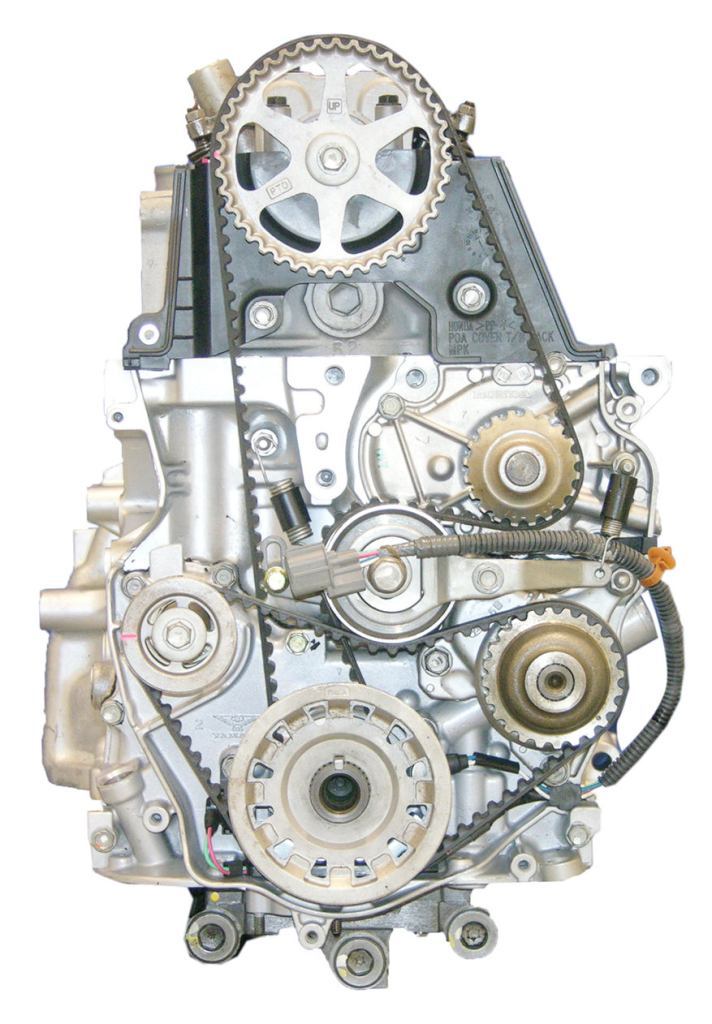
Engineered with a cast-iron cylinder block and an aluminum alloy cylinder head, the F22B1 features a Single Overhead Camshaft (SOHC) valvetrain. Its defining characteristic is the Honda VTEC (Variable Valve Timing and Lift Electronic Control) system, specifically the VTEC-E variant, which optimizes fuel economy and emissions at lower RPMs while providing increased power at higher RPMs. Fuel delivery is managed by multi-point electronic fuel injection, ensuring precise fuel metering and combustion efficiency across various operating conditions.
This specific F22B1 engine variant was primarily deployed in the 1994-1997 Honda Accord EX, LX, and SE trims in the North American market. It also powered the first-generation 1997 Acura CL 2.2, serving as the base engine for the sport coupe and contributing to its reputation for smooth, dependable performance and respectable fuel economy.
Technical Specifications
| Specification | Value |
|---|---|
| Displacement (cc) | 2156 |
| Max Power (hp (kW) @ RPM) | 145 (108) @ 5500 |
| Max Torque (Nm (kg*m) @ RPM) | 194 (19.8) @ 4500 |
| Fuel Type | Unleaded Gasoline (87+ RON) |
| Fuel Consumption (l/100 km) | ~9.5 (Combined, vehicle dependent) |
| Engine Type | Inline 4-Cylinder, SOHC VTEC |
| Compression Ratio | 8.8:1 |
| Cylinder Bore (mm) | 85 |
| Piston Stroke (mm) | 95 |
| Valvetrain | SOHC VTEC |
| Valves per Cylinder | 4 |
| Additional Info | VTEC-E (Economy-focused VTEC) |
Common Problems & Reliability
The F22B1 is highly regarded for its exceptional reliability, often reaching mileage exceeding 200,000 to 250,000 miles (320,000-400,000 km) with proper maintenance. Common issues tend to be age-related rather than fundamental design flaws. Minor oil leaks from the valve cover gasket, distributor O-ring, and VTEC solenoid gasket are frequently observed. The distributor itself can occasionally fail due to internal electrical component wear. Additionally, the Exhaust Gas Recirculation (EGR) system, particularly the port and valve, can accumulate carbon deposits, leading to rough idle or misfires if not cleaned periodically. These issues are generally manageable and do not typically lead to catastrophic engine failure.
Maintenance Tips & Service Schedule
Consistent maintenance is paramount for the longevity of the F22B1. Engine oil should be replaced every 5,000-7,500 miles (8,000-12,000 km) using 5W-30 or 10W-30 viscosity oil. Spark plugs typically require replacement every 60,000-100,000 miles (100,000-160,000 km). A critical maintenance item is the timing belt service, which includes replacing the timing belt, water pump, and tensioner. This service must be performed every 60,000-90,000 miles (100,000-145,000 km) or every 7 years, whichever comes first, to prevent catastrophic engine damage. Coolant flushes are recommended every 30,000-60,000 miles (50,000-100,000 km) or every 2-3 years.
Conclusion
The Acura F22B1 engine stands as a testament to Honda’s engineering prowess, offering a blend of durability, fuel efficiency, and adequate power. Its proven track record of reliability, coupled with relatively straightforward maintenance requirements, makes it a safe and dependable choice for prospective used vehicle buyers. Provided the engine has a history of consistent and proper maintenance, it represents a robust and long-lasting powertrain option.