
Many of the company’s flagship vehicles, including the Bronco, Edge, Explorer, and F-Series pickups, are equipped with the Ford Nano engine line, which has been manufactured at the Lima facility in Ohio since 2014. These turbo engines come in two generations with combined and direct fuel injection.
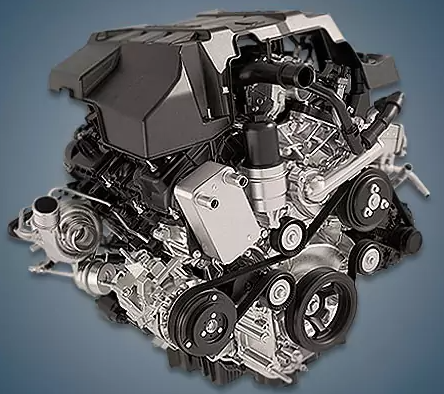
The first Nano series twin-turbo units were displayed at the Detroit show in 2014. This is a contemporary 2.7-liter V6 engine with a 60° cylinder angle, a unique two-section cylinder block made of aluminum and cast iron, two aluminum DOHC cylinder heads without hydraulic compensators, a timing chain drive, a direct fuel injection system, and a unique Ti-VCT type variable valve timing system. The boost is produced by either Honeywell or BorgWarner turbochargers, depending on the model.
A 3.0-liter version of this twin-turbo power unit with a larger displacement and a cylinder block made entirely of aluminum was released in 2016. For the second generation Lincoln Aviator, this engine is also available in a potent plug-in hybrid version.
The second generation 2.7 EcoBoost debuted in 2017 and was made available concurrently with the first. Apart from a few minor modifications, like an upgraded timing drive or a new oil pump, the unit has a combined injection system, which means it has two rows of injectors.
Ford Nano engine modifications
This line’s power units come in two different generations and two different volumes.
Specifications 1st gen 2.7 ECOBOOST
| Displacement, cc | 2694 |
| Fuel system | direct injection |
| Power output, hp | 315 – 335 |
| Torque output, Nm | 475 – 515 |
| Cylinder block | V6 |
| Block head | 24v |
| Cylinder bore, mm | 83 |
| Piston stroke, mm | 83 |
| Compression ratio | 10.3 |
| Euro standards | EURO 5/6 |
The engine was installed on:
- Ford Edge 2 (CD539) since 2014;
- Ford F-Series 13 (P552) in 2014 – 2017;
- Ford Fusion USA 2 (CD391) in 2016 – 2019;
- Lincoln Continental 10 (D544) in 2016 – 2020;
- Lincoln MKX 2 (U540) in 2015 – 2018;
- Lincoln Nautilus 1 (U540) since 2018.
Specifications 1st gen 3.0 ECOBOOST
| Displacement, cc | 2956 |
| Fuel system | direct injection |
| Power output, hp | 350 – 418 |
| Torque output, Nm | 515 – 597 |
| Cylinder block | V6 |
| Block head | 24v |
| Cylinder bore, mm | 85.4 |
| Piston stroke, mm | 86 |
| Compression ratio | 9.5 |
| Euro standards | EURO 5/6 |
For the Lincoln Aviator, a plug-in hybrid version of this engine with 494 horsepower and 854 Nm is available.
The engine was mounted on:
- Ford Bronco 6 (U725) since 2021;
- Ford Explorer 6 (U625) since 2019;
- Ford Ranger T6 2 (P703) since 2022;
- Lincoln Aviator 2 (U611) since 2019;
- Lincoln Continental 10 (D544) in 2016 – 2020;
- Lincoln MKZ 2 (CD533) in 2016 – 2020.
Specifications 2nd gen 2.7 ECOBOOST
| Displacement, cc | 2694 |
| Fuel system | combined injection |
| Power output, hp | 315 – 330 |
| Torque output, Nm | 542 – 563 |
| Cylinder block | V6 |
| Block head | 24v |
| Cylinder bore, mm | 83 |
| Piston stroke, mm | 83 |
| Compression ratio | 10.0 |
| Euro standards | EURO 6 |
The engine was installed on:
- Ford Bronco 6 (U725) since 2021;
- Ford F-Series 13 (P552) in 2017 – 2020; F-Series 14 (P702) since 2020;
- Ford Ranger T6 2 (P703) since 2023.
Ford Nano engines weigh 185 kg in the catalog.
Disadvantages of the Ford Nano engine
Carbon deposits on the valves are a problem that affects all engines with direct fuel injection in one way or another. These turbo units are particularly affected by this issue, as they are able to coke significantly on runs of up to 60,000 kilometers. Additionally, the cleaning process is highly costly. However, combined injection engines of the second generation do not experience these issues.
Prior to 2021, units were manufactured with faulty Silchrome Lite alloy valves, which frequently broke and fell into the cylinders with deadly results. In 2023, a massive campaign to replace over 700,000 engines was announced.
The short service life of spark plugs and ignition coils is also mentioned on specialized forums. Additionally, oil leaks from the plastic pan were frequent even in the initial years of production.