
Overview & Design Features
The Lexus 3GR-FE engine is a prominent member of Toyota’s GR engine family, a series of V-type six-cylinder gasoline engines developed for various Toyota and Lexus vehicles. Introduced in the early 2000s, the 3GR-FE features a 3.0-liter (2994 cc) displacement, configured as a 60-degree V6. This engine was primarily designed for the Asian market, particularly China, where it powered luxury sedans and SUVs, serving as a reliable and refined powertrain choice in its segment.
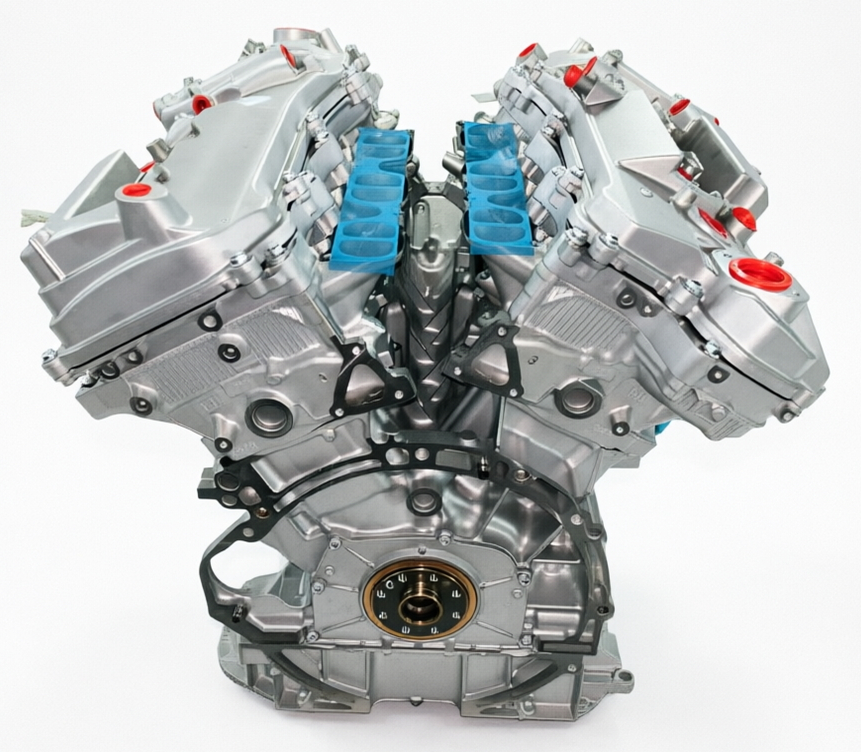
Engine construction utilizes a lightweight aluminum alloy cylinder block and cylinder heads, contributing to reduced overall vehicle weight and improved thermal management. The 3GR-FE incorporates Dual Variable Valve Timing with intelligence (Dual VVT-i) on both intake and exhaust camshafts, optimizing valve overlap and lift for enhanced torque across the RPM range and improved fuel efficiency. Fuel delivery is managed by Sequential Multiport Fuel Injection (SFI), ensuring precise fuel-air mixture control, while an electronic throttle control system provides smooth and responsive acceleration. The valvetrain features double overhead camshafts (DOHC) with four valves per cylinder.
The 3GR-FE engine found its primary applications in several Lexus and Toyota models. It was notably deployed in the Lexus GS 300 (GRS190/GRS195 chassis) for select markets, primarily China, from 2005 to 2011. It also powered the Lexus IS 300 (GSE22 chassis) in China and other Asian regions. Furthermore, the engine was utilized in the Toyota Crown (GRS182/GRS202 chassis) and Toyota Reiz (GRX122/GRX132 chassis, also known as Mark X) for the Chinese and Japanese domestic markets, providing a balance of performance and efficiency for these luxury and executive sedans.
Technical Specifications
| Specification | Value |
|---|---|
| Displacement (cc) | 2994 |
| Max Power (hp (kW) @ RPM) | 228 (168) @ 6200 |
| Max Torque (Nm (kg*m) @ RPM) | 300 (30.6) @ 4400 |
| Fuel Type | Gasoline (RON 95 recommended) |
| Fuel Consumption (l/100 km) | 9.0 – 10.5 (combined, vehicle-dependent) |
| Engine Type | V6, DOHC, 24-valve |
| Compression Ratio | 10.5:1 |
| Cylinder Bore (mm) | 87.5 |
| Piston Stroke (mm) | 82.0 |
| Valvetrain | DOHC with Dual VVT-i |
| Valves per Cylinder | 4 |
| Additional Info | Electronic throttle control, Sequential Multiport Fuel Injection (SFI) |
Common Problems & Reliability
The Lexus 3GR-FE is generally regarded as a highly reliable engine, benefiting from Toyota’s robust engineering principles. However, like any internal combustion engine, it can exhibit certain issues over extended use. One common concern involves the variable valve timing (VVT-i) actuators, which can occasionally develop a rattling noise during cold starts, particularly at higher mileages. This is often attributable to oil pressure issues within the actuator, which typically do not lead to catastrophic failure but indicate wear. Another area of attention is potential oil seepage from the valve covers or front timing cover gaskets, which can harden and lose sealing integrity over time, leading to minor leaks. While the 3GR-FE uses port injection, some instances of intake manifold carbon buildup have been reported, primarily due to the positive crankcase ventilation (PCV) system recirculating oil vapor into the intake tract.
Water pump failures are also noted at higher mileage intervals, manifesting as coolant leaks or bearing noise, necessitating replacement. The robust timing chain system is typically maintenance-free for the life of the engine under proper oil change schedules. With diligent maintenance, including timely fluid changes and inspections, the 3GR-FE engine is well-engineered to achieve a service life exceeding 300,000 kilometers (approximately 185,000 miles) before requiring significant internal overhaul.
Maintenance Tips & Service Schedule
Optimal longevity and performance from the 3GR-FE engine are achieved through adherence to a consistent maintenance regimen. Engine oil and filter replacement should occur every 8,000 to 10,000 kilometers (5,000-6,000 miles) or every 6 months, whichever comes first, utilizing a high-quality synthetic oil with a viscosity rating of 5W-30 or 0W-30, conforming to API SN or newer specifications. Regular oil changes are crucial for the health of the VVT-i system and timing chain. Spark plugs (iridium-tipped) are designed for extended service intervals and typically require replacement every 100,000 kilometers (60,000 miles).
The engine’s cooling system requires attention; coolant should be flushed and refilled with Toyota’s Super Long Life Coolant (SLLC) or an equivalent long-life ethylene-glycol coolant every 150,000 kilometers (90,000 miles) or every 10 years, then every 80,000 kilometers (50,000 miles) or 5 years thereafter. Air filters (engine and cabin) should be inspected every 20,000 kilometers and replaced as needed, typically every 40,000 kilometers. Drive belts should be checked for cracks or wear every 40,000 kilometers. A comprehensive inspection of the engine for any fluid leaks, unusual noises, or warning lights should be performed at every service interval.
Conclusion
The Lexus 3GR-FE engine stands as a testament to Toyota’s reputation for engineering dependable and refined powertrains. Its robust design, combined with features like Dual VVT-i and an aluminum construction, provides a smooth and efficient driving experience. While minor issues like VVT-i actuator noise or gasket seepage may arise with age, these are generally manageable and do not detract from its fundamental reliability. For a used vehicle buyer, a car equipped with a 3GR-FE engine represents a safe and highly reliable choice, provided the vehicle has a documented history of consistent and proper maintenance.