
Overview & Design Features
The Lexus A25B-FXS is a highly efficient 2.5-liter inline-four gasoline engine, developed by Toyota Motor Corporation as part of its Dynamic Force Engine family. This specific variant is engineered primarily for hybrid electric vehicle (HEV) applications within the premium Lexus lineup and its Toyota counterparts. Introduced as a core component of the Toyota Hybrid System II (THS II), it represents a significant advancement in internal combustion engine technology, emphasizing high thermal efficiency, reduced emissions, and robust performance within a hybrid powertrain context. Its design priorities focus on integrating seamlessly with electric motors and battery systems to deliver optimal fuel economy and responsive power delivery.
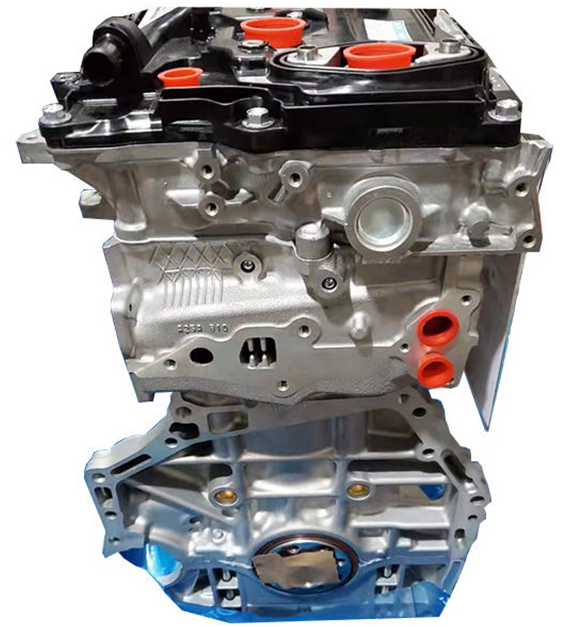
At its core, the A25B-FXS features an aluminum cylinder block and cylinder head, contributing to weight reduction and improved heat dissipation. A key technological highlight is the advanced D-4S fuel injection system, which combines both direct fuel injection (DI) and port fuel injection (PFI) to optimize combustion efficiency across various engine speeds and loads, simultaneously mitigating potential carbon buildup issues often associated with solely direct-injected engines. The engine operates on an Atkinson combustion cycle, characterized by a shorter compression stroke and a longer expansion stroke, achieved through intelligent variable valve timing. This cycle significantly enhances thermal efficiency, pushing it beyond 40%, particularly beneficial in hybrid applications where the engine can operate within its most efficient RPM range for extended periods. Variable Valve Timing intelligent electric (VVT-iE) on the intake camshaft and VVT-i on the exhaust camshaft further fine-tune valve overlap and lift for optimal performance and efficiency.
The A25B-FXS engine has been widely deployed across a range of Lexus and Toyota vehicles known for their hybrid efficiency. Notable applications include the Lexus ES 300h (2019-Present), the Lexus NX 350h (2022-Present), and the Lexus RX 350h (2023-Present). It is also found in several Toyota models such as the RAV4 Hybrid, Camry Hybrid, and Sienna Hybrid, often with slightly different power tuning or designation (e.g., A25A-FXS or A25A-FKS for non-hybrid variants). This engine variant is specifically tailored for front-wheel drive (FWD) and all-wheel drive (AWD) hybrid configurations, proving its versatility across different vehicle platforms.
Technical Specifications
| Specification | Value |
|---|---|
| Displacement (cc) | 2487 |
| Max Power (hp (kW) @ RPM) | 176 hp (131 kW) @ 5700 rpm (Engine only) |
| Max Torque (Nm (kg*m) @ RPM) | 221 Nm (22.5 kg*m) @ 3600-5200 rpm (Engine only) |
| Fuel Type | Gasoline (Unleaded, minimum 87 RON / 91 RON recommended) |
| Fuel Consumption (l/100 km) | 4.7 – 5.0 (Combined, e.g., Lexus ES 300h) |
| Engine Type | Inline 4, Naturally Aspirated, Atkinson Cycle, Hybrid-specific |
| Compression Ratio | 14.0:1 |
| Cylinder Bore (mm) | 87.5 |
| Piston Stroke (mm) | 103.4 |
| Valvetrain | DOHC, 16 Valves, VVT-iE (Intake), VVT-i (Exhaust) |
| Valves per Cylinder | 4 |
| Additional Info | Part of Toyota Hybrid System II (THS II), D-4S Dual Injection System, High Thermal Efficiency |
Common Problems & Reliability
The Lexus A25B-FXS engine benefits from Toyota’s reputation for exceptional reliability and the robust design principles of the Dynamic Force Engine family. As a relatively modern engine, widespread chronic issues are not yet evident. However, like most direct-injected engines, even with the D-4S dual injection system, there is a theoretical potential for carbon buildup on intake valves over very high mileages, although the port injectors help to wash valves and significantly mitigate this issue compared to DI-only systems. Regular use of quality fuel and adherence to maintenance schedules can minimize this. Another area for consideration, though not a common failure point for this specific engine, is the longevity of the 12V auxiliary battery, which, in hybrid vehicles, can sometimes show signs of weakness sooner than in conventional vehicles due to its role in the complex electrical system, although this is not an internal engine problem.
A specific mechanical weak point is not widely reported for the A25B-FXS. Its design, including a timing chain intended for the life of the vehicle, contributes to high mechanical integrity. Under proper care and adherence to manufacturer-recommended service intervals, the A25B-FXS engine is designed for an expected service life exceeding 300,000 kilometers (180,000 miles) before requiring any major internal overhaul. The hybrid system’s operation, which frequently cycles the engine on and off, can even reduce wear by minimizing prolonged operation at high loads or RPMs.
Maintenance Tips & Service Schedule
Proactive and precise maintenance is crucial for maximizing the longevity and efficiency of the A25B-FXS engine. Adherence to the manufacturer’s specified service schedule is paramount.
- Engine Oil & Filter Change: This is the most critical maintenance item. Use a full synthetic engine oil with a viscosity grade of 0W-16 or 0W-20, meeting API SN Plus or SP standards. The recommended interval is every 10,000 miles (16,000 km) or 12 months, whichever comes first. Regular oil analysis for high-mileage vehicles can provide insights into engine health.
- Spark Plugs: The A25B-FXS utilizes long-life iridium-tipped spark plugs. Replacement is typically recommended every 120,000 miles (192,000 km). Using only OEM-specified spark plugs is advised to ensure optimal combustion and engine performance.
- Engine Air Filter: Inspect every 15,000 miles (24,000 km) and replace as needed, or at least every 30,000 miles (48,000 km). A clean air filter is vital for proper air-fuel mixture and engine protection.
- Coolant Flush: The engine uses Toyota Super Long Life Coolant (SLLC). The initial replacement interval is typically at 150,000 miles (240,000 km), followed by subsequent replacements every 100,000 miles (160,000 km).
- Timing Chain: The A25B-FXS is equipped with a timing chain designed to last the lifetime of the engine under normal operating conditions and proper oil change intervals. No scheduled replacement is typically required.
- Hybrid System Maintenance: While not strictly engine-specific, regular inspection of the hybrid system’s components, including the transaxle fluid (notably the specific WS fluid for eCVT), cooling system for the hybrid battery, and inverter coolant, is critical for overall powertrain health.
Conclusion
The Lexus A25B-FXS engine stands out as an exceptionally reliable and highly efficient powertrain, especially when integrated into its intended hybrid applications. Its advanced engineering, including the D-4S injection and Atkinson cycle operation, delivers an impressive balance of fuel economy and performance. For a used vehicle buyer, an A25B-FXS equipped Lexus or Toyota represents a safe and reliable choice, provided the vehicle has a documented history of consistent and proper maintenance. Its robust design and Toyota’s renowned manufacturing quality mean that major mechanical issues are rare, making it a dependable engine for long-term ownership with low running costs.