
Overview & Design Features
The GM Chevrolet Small-Block 350 is a legendary internal combustion engine, primarily produced by General Motors for its Chevrolet and GMC divisions, alongside other GM marques. Introduced in 1967, this 350 cubic inch (5.7-liter) V8 engine quickly became a cornerstone of the automotive industry, celebrated for its robust design, versatility, and widespread adoption across a multitude of vehicle types. Its historical significance is unparalleled, serving as the backbone for countless cars, trucks, and SUVs, and cementing its status as one of the most prolific and enduring engines ever manufactured.
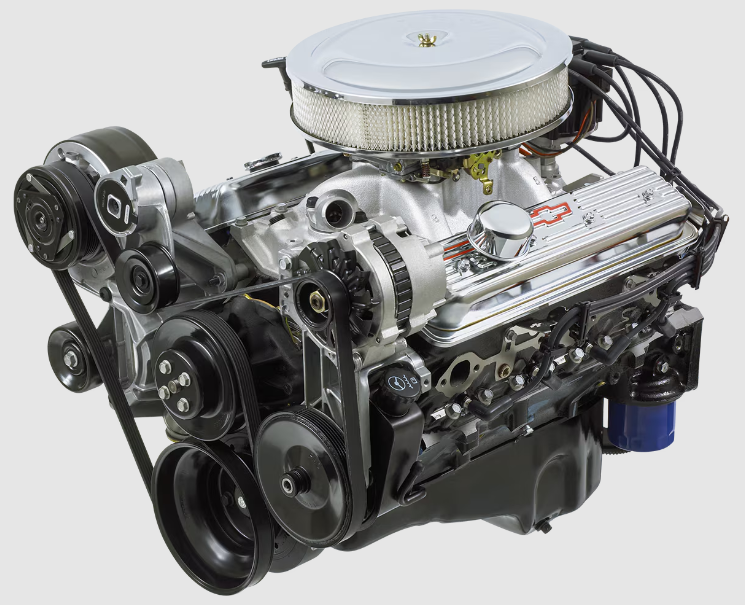
Engineering highlights of the 350 Small-Block include its conventional overhead valve (OHV) pushrod architecture, typically featuring a durable cast iron engine block. Early versions utilized cast iron cylinder heads and carbureted fuel delivery. As production evolved through the decades, advancements included the adoption of Throttle Body Injection (TBI) and later Sequential Port Fuel Injection (SFI) systems, coupled with improved cylinder head designs, such as the Vortec series, which introduced enhanced airflow characteristics. While a traditional pushrod design, some later iterations incorporated hydraulic roller lifters for improved efficiency and reduced friction, though variable valve timing mechanisms were not characteristic of this engine family.
The GM Chevrolet Small-Block 350 was deployed across an exceptionally broad range of vehicles. Its applications spanned from performance cars like the Chevrolet Camaro and Corvette, and Pontiac Firebird/Trans Am, to full-size sedans such as the Chevrolet Impala and Caprice. Crucially, it powered countless trucks and SUVs, including the Chevrolet C/K series, Suburban, Tahoe, Blazer, and GMC Sierra, Yukon, and Jimmy, from its inception through the early 2000s, often serving as the primary V8 engine option across various trims and duty cycles.
Technical Specifications
| Specification | Value (Example: Vortec L31 5.7L V8) |
|---|---|
| Displacement (cc) | 5733 cc (350 cu in) |
| Max Power (hp (kW) @ RPM) | 255 hp (190 kW) @ 4600 RPM |
| Max Torque (Nm (kg*m) @ RPM) | 441 Nm (45 kg*m) @ 2800 RPM |
| Fuel Type | Gasoline (Regular Unleaded, 87 Octane) |
| Fuel Consumption (l/100 km) | Highly variable depending on application and driving conditions (e.g., 15-20 l/100 km combined) |
| Engine Type | V8, OHV (Overhead Valve), Pushrod |
| Compression Ratio | 9.1:1 – 9.3:1 |
| Cylinder Bore (mm) | 101.6 mm (4.00 inches) |
| Piston Stroke (mm) | 88.4 mm (3.48 inches) |
| Valvetrain | Hydraulic Roller Lifters, Two Valves per Cylinder |
| Valves per Cylinder | 2 |
| Additional Info | Cast iron block and cylinder heads; extensive aftermarket support; renowned for durability. |
Common Problems & Reliability
The Chevrolet Small-Block 350 is generally revered for its exceptional durability and longevity, yet certain common issues can arise, particularly in high-mileage examples. A prevalent concern is oil leaks, frequently originating from the rear main seal, valve covers, and oil pan gaskets due to age-related material degradation and heat cycling. While typically not catastrophic, these leaks require attention to prevent oil loss and potential mess.
Another common issue, particularly with later Vortec (L31) versions, involves intake manifold gasket leaks. These leaks can manifest externally as coolant or oil seepage, or internally, potentially leading to coolant contamination in the oil or misfires due to vacuum leaks. Prompt diagnosis and repair are essential to prevent further engine damage. For carbureted and early TBI variants, wear on the distributor gear, cap, and rotor can lead to ignition timing issues or misfires, necessitating periodic inspection and replacement.
Under proper and consistent maintenance, the GM Chevrolet Small-Block 350 engine is renowned for its remarkable service life. Many units are capable of exceeding 200,000 to 300,000 miles (320,000 to 480,000 km) before requiring a major overhaul. Instances of engines lasting significantly longer, particularly with rebuilds, are not uncommon, underscoring its inherent robustness.
Maintenance Tips & Service Schedule
Optimal longevity and performance for the GM Chevrolet Small-Block 350 hinge on adherence to a consistent maintenance regimen. Regular engine oil and filter changes are paramount; it is recommended every 3,000-5,000 miles (5,000-8,000 km). Recommended oil viscosities typically range from 5W-30 to 10W-30, depending on climate and engine wear, utilizing conventional or synthetic blend oils meeting API specifications.
Spark plugs should be inspected and replaced approximately every 30,000-50,000 miles (48,000-80,000 km) to maintain combustion efficiency. A complete coolant flush and fill is advisable every 2-3 years or 30,000-50,000 miles (48,000-80,000 km), using the manufacturer-specified coolant type to prevent corrosion and maintain cooling system effectiveness. The engine’s timing chain is designed for the life of the engine and typically does not require scheduled replacement under normal operating conditions, but should be inspected if engine noise or performance issues arise. Fuel filter replacement every 15,000-30,000 miles (24,000-48,000 km) helps ensure clean fuel delivery and protects the fuel system components.
Additionally, diligent monitoring of fluid levels, addressing any oil or coolant leaks promptly, and using quality replacement parts are critical for preserving the engine’s long-term reliability.
Conclusion
The GM Chevrolet Small-Block 350 represents an exceptionally reliable and durable choice for a used vehicle buyer. Its straightforward design, proven track record, and widespread parts availability make it an economical and maintainable engine. Despite its age, a well-maintained 350 offers robust performance and significant longevity. Buyers seeking a dependable V8 with extensive aftermarket support and readily available service knowledge will find the Small-Block 350 a safe and solid investment, provided its maintenance history is sound.