
Overview & Design Features
The Chery 4G64 engine represents a foundational powerplant in the early stages of Chery Automobile’s production lineage. Originating from the robust and widely utilized Mitsubishi 4G64 (part of the Sirius engine family), this particular iteration was manufactured by Chery under license or through reverse engineering, allowing the Chinese automaker to rapidly expand its vehicle offerings. With a displacement of 2.4 liters (2351 cubic centimeters) and an inline four-cylinder configuration, the 4G64 became a workhorse for various Chery models, known for its straightforward design and respectable torque output.
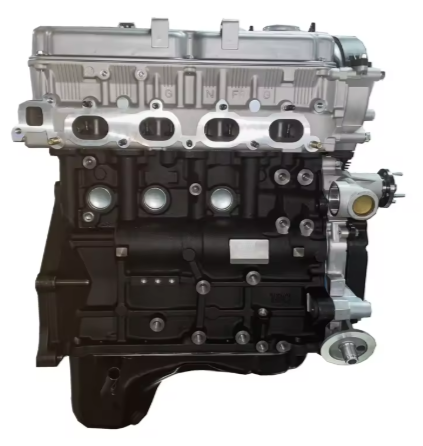
From an engineering perspective, the Chery 4G64 features a durable cast-iron cylinder block, which contributes to its longevity and structural rigidity. The cylinder head is typically constructed from aluminum alloy, promoting better heat dissipation while keeping overall engine weight manageable for its class. Fuel delivery is handled by a multi-point fuel injection (MPI) system, a proven and reliable technology that ensures efficient fuel atomization across cylinders. The valvetrain design is a Single Overhead Camshaft (SOHC) configuration with four valves per cylinder, totaling 16 valves, actuated via a timing belt. This SOHC 16V setup balances performance with relative simplicity, eschewing more complex variable valve timing technologies for cost-effectiveness and ease of maintenance.
The Chery 4G64 engine was primarily deployed in a range of Chery’s early passenger vehicles and light commercial vans, particularly those requiring more power than smaller displacement options. Key models include the Chery Amulet (often marketed as Cowin or Flagcloud depending on the region), the Chery Eastar (Oriental Son), and some variants of the Chery Tiggo SUV in its initial production years. It also powered various Chery-branded vans and pickup trucks, typically spanning production years from the early 2000s through to the mid-2010s, before Chery fully transitioned to its indigenous ACTECO engine family across its full model range.
Technical Specifications
| Specification | Value |
|---|---|
| Displacement (cc) | 2351 |
| Max Power (hp (kW) @ RPM) | 129 hp (96 kW) @ 5250 RPM |
| Max Torque (Nm (kg*m) @ RPM) | 190 Nm (19.4 kg*m) @ 3000 RPM |
| Fuel Type | Gasoline (RON 92 minimum) |
| Fuel Consumption (l/100 km) | Approximately 9.5 – 11.5 (combined cycle, varies by vehicle) |
| Engine Type | Inline-4, SOHC |
| Compression Ratio | 9.0:1 – 9.3:1 |
| Cylinder Bore (mm) | 86.5 |
| Piston Stroke (mm) | 100.0 |
| Valvetrain | SOHC, Timing Belt |
| Valves per Cylinder | 4 (16 valves total) |
| Additional Info | Derived from Mitsubishi 4G64 (Sirius/Orion series) |
Common Problems & Reliability
The Chery 4G64, inheriting much of its design from the Mitsubishi 4G64, is generally considered a robust and relatively simple engine. However, specific areas warrant attention for maintaining its reliability. One prevalent issue is related to the timing belt system. Due to its interference design, failure to replace the timing belt, tensioners, and idlers at the manufacturer-recommended intervals can lead to catastrophic engine damage (bent valves, piston damage) if the belt breaks. Another common concern on higher mileage units involves oil leaks, particularly from the valve cover gasket, oil pan gasket, and crankshaft/camshaft seals. These leaks are typically minor but can accumulate over time if neglected. Lastly, the hydraulic valve lifters can become noisy, particularly after prolonged periods of infrequent oil changes or when using incorrect oil viscosity, manifesting as a ticking sound. While often not immediately critical, it indicates wear or sludge buildup requiring attention.
Under conditions of diligent maintenance, including regular oil changes and timely replacement of wear items, the Chery 4G64 engine exhibits a realistic expected service life of 200,000 to 250,000 kilometers before requiring a major overhaul. Instances of units exceeding 300,000 kilometers are not uncommon when properly cared for.
Maintenance Tips & Service Schedule
Maintaining the Chery 4G64 engine primarily revolves around adherence to a regular schedule for consumable replacements and fluid changes to maximize its service life and reliability. Engine oil and filter changes are critical; a conventional or semi-synthetic 10W-40 or 5W-40 oil meeting API SL or SN specifications is recommended every 7,500 to 10,000 kilometers, or every six months, whichever comes first, especially in older vehicles. Spark plugs (standard copper-nickel type) should be inspected and replaced every 30,000 to 40,000 kilometers to ensure optimal combustion and fuel efficiency.
The timing belt system is the most critical scheduled maintenance item. It requires replacement, along with the tensioner, idler pulleys, and often the water pump, every 60,000 to 90,000 kilometers or every 4-5 years, depending on the manufacturer’s specific recommendation for the vehicle model. Coolant flushes and refills with a suitable long-life ethylene glycol-based coolant should be performed every 40,000 to 60,000 kilometers or every 2-3 years. Air filters and fuel filters should be checked and replaced annually or every 20,000 kilometers to maintain proper engine breathing and fuel system cleanliness.
Conclusion
The Chery 4G64 engine, with its origins in the dependable Mitsubishi 4G64 design, generally represents a safe and reliable choice for a used vehicle buyer, provided a thorough pre-purchase inspection confirms a history of diligent maintenance. Its straightforward SOHC 16V design and multi-point fuel injection contribute to its mechanical robustness and ease of repair, as replacement parts are widely available and often interchangeable with its Mitsubishi counterparts. While not a powerhouse of modern performance, its ample displacement provides sufficient torque for daily driving and light hauling. Buyers should prioritize vehicles with documented timing belt replacements and address any minor oil leaks proactively. With proper ongoing care, this engine can deliver many more kilometers of dependable service.