
Overview & Design Features
The Chery 4G64S4M engine represents a significant component in the early automotive offerings from Chinese manufacturer Chery Automobile. This engine is fundamentally a licensed derivative of the venerable Mitsubishi 4G64, an inline-four gasoline engine known for its robust construction and widespread application. With a displacement of 2.4 liters, the 4G64S4M played a crucial role in powering Chery’s passenger vehicles, offering a balance of performance and reliability through a time-tested design. Its integration allowed Chery to leverage proven engineering, providing a familiar and dependable powertrain for its burgeoning product line.
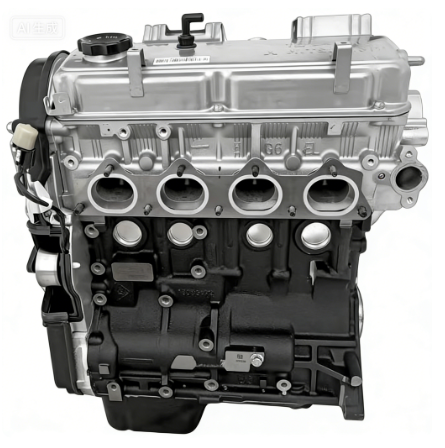
From an engineering perspective, the 4G64S4M features a durable cast-iron cylinder block, which contributes to its longevity and resistance to heat-induced distortion. The cylinder head is constructed from aluminum, optimizing weight and thermal dissipation. It employs a Single Overhead Camshaft (SOHC) valvetrain with 16 valves, ensuring efficient airflow for both intake and exhaust. Fuel delivery is handled by a multi-point fuel injection (MPI) system, a common and reliable technology for its era, which precisely meters fuel into each intake port. Notably, this version of the engine typically operates without advanced variable valve timing (VVT) systems, reflecting its design lineage focused on simplicity and proven mechanical integrity.
The Chery 4G64S4M engine was primarily deployed in a range of Chery’s mid-size sedans and early SUVs during the 2000s. Key applications included the Chery Eastar (also known as Oriental Son) from approximately 2003 to 2010, serving as a popular choice for its larger passenger vehicles. It also powered certain variants of the Chery Cowin series and was notably featured in the Chery V5 (Eastar Cross) and some early iterations of the Chery Tiggo, providing a dependable powertrain for these utility and crossover models across various markets.
Technical Specifications
| Specification | Value |
|---|---|
| Displacement (cc) | 2351 |
| Max Power (hp (kW) @ RPM) | 127 (93) @ 5250 |
| Max Torque (Nm (kg*m) @ RPM) | 198 (20.2) @ 3000-4000 |
| Fuel Type | Gasoline (RON 92 minimum) |
| Fuel Consumption (l/100 km) | 9.5 – 11.0 (Combined Cycle, dependent on vehicle) |
| Engine Type | Naturally Aspirated, Inline-4, SOHC |
| Compression Ratio | 9.0:1 – 9.5:1 |
| Cylinder Bore (mm) | 86.5 |
| Piston Stroke (mm) | 100.0 |
| Valvetrain | SOHC, Belt-driven |
| Valves per Cylinder | 4 (16 valves total) |
| Additional Info | Licensed Mitsubishi 4G64 derivative, Multi-Point Fuel Injection (MPI) |
Common Problems & Reliability
The Chery 4G64S4M, owing to its Mitsubishi 4G64 heritage, generally exhibits good reliability. However, several common issues can arise, primarily due to age, mileage, or neglected maintenance. Oil leaks are a frequent concern, particularly from the valve cover gasket, front crankshaft seal, and rear main seal. These leaks, if left unaddressed, can lead to reduced oil levels and potential damage. The engine’s use of a timing belt rather than a chain is a critical point; failure to replace the timing belt at specified intervals will inevitably lead to catastrophic engine damage, as this is an interference engine design. Lastly, age-related degradation of ignition system components such as spark plug wires, ignition coils, and the distributor (if fitted) can lead to misfires, rough idling, and reduced power output. Regular inspection and timely replacement of these consumable parts are essential.
Under proper care and adherence to the manufacturer’s maintenance schedule, the Chery 4G64S4M engine has a realistic expected service life exceeding 250,000 to 300,000 kilometers (155,000 to 185,000 miles) before requiring a major overhaul. Its conventional design and robust construction contribute significantly to this longevity, making it a durable powerplant when maintained diligently.
Maintenance Tips & Service Schedule
Proactive maintenance is key to maximizing the lifespan and reliability of the Chery 4G64S4M engine. An engineering-backed approach to service intervals is critical. Engine oil and filter changes should be performed every 8,000 to 10,000 kilometers (or every 6-12 months, whichever comes first), utilizing a high-quality synthetic or semi-synthetic oil with a viscosity of 5W-30 or 10W-40, compliant with API SN/SM standards. Spark plugs, depending on their type, should be replaced every 40,000 kilometers for copper plugs or 80,000-100,000 kilometers for iridium or platinum plugs.
The timing belt is the most crucial maintenance item and must be replaced precisely every 80,000 to 100,000 kilometers, along with the tensioners, idler pulleys, and preferably the water pump, as these components share a similar service life and labor costs are minimized during a single intervention. Coolant flushes and replacement with a suitable ethylene glycol-based antifreeze should occur every 40,000-60,000 kilometers or every 2-3 years. Air and fuel filters require inspection at every service and replacement generally every 20,000-40,000 kilometers to ensure optimal fuel economy and engine performance.
Conclusion
The Chery 4G64S4M engine, with its foundation in the proven Mitsubishi 4G64 design, presents itself as a generally robust and reliable powerplant. Its straightforward architecture, absence of complex variable valve timing systems, and the use of a durable cast-iron block contribute to its longevity and relative ease of maintenance. For a used vehicle buyer, this engine can be considered a safe and dependable choice, provided that its critical maintenance history, particularly the timing belt replacement, is well-documented and up-to-date. Vigilance regarding oil leaks and routine adherence to service schedules will ensure this engine continues to perform reliably for many years and kilometers, embodying the endurance of its design heritage.