
Overview & Design Features
The Chery SQR480 is a 1.6-liter, naturally aspirated inline four-cylinder gasoline engine that played a foundational role in the early global expansion of the Chinese automaker Chery Automobile. Introduced in the late 1990s, this powerplant was manufactured using production tooling purchased from Ford, which originally utilized the design for its European Escort and Fiesta models (the Ford CVH engine family). Consequently, the SQR480 served as the mechanical backbone for Chery’s entry into the passenger car market, establishing a reputation for simple construction and affordable maintenance.
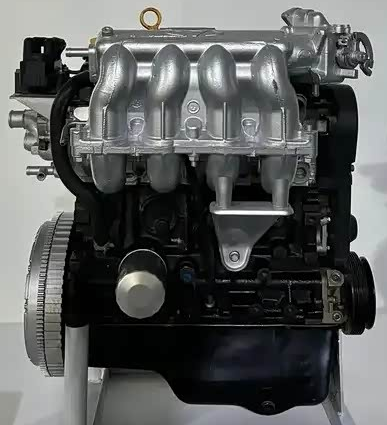
Engineering features of the SQR480 reflect its late 20th-century origins. The engine utilizes a heavy-duty cast iron cylinder block paired with a lightweight aluminum alloy cylinder head. It features a Single Overhead Camshaft (SOHC) configuration operating two valves per cylinder. Fuel delivery is managed by a multi-point electronic fuel injection (MPFI) system, which was highly reliable for its time but lacks modern direct-injection technology. The valvetrain operates without variable valve timing (VVT), relying on a straightforward timing belt drive mechanism that emphasizes mechanical simplicity over high-RPM efficiency.
The SQR480 engine was primarily deployed in Chery’s early sedan and hatchback lineups. It served as the primary powertrain for the Chery A11 (also known as the Fengyun or Windcloud) from 1999 to 2006, and its successor, the Chery A15 (Amulet or Flagcloud), from 2003 to 2010. Additionally, variations of this engine were used in light commercial vehicles and utility models sold across Asian, Eastern European, and South American markets during the same era.
Technical Specifications
| Displacement (cc) | 1596 cc |
| Max Power (hp (kW) @ RPM) | 87 hp (65 kW) @ 5500 RPM |
| Max Torque (Nm (kg*m) @ RPM) | 132 Nm (13.5 kg*m) @ 3000 RPM |
| Fuel Type | Gasoline (92 RON / Regular unleaded) |
| Fuel Consumption (l/100 km) | Approximately 7.5 – 8.5 liters per 100 km (combined cycle) |
| Engine Type | Inline 4-cylinder, SOHC 8V, naturally aspirated |
| Compression Ratio | 9.5:1 |
| Cylinder Bore (mm) | 80.0 mm |
| Piston Stroke (mm) | 79.5 mm |
| Valvetrain | SOHC, belt-driven |
| Valves per Cylinder | 2 |
| Additional Info | Derived from the Ford CVH engine architecture; features hydraulic valve lifters. |
Common Problems & Reliability
While the SQR480 is appreciated for its basic design, several mechanical weak points have been documented over high mileages. A primary concern involves the timing belt system. Because this engine is an interference-type design, a sudden timing belt failure can cause catastrophic contact between the pistons and valves, leading to severe internal engine damage. Additionally, the hydraulic lifters are prone to clogging, resulting in a distinct tapping noise from the cylinder head, especially during cold starts or when low-quality engine oil is used.
Oil consumption and fluid leaks are also common as the engine ages. Gaskets and oil seals, particularly the valve cover gasket and the front and rear crankshaft seals, tend to degrade, leading to external oil leaks. Despite these vulnerabilities, the cast iron cylinder block is highly robust. With meticulous maintenance and prompt component replacements, the realistic expected service life of the SQR480 before requiring a major overhaul is approximately 200,000 to 250,000 kilometers.
Maintenance Tips & Service Schedule
To preserve the operational integrity of the SQR480, strict adherence to a preventative maintenance schedule is essential. Lubrication quality is paramount; engine oil changes must be performed every 8,000 to 10,000 kilometers. The manufacturer recommends using high-quality semi-synthetic or synthetic oil with a viscosity rating of 10W-40 or 5W-40, depending on the climate. The oil filter must be replaced concurrently with every oil change.
- Timing Belt and Tensioner: Must be inspected regularly and replaced strictly every 60,000 kilometers to prevent catastrophic engine failure.
- Spark Plugs: Standard copper-core spark plugs should be replaced every 30,000 kilometers to maintain optimal ignition efficiency.
- Cooling System: The coolant must be flushed and replaced every 40,000 kilometers or every two years using a high-quality ethylene glycol mixture to prevent corrosion in the aluminum cylinder head.
- Valve Lifter Care: Keeping the lubrication system clean via regular flushes can mitigate hydraulic lifter noise and extend valvetrain longevity.
Conclusion
The Chery SQR480 engine stands as a rugged, utilitarian power unit from a bygone era of automotive engineering. For a used vehicle buyer, it represents a double-edged sword. While its mechanical simplicity means replacement parts are inexpensive and repairs can be performed by almost any general technician, it lacks modern fuel economy, refinement, and environmental standards. If found in a vehicle with a fully documented service history showing timely timing belt and oil changes, the SQR480 remains a viable, low-cost option for budget-conscious buyers seeking reliable, basic transportation.