
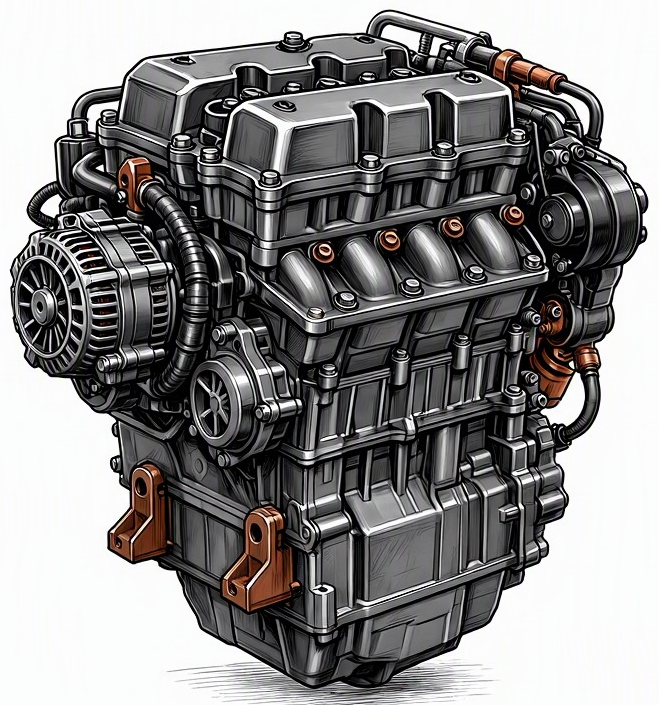
Problem Overview & Engine Systems
Intake air temperature (IAT) sensor heat soak is a specific thermal phenomenon where the IAT sensor reports an artificially elevated air temperature to the Engine Control Unit (ECU) due to radiative and convective heat transfer from surrounding hot engine components, rather than accurately reflecting the true temperature of the incoming ambient air charge. This often occurs after the engine has been run and then shut off for a short period, or during prolonged idling and stop-and-go traffic, allowing residual engine heat to saturate the sensor. The ECU relies on accurate IAT data, alongside Manifold Absolute Pressure (MAP) or Mass Air Flow (MAF) sensor data, to calculate air density. This air density calculation is critical for determining appropriate fuel trim (fuel injection pulse width), ignition timing advance, boost pressure control (in forced induction applications), and exhaust gas recirculation (EGR) rates. When heat soak occurs, the ECU perceives denser, colder air than is actually present, leading to an incorrect fuel-air mixture and suboptimal ignition timing. This malfunction primarily affects the Intake System and the overarching Engine Management System (ECU). The IAT sensor itself is the directly affected component, typically integrated into the air intake tube, throttle body, or intake manifold. Indirectly, the Fuel System, Ignition System, and in turbocharged/supercharged engines, the Forced Induction System, are compromised by the inaccurate data.
Common Symptoms
- Primary Signs: A prominent symptom is the illumination of the Check Engine Light (CEL) accompanied by diagnostic trouble codes (DTCs) related to IAT sensor performance, such as P0111 (IAT Sensor Range/Performance Problem), P0112 (IAT Sensor Circuit Low Input), P0113 (IAT Sensor Circuit High Input), or rationality codes that compare IAT to Engine Coolant Temperature (ECT) or ambient air temperature sensors.
- Engine Behavior Changes: Reduced engine power output, particularly noticeable during acceleration from a hot start or after extended idling. The engine may exhibit rough idling, hesitation or sluggishness upon throttle application, and decreased fuel efficiency. In some cases, especially in forced induction vehicles, the ECU may pull significant ignition timing to prevent pre-ignition, leading to a noticeable reduction in torque. Rich or lean running conditions can occur, potentially leading to increased exhaust emissions or spark plug fouling over time.
Root Causes & Failure Mechanisms
- Suboptimal Sensor Placement: The primary root cause is often the physical location of the IAT sensor within the engine bay, either by original equipment manufacturer (OEM) design or due to aftermarket modifications. Placing the sensor too close to radiant heat sources such as exhaust manifolds, turbocharger hot sides, or engine block surfaces, especially in modern compact engine compartments with limited airflow, makes it highly susceptible to heat soak.
- Thermal Degradation of Sensor Element: Repeated exposure to extreme and fluctuating temperatures can cause the thermistor within the IAT sensor to drift out of calibration or experience internal resistance changes. This degradation results in inaccurate resistance values being sent to the ECU, particularly when exposed to sustained thermal loads.
- Inadequate Engine Bay Ventilation: Poor airflow within the engine bay, exacerbated by aftermarket components that obstruct normal airflow or by insufficient cooling fan operation during stationary conditions, contributes to higher under-hood temperatures, intensifying heat soak effects.
- Hot Intake Manifold Design: Some intake manifold designs, particularly those made of metal or those with integral coolant passages, can retain significant heat, transferring it to an IAT sensor mounted directly within or on the manifold.
- Environmental Factors: Prolonged idling, stop-and-go traffic, and high ambient temperatures exacerbate the effects of heat soak by allowing engine bay temperatures to climb and remain elevated.
How to Diagnose and Troubleshoot
Diagnosis of IAT sensor heat soak requires a multi-faceted approach utilizing professional diagnostic tools:
- OBD-II Scan Tool Data Analysis: Connect an advanced OBD-II scan tool and monitor live data stream parameters. Focus on the IAT sensor reading, Engine Coolant Temperature (ECT) sensor reading, and Ambient Air Temperature (AAT) sensor reading (if equipped).
- After a hot soak (engine shut off for 15-30 minutes after reaching operating temperature), observe the IAT reading immediately upon restart. If the IAT reading is significantly higher than both ECT and AAT (e.g., IAT reads 70°C while AAT is 25°C and ECT is 95°C), it indicates heat soak. The IAT should gradually decrease as ambient air flows over it, but a sustained high reading is problematic.
- Perform a test drive, specifically including periods of idling and stop-and-go traffic. Log IAT, ECT, fuel trims (Short Term Fuel Trim – STFT, Long Term Fuel Trim – LTFT), and ignition timing. Look for sudden, inexplicable spikes in IAT, especially when vehicle speed is low or stopped, and correlate these with negative fuel trim adjustments or ignition timing retard.
- Infrared Thermometer Verification: Use an infrared (non-contact) thermometer to measure the actual temperature of the intake air stream immediately adjacent to the IAT sensor, as well as the surface temperature of the sensor itself and surrounding components, during various engine operating conditions (cold, hot, after soak). Compare these physical measurements with the IAT sensor reading reported by the scan tool. A significant discrepancy (IAT reading much higher than actual air temperature) confirms heat soak.
- Multimeter Resistance Test: Disconnect the IAT sensor and test its resistance across its terminals using a digital multimeter. Refer to the manufacturer’s specifications for the expected resistance values at various temperatures. Perform this test when the engine is cold, at operating temperature, and after a hot soak. An erratic or out-of-specification resistance value, especially when hot, indicates internal sensor failure exacerbated by heat.
- Visual Inspection: Carefully inspect the IAT sensor wiring harness for damage, chafing, or signs of heat exposure. Ensure the connector is clean and securely seated. Visually check the sensor’s mounting location for proximity to heat sources.
Recommended Repairs and Solutions
Addressing IAT sensor heat soak typically involves direct component replacement and, in some cases, strategic modification:
- IAT Sensor Replacement: The primary solution is to replace the faulty IAT sensor with a new, OEM-specification or high-quality aftermarket equivalent. Ensure the replacement sensor is designed for the specific application and calibrated correctly. This addresses sensor degradation dueating to thermal stress.
- Sensor Relocation (If Applicable): For vehicles with a known design propensity for IAT heat soak, especially in aftermarket applications or for heavily modified engines, relocating the IAT sensor to a cooler, less thermally exposed section of the intake tract (e.g., further upstream in the airbox or closer to the throttle body on the cooler side of the intake manifold) can be highly effective. This may require an extension harness and careful consideration to ensure the new location still provides an accurate representation of the air entering the engine.
- Improved Heat Shielding: Installing custom or aftermarket thermal shielding around the IAT sensor, intake manifold, or adjacent hot engine components (e.g., turbocharger housing, exhaust runners) can significantly reduce radiant heat transfer to the sensor. This can involve reflective heat wrap or custom-fabricated metal shields.
- Engine Bay Ventilation Enhancement: Ensuring proper function of cooling fans and optimizing engine bay airflow can help. This might include checking for obstructions, replacing faulty fan components, or, in extreme cases, installing supplemental cooling measures.
The repair scale is generally component replacement. Driving with persistent IAT heat soak carries moderate safety risks. While not immediately catastrophic, it leads to suboptimal engine performance, increased fuel consumption, elevated emissions, and long-term strain on engine components due to incorrect air-fuel mixtures and potential detonation (pre-ignition) events if the ECU’s corrective measures are insufficient. This can accelerate wear on pistons, rings, valves, and catalytic converters.
Maintenance Recommendations
Preventative maintenance and operational habits are crucial for mitigating IAT sensor heat soak:
- Regular Diagnostic Monitoring: During routine service intervals, briefly monitor IAT sensor readings with a scan tool, particularly after a test drive that includes idling. Note any abnormally high readings after shutdown or in slow traffic.
- Use Quality Components: When replacing the IAT sensor or any associated intake components, always opt for OEM or high-quality aftermarket parts. Substandard sensors may have inferior thermal characteristics.
- Maintain Engine Cooling System: While not a direct cause, an optimally functioning engine cooling system (radiator, cooling fan, coolant, thermostat) contributes to lower overall engine bay temperatures, indirectly reducing the propensity for heat soak. Adhere to recommended coolant change intervals and inspect fan operation.
- Keep Engine Bay Clean: Periodically inspect the engine bay for accumulated debris, leaves, or aftermarket items that might obstruct airflow around the intake system or IAT sensor. Clear any blockages.
- Consider Sensor Relocation in Known Problem Areas: For vehicle models or engine configurations known to suffer from IAT heat soak, proactively researching and implementing a well-engineered sensor relocation or additional heat shielding solution can prevent future issues.
- Mindful Driving Habits: In extremely hot weather or after prolonged hard driving, allowing the engine to idle for a minute or two before shutdown can help dissipate some residual heat and reduce the severity of heat soak upon the next start.
