
From 2008 to 2018, the 2.4-liter General Motors LE9 gasoline engine was manufactured in the United States and fitted to well-known models like the Malibu, HHR, and Chevrolet Captiva. This power unit is comparable to the Opel A24XE and was merely an upgraded version of the LE5 engine.
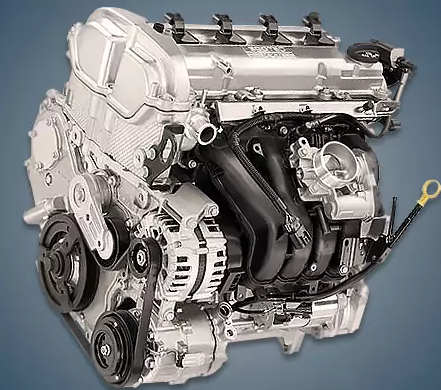
LDK, LHU, LNF, LAF, LEA, LE5, and LE9 are members of GM Ecotec’s second generation.
Specifications
| Production years | 2008-2018 |
| Displacement, cc | 2384 |
| Fuel system | distributed injection |
| Power output, hp | 165 – 175 |
| Torque output, Nm | 225 – 230 |
| Cylinder block | aluminum R4 |
| Block head | aluminum 16v |
| Cylinder bore, mm | 88 |
| Piston stroke, mm | 98 |
| Compression ratio | 10.4 |
| Features | DOHC |
| Hydraulic lifters | yes |
| Timing drive | chain |
| Phase regulator | Dual VVT |
| Turbocharging | no |
| Recommended engine oil | 5W-30 |
| Engine oil capacity, liter | 4.7 |
| Fuel type | petrol |
| Euro standards | EURO 4/5 |
| Fuel consumption, L/100 km (for Chevrolet Captiva 2012) — city — highway — combined |
12.8 7.4 9.3 |
| Engine lifespan, km | ~350 000 |
| Weight, kg | 145 |
The engine was installed on:
- Chevrolet Captiva 1 (C140) in 2011 – 2018;
- Chevrolet HHR 1 (GMT001) in 2008 – 2011;
- Chevrolet Malibu 7 (GMX386) in 2009 – 2012.
Disadvantages of the GM LE9 engine
The owners’ primary grievances stem from the timing chain’s relatively small resource.
Since it is not part of the timing kit, the balancer chain tensioner is unreliable.
You will need to purchase new phase regulators if you replace the chains and tighten it up.
Because of rings, lubricant consumption is frequently observed after 100,000 kilometers of operation.
It should be mentioned that there are cracks on the exhaust manifold that appear frequently.