
From 1993 to 2004, the company produced the 2.6-liter Hyundai D4BB diesel engine, which was used in commercial vehicles as well as the Galloper SUV and H1 minibus. One of the numerous replicas of the well-known Mitsubishi 4D56 diesel engine was this motor.
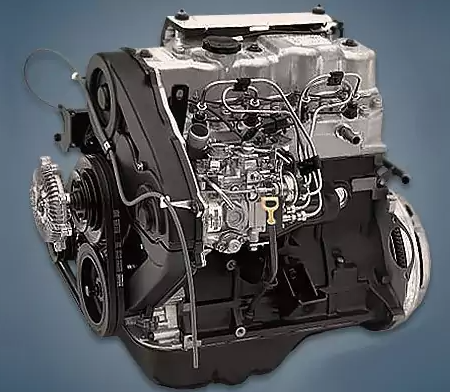
Hyundai upgraded the D4BA engine in the early 1990s by adding a crankshaft with a large piston stroke, increasing its displacement from 2.5 to 2.6 liters. However, it remains identical to the Mitsubishi 4D56 atmospheric pre-chamber diesel engine in every other way. A timing belt, a block of two balancers, an aluminum 8-valve cylinder head without hydraulic lifters, a cast-iron block, and a Zexel distribution-type fuel pump are all part of the design.
There are references to a supercharged version of this diesel engine for commercial vehicles, but naturally aspirated versions without a turbine were the most common.
Diesels D4BA, D4BF, and D4BH are also members of this family.
The engine was mounted on:
- Hyundai Galloper 2 (JK) in 1997 – 2003;
- Hyundai Starex 1 (A1) in 1997 – 2004.
Specifications
| Production years | 1993-2004 |
| Displacement, cc | 2607 |
| Fuel system | prechambers |
| Power output, hp | 78 – 83 |
| Torque output, Nm | 162 – 168 |
| Cylinder block | cast iron R4 |
| Block head | aluminum 8v |
| Cylinder bore, mm | 91.1 |
| Piston stroke, mm | 100 |
| Compression ratio | 21.0 |
| Hydraulic lifters | no |
| Timing drive | belt |
| Turbocharging | no |
| Recommended engine oil | 5W-40, 10W-40 |
| Engine oil capacity, liter | 6.5 |
| Fuel type | diesel |
| Euro standards | EURO 1/2 |
| Fuel consumption, L/100 km (for Hyundai H1 2000) — city — highway — combined |
12.8 8.7 10.3 |
| Engine lifespan, km | ~450 000 |
| Weight, kg | 200.8 |
Disadvantages of the Hyundai D4BB engine
Even though this diesel engine has a basic distribution pump, heavy wear on the high-pressure fuel pump frequently causes a warm engine to start poorly at high mileage. Heating causes the plunger’s gaps to widen, making it impossible to create the necessary pressure. Additionally, the nozzles eventually overflow and need to be replaced.
The timing belt is supposed to change every 90,000 kilometers, but if you disregard its tightening every 30,000 kilometers, it can actually burst much earlier. Here, a separate belt is used to rotate the block of balancing shafts. When this belt breaks, it frequently falls beneath the timing belt and breaks as well. The fact that it only breaks the rocker at the same time is also beneficial.
This power unit frequently breaks its gasket and is terrified of overheating. In this case, replacing the gasket is insufficient; the mating surfaces must be ground. Because the cylinder heads for these diesel engines are so rare and costly, cracks frequently develop in the cylinder head as well, particularly around the prechambers or in between the valves.
They frequently complain about low vacuum pump resources, crankshaft failure at low speeds, and lubricant leaks through gaskets and seals in specialized forums. Additionally, it frequently stops the drive of attachments and cuts off the crankshaft key. Additionally, remember to check the valve clearance every 20,000 kilometers to prevent them from burning out.