
Only the first generation of the well-liked Kuga crossover was equipped with the 2.0-liter Ford TXDA or 2.0 TDCi Duratorq DW engine, which was manufactured between 2010 and 2012. This power unit was basically a replica of the well-known DW10CTED4 diesel engine from France.
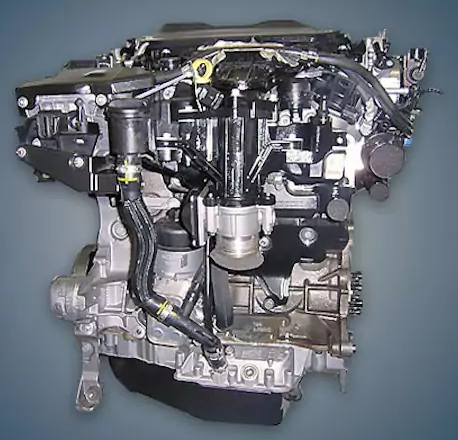
The QXWA, Q4BA, and KNWA internal combustion engines are also part of the Duratorq-DW line.
The engine was installed on:
- Ford Kuga Mk1 in 2010 – 2012.
Specifications
| Production years | 2010-2012 |
| Displacement, cc | 1997 |
| Fuel system | Common Rail |
| Power output, hp | 163 |
| Torque output, Nm | 340 |
| Cylinder block | cast iron R4 |
| Block head | aluminum 16v |
| Cylinder bore, mm | 85 |
| Piston stroke, mm | 88 |
| Compression ratio | 16.0 |
| Features | intercooler |
| Hydraulic lifters | yes |
| Timing drive | belt and chain |
| Phase regulator | no |
| Turbocharging | VGT |
| Recommended engine oil | 5W-30 |
| Engine oil capacity, liter | 5.6 |
| Fuel type | diesel |
| Euro standards | EURO 5 |
| Fuel consumption, L/100 km (for Ford Kuga 2011) — city — highway — combined |
8.5 5.8 6.8 |
| Engine lifespan, km | ~350 000 |
Disadvantages of the TXDA engine
Bad fuel cannot be tolerated by modern fuel equipment with piezo injectors; Delphi injectors quickly become unusable and cannot be fixed in any way;
It is worthwhile to examine the wiring harness if a number of errors occur because it is frequently frayed;
As with any new diesel, you must clean the EGR and burn through the particulate filter because hydraulic lifters prefer the original oil, which can drop to 100,000 kilometers.