What Does Code P0374 Mean?
The diagnostic trouble code P0374 signifies “Timing Reference High Resolution Signal A No Pulses.” This code indicates that the Engine Control Module (ECM) or Powertrain Control Module (PCM) is not receiving the expected high-resolution timing reference signal from the designated “A” sensor. In most automotive applications, the “high resolution” timing signal is primarily derived from the Crankshaft Position (CKP) sensor, which provides precise rotational position and speed information of the crankshaft. This data is critical for accurate fuel injection timing, ignition timing, and engine speed calculation. A camshaft position (CMP) sensor can also be designated as “A” in certain configurations, providing synchronization information relative to the crankshaft.
The ECM/PCM continuously monitors the waveform output from these timing reference sensors. It expects a consistent series of pulses, representing the rotation of the crankshaft or camshaft, to accurately determine engine position and speed. When the ECM/PCM detects a complete absence of these pulses during engine cranking or operation, it interprets this as a critical failure in obtaining engine timing data and sets the P0374 code. Without this fundamental timing information, the ECM/PCM cannot effectively synchronize fuel delivery and spark events, leading to severe engine performance issues or a no-start condition. The subsystem directly affected is the core engine management and control system, particularly the ignition and fuel delivery strategies.
Common Symptoms
- Engine Cranks But Does Not Start: The most prevalent symptom, as the ECM/PCM cannot initiate fuel injection or ignition without a valid timing reference.
- Prolonged Cranking: If the signal is intermittent or delayed in detection, the engine may crank for an extended period before potentially starting or failing to start.
- Engine Stalling: If the signal is lost while the engine is running, the engine will typically stall immediately.
- Rough Idling or Misfires: In cases of intermittent signal loss, the engine may run very roughly, misfire, or enter a limp-home mode with reduced power.
- Malfunction Indicator Lamp (MIL) Illumination: The “Check Engine” light will illuminate on the dashboard once the code is set.
What Causes the Code P0374?
- Faulty Crankshaft Position (CKP) Sensor: This is the most common cause, where the sensor itself has internally failed and is no longer generating a signal.
- Faulty Camshaft Position (CMP) Sensor “A”: If the “A” designation refers to a primary CMP sensor responsible for initial timing synchronization, its failure can trigger P0374.
- Open or Short Circuit in the Sensor Wiring Harness: Damage to the wiring leading to or from the CKP/CMP sensor, including chafing, cuts, or corrosion within the harness.
- Poor Electrical Connection at the Sensor or ECM/PCM: Corroded, bent, or loose pins at the CKP/CMP sensor connector or at the ECM/PCM connector can interrupt the signal.
- Damaged or Missing Reluctor Ring/Tone Wheel: Physical damage, missing teeth, or accumulation of debris on the crankshaft or camshaft-mounted reluctor ring can prevent the sensor from generating proper pulses.
- ECM/PCM Failure: While rare, an internal fault within the ECM/PCM preventing it from processing the sensor signal correctly or providing proper reference voltage can cause this code.
How to Diagnose and Troubleshoot
Diagnosing P0374 requires a systematic approach using specialized tools:
- Visual Inspection:
- Begin with a thorough visual inspection of the CKP/CMP sensor and its wiring harness. Look for obvious damage, frayed wires, exposed conductors, or signs of rodent damage.
- Inspect the sensor connector for corrosion, bent pins, or loose connections. Ensure the sensor is securely mounted and not physically damaged.
- OBD-II Scanner Diagnostics:
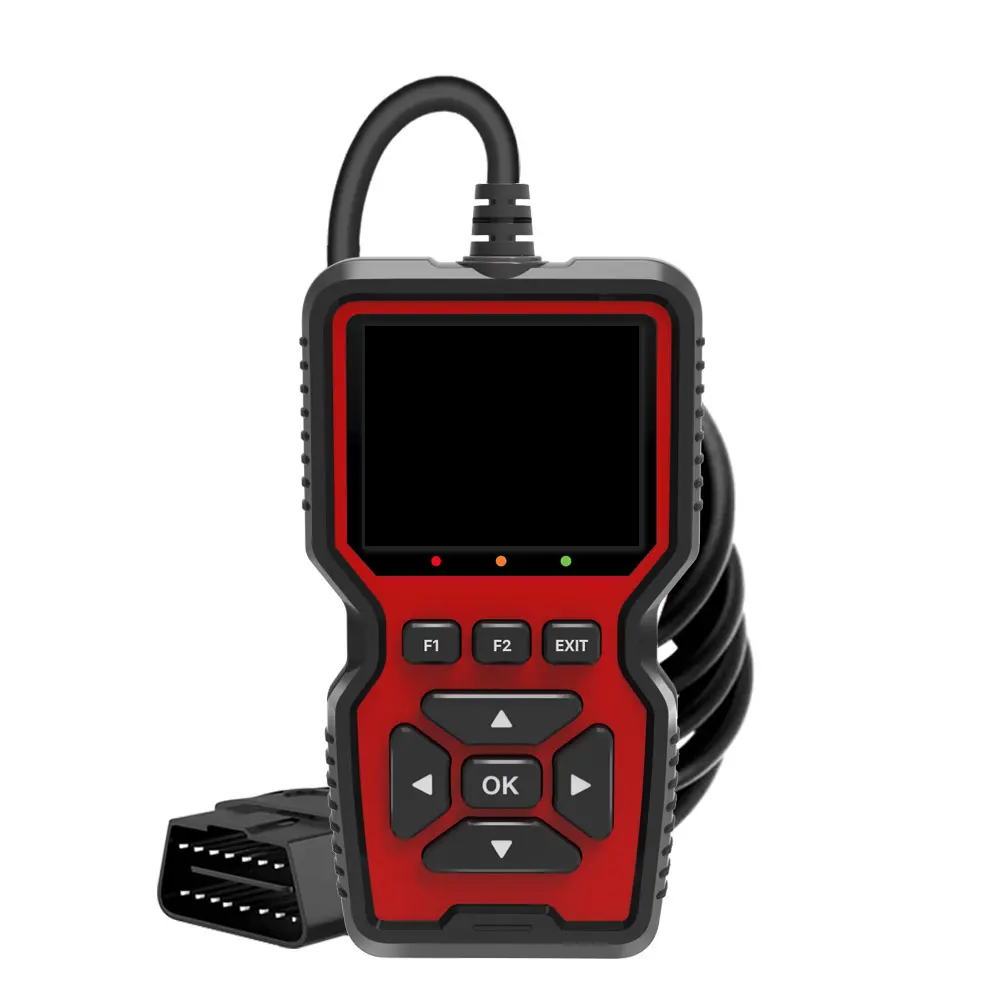
- Connect an OBD-II scanner and check for any additional related diagnostic trouble codes (DTCs), such as P0335 (CKP Sensor “A” Circuit Malfunction) or P0340 (CMP Sensor “A” Circuit Malfunction).
- Access live data parameters, specifically “Engine RPM” or “Crankshaft Position Sensor RPM.” During cranking, observe if the scanner registers any RPM. A consistent 0 RPM reading while the engine is cranking confirms the absence of a signal from the primary timing reference sensor.
- Digital Multimeter (DMM) Testing:
- Sensor Power Supply: With the ignition ON, disconnect the CKP/CMP sensor connector. Using a DMM, check for the specified reference voltage (typically 5V or 12V, depending on the sensor type) at the power supply terminal of the harness side connector.
- Sensor Ground: Verify good ground continuity at the ground terminal of the harness side connector to a known good chassis ground.
- Signal Wire Continuity: With the battery disconnected and the ECM/PCM connector unplugged, check for continuity between the signal wire terminal at the sensor harness connector and the corresponding signal input terminal at the ECM/PCM connector. Also, check for shorts to ground or to power on the signal wire.
- Sensor Resistance (if applicable): For certain inductive type sensors, measure the internal resistance of the sensor itself across its terminals. Compare the reading to manufacturer specifications. An open circuit or out-of-spec reading indicates a faulty sensor.
- Oscilloscope Waveform Analysis (Recommended):
- For definitive sensor signal verification, connect an oscilloscope to the CKP/CMP sensor’s signal wire (and ground) while cranking the engine.
- Observe the waveform. A healthy CKP sensor (Hall effect) typically produces a clean square wave, while an inductive sensor produces a sine wave. “No pulses” will appear as a flat line on the oscilloscope screen, confirming the absence of a signal. If a signal is present but erratic or weak, it indicates an intermittent fault or a damaged tone wheel.
- Reluctor Ring Inspection:
- If the sensor and wiring test good, the reluctor ring (tone wheel) needs inspection. This often requires removal of the sensor to gain visual access to the ring mounted on the crankshaft or camshaft. Look for missing teeth, damage, bending, or excessive metallic debris adhering to it.
Recommended Repairs and Solutions
Once the root cause is identified through proper diagnosis, the following repairs are typically recommended:
- Replace the Faulty CKP or CMP Sensor: If testing confirms the sensor is not generating a signal, replace it with a new, OEM-quality part. Ensure the new sensor is correctly installed and torqued to specifications.
- Repair or Replace Damaged Wiring Harness: If opens, shorts, or poor connections are identified in the wiring, repair them using appropriate gauge wire, solder, and heat-shrink tubing for durability. For extensive damage, replacement of the relevant section of the engine harness may be necessary.
- Clean or Repair Corroded Connectors: Address any corrosion on the sensor or ECM/PCM connectors using electrical contact cleaner and a small brush. If pins are bent or damaged, carefully straighten them or replace the connector housing. Apply dielectric grease to protect against future corrosion.
- Repair or Replace Damaged Reluctor Ring: If the reluctor ring (tone wheel) is found to be damaged, it must be repaired or replaced. This can be a more involved repair, often requiring significant engine disassembly to access the crankshaft or camshaft.
- ECM/PCM Replacement (Last Resort): Only consider replacing the ECM/PCM after absolutely all other possibilities have been meticulously ruled out. ECM replacement often requires programming or “flashing” to the specific vehicle, which typically needs dealer-level diagnostic equipment.
Mechanic’s Tip: Always clear the DTCs after performing repairs and then conduct a test drive to confirm the issue is resolved and the code does not return. Pay close attention to any pending codes or changes in live data during the test drive. Ensure all connectors are securely latched after any disconnection.