
Overview & Design Features
The Chery 4G63 is a prominent inline four-cylinder internal combustion engine, primarily known for its widespread application in Chery Automobile’s vehicle lineup during the 2000s and early 2010s. This engine, with a displacement of 1997 cc (2.0 liters), holds significant historical importance as a foundational power unit for Chery, enabling the manufacturer to produce a range of sedans, SUVs, and MPVs. Its design is fundamentally derived from the well-regarded Mitsubishi 4G63 engine, a testament to its proven architecture and reliability, which Chery either manufactured under license or reverse-engineered for its domestic and export markets.
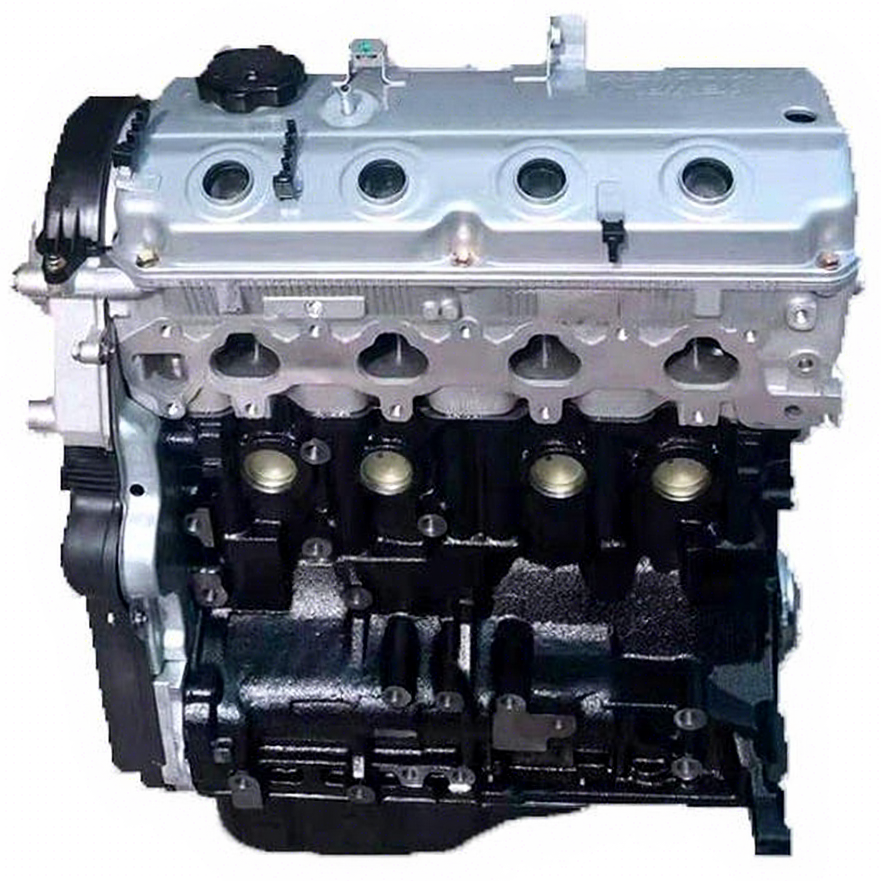
The core engineering of the Chery 4G63 features a robust cast iron cylinder block, providing durability and structural rigidity, paired with an aluminum alloy cylinder head for optimized heat dissipation and reduced weight. This naturally aspirated engine typically incorporates a Single Overhead Camshaft (SOHC) valvetrain with 16 valves (four valves per cylinder), facilitating efficient air intake and exhaust gas scavenging. Fuel delivery is managed by a Multi-Point Fuel Injection (MPI) system, which precisely atomizes fuel into the intake manifold, contributing to a balanced performance output and reasonable fuel economy. The absence of advanced variable valve timing technology in most Chery 4G63 variants emphasizes its straightforward, reliable design.
During its production tenure, the Chery 4G63 engine was a workhorse for several of the brand’s key models. It powered vehicles such as the Chery A5 sedan (also known as the Fora or Cowin 3 in some markets), providing a capable and economical powertrain option. The engine also found its way into the larger Chery Eastar (Oriental Son), a mid-size sedan known for its spacious interior. Furthermore, earlier generations of the Chery Tiggo 3 (or Tiggo 2.0) SUV and the Chery V5/B14 MPV utilized the 4G63, establishing it as a versatile engine suitable for diverse vehicle platforms and consumer needs.
Technical Specifications
| Displacement | 1997 cc |
| Max Power | 129 hp (96 kW) @ 5800 RPM |
| Max Torque | 180 Nm (18.3 kg*m) @ 4300 RPM |
| Fuel Type | Unleaded Gasoline (RON 93/95) |
| Fuel Consumption (Combined) | ~8.5 l/100 km (vehicle dependent) |
| Engine Type | Inline-4, Naturally Aspirated |
| Compression Ratio | 9.5:1 |
| Cylinder Bore | 85 mm |
| Piston Stroke | 88 mm |
| Valvetrain | SOHC, Belt-driven |
| Valves per Cylinder | 4 |
| Additional Info | Multi-point fuel injection (MPI), Cast iron block, Aluminum cylinder head |
Common Problems & Reliability
The Chery 4G63, inheriting its fundamental design from the Mitsubishi 4G63, generally exhibits robust reliability. However, specific mechanical weak points and common failures can arise, particularly in Chery’s implementation. A frequent issue identified is premature wear of the timing belt and its associated components (tensioners, idlers) if not replaced diligently. Neglect of this critical service item can lead to catastrophic engine damage due to valve-to-piston contact. Another common concern is oil leakage, often originating from the valve cover gasket, crankshaft seals, or oil pan gasket, which typically manifests with higher mileage. Owners may also report occasional issues with the idle air control valve (IACV) or throttle body cleanliness, leading to irregular idle or minor hesitation.
Under proper care and adherence to recommended service intervals, the Chery 4G63 engine is known for its durability. A realistic expected service life before requiring a major overhaul, such as piston rings or bearing replacement, often exceeds 250,000 kilometers (approximately 155,000 miles). Engines that have received consistent oil changes, timing belt replacements, and general preventative maintenance can often surpass 300,000 kilometers.
Maintenance Tips & Service Schedule
Proper maintenance is paramount for extending the service life and ensuring the reliable operation of the Chery 4G63 engine. Regular engine oil and filter changes are critical; semi-synthetic 10W-40 or 5W-40 oil is generally recommended, with intervals typically set at 7,500 to 10,000 kilometers (or every 6-12 months, whichever comes first). Air filters should be inspected and replaced every 20,000-30,000 kilometers to ensure optimal air intake and fuel efficiency. Spark plugs, ideally iridium or platinum-tipped for longevity, should be replaced every 60,000-80,000 kilometers.
The timing belt system is a crucial maintenance item. It is imperative to replace the timing belt, tensioner, and idler pulleys every 80,000-100,000 kilometers or every 5-6 years, as a preventative measure against potential failure. The cooling system, including radiator coolant, should be flushed and refilled with a suitable ethylene glycol-based coolant every 40,000-60,000 kilometers or every 2-3 years to prevent corrosion and maintain thermal efficiency. Regular inspection of accessory belts, hoses, and fluid levels also contributes significantly to the engine’s long-term health.
Conclusion
The Chery 4G63 engine represents a reliable and straightforward powertrain option for used vehicle buyers. Its Mitsubishi heritage imbues it with a fundamentally robust design, making it a dependable choice for everyday driving. While not boasting high performance or advanced technologies, its simplicity contributes to lower repair complexity and generally accessible parts. As long as a prospective buyer ensures a verifiable service history, particularly concerning timing belt replacements and regular oil changes, the Chery 4G63 can be considered a safe and economical engine choice, capable of providing many more kilometers of trouble-free operation.