What Does Code B1382 Mean?
The diagnostic trouble code (DTC) B1382 signifies an “Oil Change Reset Button Circuit Short To Battery.” This code is typically set by the Body Control Module (BCM), or in some integrated systems, the Powertrain Control Module (PCM/ECM), when it detects an unintended constant voltage on the input circuit connected to the oil life reset button. Under normal operating conditions, this circuit should either be open, pulled to ground, or held at a reference voltage, with a momentary change in state (e.g., pulling to ground or momentarily seeing battery voltage) occurring only when the oil change reset button is actively pressed by the operator. A “short to battery” indicates that the BCM/PCM is continuously receiving a voltage level consistent with the vehicle’s battery voltage on this signal circuit, implying that the button is stuck in a ‘pressed’ state, the wiring is directly shorted to a constant power source, or there is an internal fault within the module or button itself that mimics a continuous button press.
The primary subsystem affected is the vehicle’s oil life monitoring and maintenance reminder system. This system calculates the remaining oil life based on various parameters such as engine temperature, RPMs, and driving conditions. The BCM/PCM monitors the reset button’s circuit to allow for manual reset of this system after an oil change. When a B1382 code is present, it indicates an electrical malfunction preventing the module from accurately interpreting the state of the reset button, thereby compromising the functionality of the oil life monitoring system.
Common Symptoms
- The Oil Change Required or Maintenance Due indicator light remains illuminated on the instrument cluster, even after an oil change has been performed.
- Inability to successfully reset the oil life monitor using the dashboard controls or dedicated button. The reset procedure may fail to initiate or complete.
- The oil life indicator may display erroneous readings, such as fluctuating percentages or an immediate return to a low oil life percentage after an attempted reset.
- Intermittent or erratic flashing of the oil change reminder light.
What Causes the Code B1382?
- Faulty Oil Change Reset Button: The most common cause is an internal short circuit within the physical oil change reset button itself. The switch mechanism may be stuck in a closed position, constantly sending a ‘pressed’ signal to the BCM/PCM.
- Wiring Harness Short to Battery Voltage: Damage to the wiring harness leading from the oil change reset button to the BCM/PCM. This damage could cause the signal wire to come into continuous contact with a B+ (battery voltage) wire, providing an unintended constant high signal.
- Corrosion or Contamination in Connectors: Corroded or contaminated electrical connectors at either the oil change reset button or the BCM/PCM can create a bridge between the signal pin and a battery voltage pin, leading to a false high signal.
- Faulty Body Control Module (BCM) or Powertrain Control Module (PCM/ECM): Less common, but an internal fault within the BCM’s or PCM’s input circuit for the oil change reset button could cause it to incorrectly interpret the circuit state as a constant short to battery.
How to Diagnose and Troubleshoot
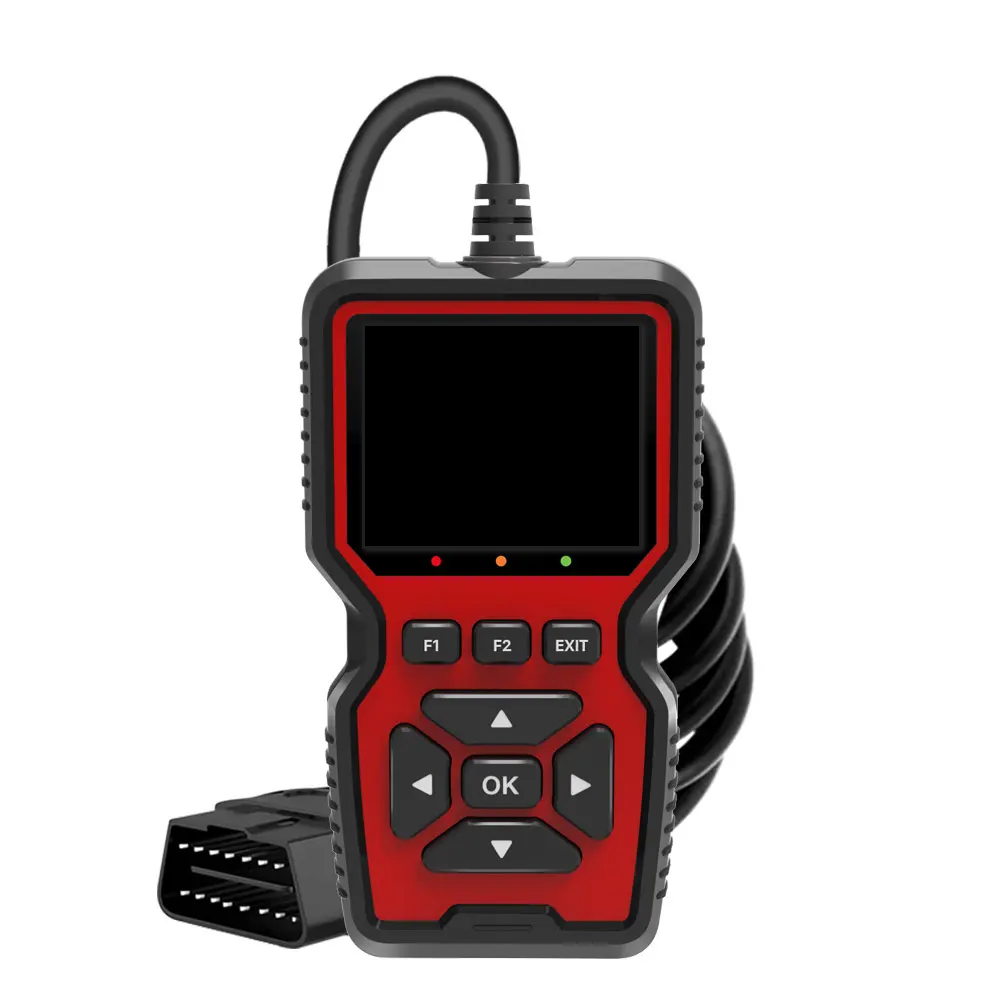
Diagnosing DTC B1382 requires a methodical approach, utilizing a digital multimeter (DMM) and an OBD-II scan tool capable of live data monitoring.
- Preliminary Visual Inspection: Begin by visually inspecting the oil change reset button and its immediate surroundings for any signs of physical damage, sticky residue, or obvious contamination. Follow the wiring harness from the button to the BCM/PCM, checking for chafing, pinching, or exposure that could indicate a short to power. Inspect all relevant connectors for corrosion, bent pins, or loose connections.
- Scan Tool Live Data Analysis: Connect an advanced OBD-II scan tool and navigate to the BCM/PCM live data parameters. Look for parameters related to the “Oil Life Reset Switch Status” or similar. Observe the reported state of the switch. If the scan tool continuously shows the switch as “closed,” “pressed,” or at a high voltage state (e.g., battery voltage) without the button being pressed, this confirms the module is receiving an erroneous signal. Attempt to press and release the button while monitoring the live data; if the status does not change, it further indicates an issue with the circuit or button.
- Circuit Integrity Testing with DMM:
- Isolate the Button: Disconnect the electrical connector from the oil change reset button.
- Test Button Continuity: Using a DMM set to continuity or resistance mode, probe the terminals of the disconnected oil change reset button. The button should show an open circuit (infinite resistance) when not pressed and continuity (near zero resistance) when pressed. If continuity is present constantly, the button itself is faulty and internally shorted.
- Test Harness for Short to Battery: With the button still disconnected, locate the corresponding signal wire at the harness connector that plugs into the BCM/PCM. Consult the vehicle’s wiring diagram to identify the correct pin. Disconnect the BCM/PCM connector. Set the DMM to measure DC voltage. With the ignition ON, carefully probe the signal wire terminal at the harness connector (not the module side) and chassis ground. If you measure battery voltage (e.g., 12V), there is a direct short to a power source in the wiring harness between the button connector and the BCM/PCM connector.
- Test Harness for Open/Short to Ground: With the BCM/PCM and button connectors disconnected, set the DMM to resistance mode. Measure resistance between the signal wire terminal at the BCM/PCM harness connector and chassis ground. There should be infinite resistance (open circuit). A low resistance indicates a short to ground, which would typically set a different code but is worth ruling out. Also, measure resistance between the signal wire and other power wires (e.g., 12V constant or ignition-switched power) within the same harness bundle. Any low resistance indicates a short between wires.
- BCM/PCM Internal Input Check: If all wiring and the button test correctly, and the scan tool still reports a constant “pressed” status, the issue might be an internal fault within the BCM/PCM. This is less common and should only be considered after thoroughly ruling out external components.
Recommended Repairs and Solutions
Once the diagnostic steps have pinpointed the root cause, the following repairs are typically recommended:
- Replace the Oil Change Reset Button: If the DMM tests confirm an internal short within the button, replacement is necessary. Ensure the replacement part is an OEM equivalent to guarantee proper fitment and electrical specifications.
- Repair or Replace Wiring Harness: If a short to battery voltage is identified in the wiring harness, the damaged section of the wire must be repaired. This often involves carefully exposing the harness, cutting out the compromised section, and splicing in new wire using heat-shrink solder connectors or proper crimp-and-seal terminals to ensure a durable, weatherproof repair. In cases of extensive damage, replacing a section of the sub-harness may be more practical.
- Clean and Secure Connectors: If corrosion or contamination is found at any connector, thoroughly clean the terminals using an approved electrical contact cleaner and a small brush. Apply dielectric grease to prevent future corrosion and ensure secure, proper seating of the connectors.
- Replace the Body Control Module (BCM) or Powertrain Control Module (PCM/ECM): If all other components and wiring test normal, and diagnostics strongly point to an internal module fault, the BCM or PCM may require replacement. Be aware that module replacement often necessitates programming or flashing with the vehicle’s specific software, which usually requires specialized diagnostic tools (e.g., factory scan tools) and expertise. Always exhaust all other diagnostic possibilities before condemning a control module.
After performing any repairs, clear the B1382 DTC using an OBD-II scan tool. Then, attempt to perform the oil life reset procedure to confirm that the system is now functioning correctly and that the code does not return.