What Does Code B1470 Mean?
DTC B1470 signifies an issue within the Headlamp Input Circuit, as detected by the Body Control Module (BCM) or Smart Junction Box (SJB). This code is set when the BCM/SJB monitors the electrical signal from the headlamp switch, ambient light sensor, or other initiating input source, and determines that the signal’s voltage or resistance falls outside of its predefined operational parameters. This could indicate an open circuit (excessive resistance/no signal), a short to ground (signal pulled low), or a short to voltage (signal pulled high) within the input circuit that commands the headlamps to activate or deactivate. Essentially, the BCM/SJB is not receiving the expected input signal for headlamp control, thus flagging a circuit failure. This directly impacts the vehicle’s external lighting subsystem, specifically the headlamp operation.
Common Symptoms
- Headlamps fail to illuminate when commanded.
- Headlamps remain on continuously and cannot be turned off.
- Intermittent or erratic headlamp operation.
- Automatic headlamp function (if equipped) becomes inoperative.
- Dashboard headlamp indicator light may not function correctly.
What Causes the Code B1470?
- Faulty Headlamp Switch: Internal mechanical or electrical failure within the switch, leading to an open circuit, short, or high resistance.
- Wiring Harness Fault: An open circuit, short to ground, or short to voltage within the wiring connecting the headlamp input device (switch/sensor) to the BCM/SJB.
- Corroded or Loose Connectors: Poor electrical contact at the headlamp switch connector, BCM/SJB connector, or any inline connectors in the headlamp input circuit.
- Defective Ambient Light Sensor: If the vehicle is equipped with automatic headlamps and the sensor provides the primary input, a faulty sensor could generate an incorrect signal.
- Internal Body Control Module (BCM/SJB) Failure: Although less common, the internal monitoring or input driver circuit within the BCM/SJB could be faulty.
- Aftermarket Accessory Interference: Incorrectly wired aftermarket lighting, alarms, or other accessories tapping into the headlamp control circuit can disrupt the signal.
How to Diagnose and Troubleshoot
Diagnosis of B1470 requires a systematic approach, often involving a digital multimeter (DMM), an OBD-II scanner, and vehicle-specific wiring diagrams.
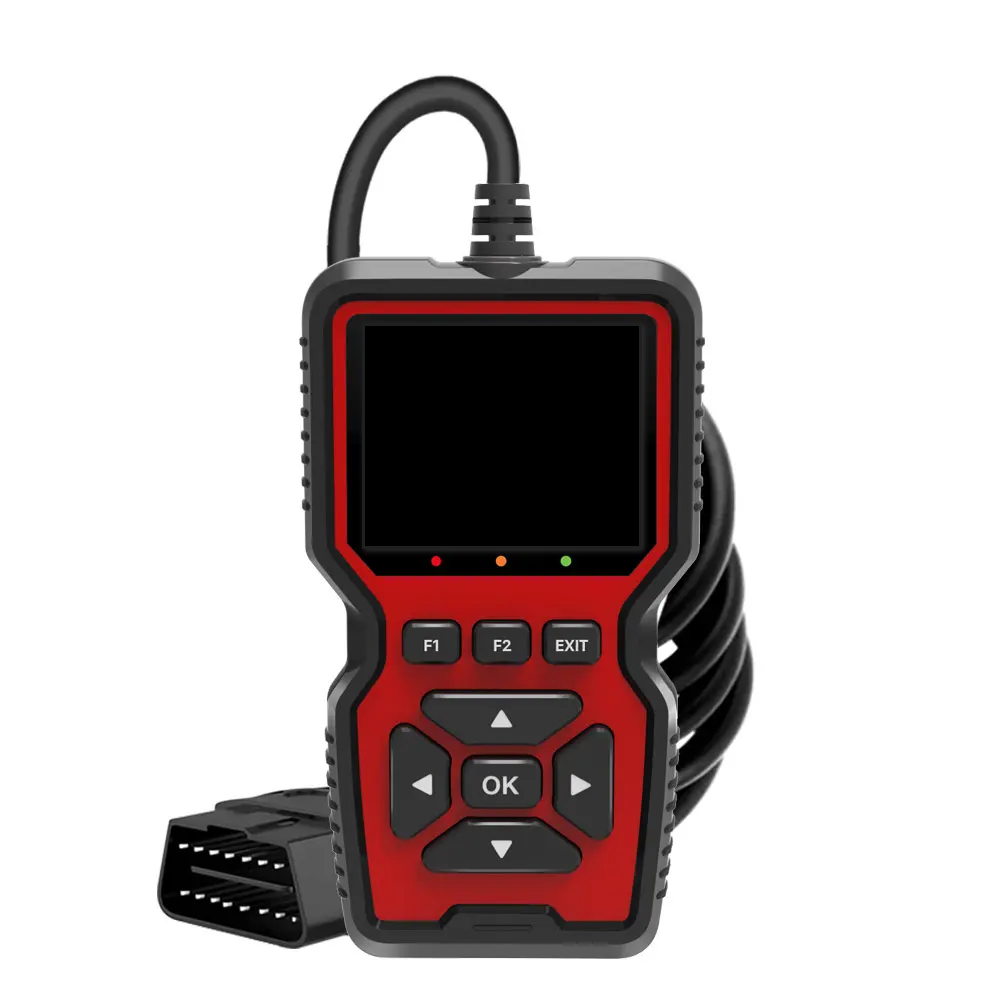
- Retrieve Diagnostic Data: Connect an OBD-II scanner to confirm B1470 and check for any related or accompanying DTCs. Review freeze frame data to understand the operating conditions (e.g., ignition state, vehicle speed) present when the code was set.
- Visual Inspection: Perform a thorough visual inspection of the headlamp switch, its electrical connector, the wiring harness running from the switch/sensor to the BCM/SJB, and the BCM/SJB connector. Look for signs of chafing, cuts, pinch points, corrosion, or any obvious damage. Verify that all connectors are fully seated.
- Obtain Wiring Diagrams: Acquire the vehicle-specific wiring diagram for the headlamp input circuit. Identify the BCM/SJB input pin, the headlamp switch or sensor, and all intermediate connectors.
- Test Headlamp Switch:
- Disconnect the electrical connector from the headlamp switch.
- Using a DMM set to the ohms function, test for continuity and resistance across the appropriate terminals of the headlamp switch in its various positions (OFF, Parking Lamps, Headlamps ON).
- Compare the measured resistance values to the manufacturer’s specifications. Look for infinite resistance (open circuit) where continuity should exist, or continuity where there should be an open circuit.
- Verify Wiring Integrity (Switch/Sensor to BCM/SJB):
- With the headlamp switch/sensor and BCM/SJB connectors disconnected, use the DMM to check for continuity on the specific input wire from the headlamp switch/sensor connector to the BCM/SJB connector. Resistance should be minimal (typically less than 0.5 Ohms).
- Perform a short-to-ground test: Place one DMM lead on the input wire terminal (at either end of the harness) and the other lead on a known good chassis ground. Resistance should be infinite (OL).
- Perform a short-to-voltage test: Reconnect the BCM/SJB but leave the headlamp switch/sensor disconnected. Turn the ignition to the ON position. Using the DMM, check for unintended voltage on the input wire at the disconnected headlamp switch/sensor connector. Any voltage present indicates a short to voltage.
- Test Ambient Light Sensor (if applicable): If the vehicle uses an ambient light sensor, consult the service manual for its specific testing procedure. This often involves measuring its resistance or voltage output while varying the light levels applied to the sensor.
- BCM/SJB Input Verification: If the switch/sensor and wiring harness test good, the issue may lie within the BCM/SJB. With the BCM/SJB connector connected and the headlamp switch/sensor operated, back-probe the BCM/SJB’s input pin for the headlamp signal. Verify that the BCM/SJB is receiving the correct voltage or resistance change according to the wiring diagram. If the correct signal is present at the BCM/SJB input pin, but the module fails to act or sets the code, the BCM/SJB itself may be faulty.
Recommended Repairs and Solutions
Once the faulty component has been identified through systematic diagnosis, the following repairs are typically recommended:
- Replace Faulty Headlamp Switch: If the headlamp switch fails its continuity and resistance tests, replace it with an OEM or equivalent quality aftermarket part.
- Repair or Replace Wiring Harness: If an open, short, or high resistance is found in the wiring, repair the specific section. This may involve splicing in new wire sections, ensuring proper soldering, heat-shrink insulation, and routing to prevent future damage. For extensive damage, harness replacement may be necessary.
- Clean and Secure Connectors: If corrosion or poor contact is found at any connector, clean the terminals thoroughly using electrical contact cleaner and a small brush. Apply dielectric grease to prevent future corrosion upon reassembly, and ensure connectors are fully seated and locked.
- Replace Defective Ambient Light Sensor: If diagnostic procedures confirm the ambient light sensor is faulty, replace it.
- Replace Body Control Module (BCM/SJB): If all external components and wiring test correctly, and the BCM/SJB is confirmed to be receiving the correct input signal but still setting the B1470 code, replacement of the BCM/SJB is indicated. Be aware that BCM/SJB replacement often requires programming or coding using specialized diagnostic tools to match the module to the vehicle’s VIN and options.
- Address Aftermarket Wiring Issues: If aftermarket accessories are implicated, temporarily disconnect them and verify the headlamp system function. Correct any improper wiring or remove conflicting accessories.