What Does Code C1247 Mean?
The diagnostic trouble code C1247 signifies an ABS Outlet Valve Coil RR Circuit Open condition. This code is generated by the Electronic Brake Control Module (EBCM), often referred to as the ABS control module, when it detects an electrical open circuit within the solenoid coil of the right rear (RR) outlet valve or its associated wiring. The ABS system utilizes hydraulic control units containing multiple solenoids (both inlet and outlet valves) to modulate brake fluid pressure to individual wheels during anti-lock braking events. An outlet valve’s primary function is to release brake fluid pressure from a specific wheel’s caliper, preventing wheel lock-up by allowing the wheel to regain traction. The EBCM continuously monitors the electrical resistance and continuity of these solenoid circuits. When the EBCM detects an abnormally high or infinite resistance (an open circuit) in the right rear outlet valve’s coil circuit, it interprets this as a fault, disables the ABS function for that wheel (and often the entire system), illuminates the ABS warning light, and stores the C1247 code.
Common Symptoms
- Illumination of the Anti-lock Brake System (ABS) warning light on the instrument panel.
- Illumination of the Traction Control System (TCS) warning light (if equipped).
- Illumination of the Stability Control System (SCS) warning light (if equipped).
- Potential decrease in brake pedal feedback or change in pedal feel during hard braking events, as the ABS system may be disabled or operating in a compromised state.
- Absence of ABS function for the right rear wheel, and possibly other wheels, under severe braking conditions.
What Causes the Code C1247?
- Internal open circuit within the ABS outlet valve solenoid coil for the right rear wheel. This is the most direct cause, indicating a failure of the solenoid itself.
- Open circuit in the wiring harness connecting the right rear outlet valve solenoid to the EBCM. This could be due to a severed wire, a damaged wire insulation leading to corrosion, or a loose/corroded terminal within a connector.
- Corroded or damaged terminals within the ABS hydraulic unit connector or the EBCM connector, preventing proper electrical continuity.
- Faulty ABS control module (EBCM), though less common for a specific “coil open” code, an internal fault in the module’s driver circuit for that solenoid can also manifest this code.
How to Diagnose and Troubleshoot
Diagnosing C1247 requires a systematic approach using a digital multimeter (DMM) and a vehicle-specific wiring diagram.
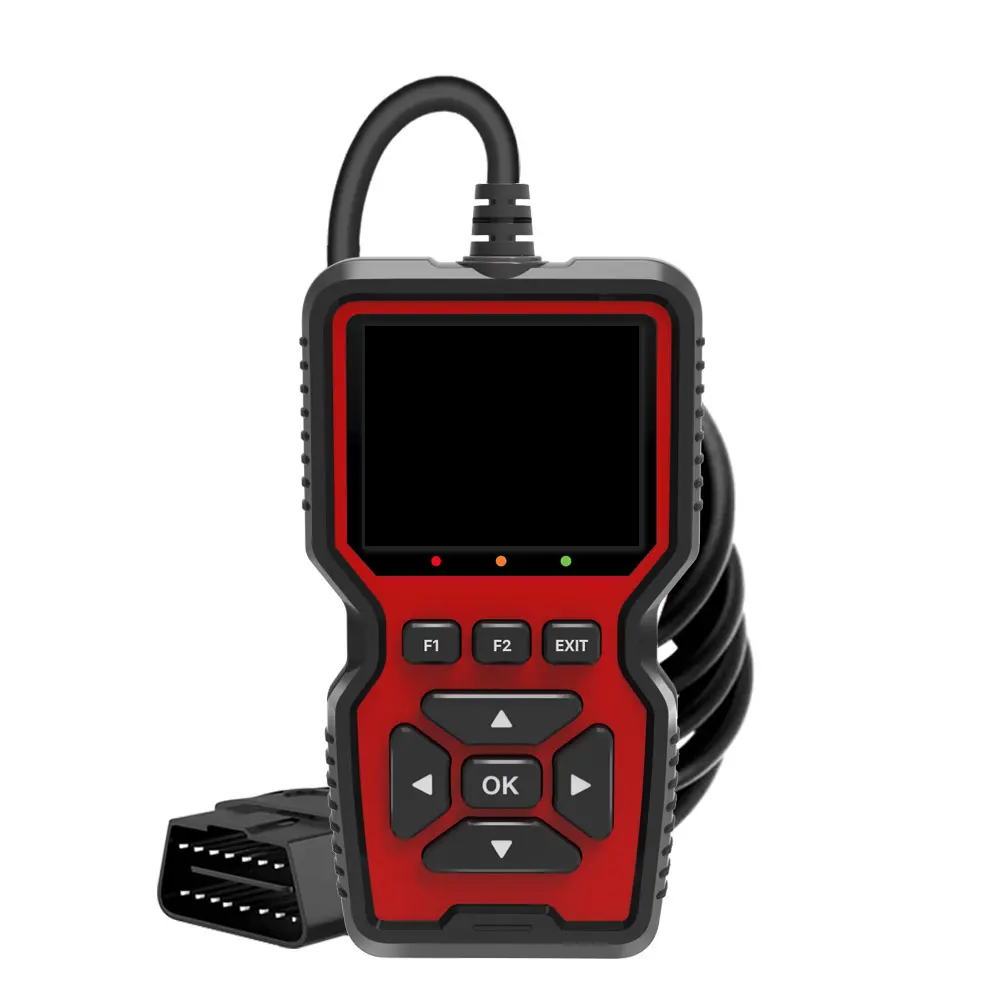
- Retrieve and Confirm DTCs: Use an OBD-II scanner capable of accessing ABS modules to confirm C1247 is the active code. Check for any related ABS or EBCM codes that might provide additional context.
- Visual Inspection: Begin by visually inspecting the wiring harness leading to the ABS hydraulic unit and specifically towards the area of the right rear wheel. Look for any signs of physical damage, chafing, cuts, corrosion, or loose connections. Inspect the multi-pin connector at the ABS hydraulic unit for corrosion, bent pins, or proper seating.
- Locate and Isolate the Circuit: Obtain the vehicle’s specific wiring diagram for the ABS system. Identify the specific pins at the EBCM connector that correspond to the right rear outlet valve solenoid.
- Resistance Measurement at EBCM Connector:
- With the ignition OFF, disconnect the EBCM connector.
- Using a DMM set to ohms, measure the resistance between the two pins at the EBCM connector that correspond to the right rear outlet valve solenoid.
- An open circuit will typically show infinite resistance (indicated as “OL” or “1” on most DMMs). A healthy solenoid coil typically has a resistance of a few ohms (e.g., 2-5 ohms), but this value is vehicle-specific and must be compared to manufacturer specifications.
- If an open circuit is detected here, proceed to isolate the fault further.
- Resistance Measurement at ABS Hydraulic Unit:
- If the hydraulic unit has a separate connector for the solenoid block (or individual solenoid wires are accessible), disconnect it.
- Measure the resistance directly across the right rear outlet valve solenoid’s terminals.
- If infinite resistance is measured directly at the solenoid, the solenoid coil itself is open, indicating an internal fault within the solenoid or the hydraulic unit assembly.
- Wiring Continuity and Short Test:
- If the solenoid itself tests good, the issue lies within the wiring harness.
- With both the EBCM connector and the hydraulic unit connector (if separable) disconnected, use the DMM to check for continuity in each wire segment from the EBCM connector to the hydraulic unit connector that serves the right rear outlet valve. An open circuit in the wire will show infinite resistance.
- Simultaneously, check for shorts to ground and shorts to power (battery voltage) on each wire of the solenoid circuit.
- EBCM Internal Test (if all else passes): If the wiring harness tests good for continuity and no shorts, and the solenoid coil resistance is within specification, then the fault may lie within the EBCM itself, specifically the internal driver circuit for that solenoid. This is typically the last diagnostic step after eliminating external factors.
Recommended Repairs and Solutions
The repair for C1247 depends directly on the root cause identified during diagnosis:
- Repair or Replace Wiring Harness: If an open circuit or short is found in the wiring, repair the damaged section using appropriate automotive-grade wire, splices, and connectors. Ensure proper weather sealing to prevent future issues. If the damage is extensive, replacement of the entire harness segment may be necessary.
- Clean or Replace Connectors: If corrosion or damage is found on connector terminals, carefully clean them using an electrical contact cleaner and a small brush. If terminals are severely damaged or loose, re-pinning the connector or replacing the entire connector housing may be required.
- Replace the ABS Hydraulic Unit Assembly: In most modern vehicles, the ABS solenoids are an integral part of the hydraulic control unit. If the diagnosis points to an internal open circuit within the right rear outlet valve solenoid coil, the entire ABS hydraulic unit (which includes the manifold and solenoids) must typically be replaced as a complete assembly. This can be a complex procedure and often requires special tools for brake line removal and installation.
- Replace the ABS Control Module (EBCM): If all wiring and solenoid tests pass and suspicion remains on the EBCM, replacement of the module may be necessary. In some cases, the EBCM can be replaced separately from the hydraulic unit, while in others, it’s an integrated unit. After replacement, the new EBCM may require programming or calibration using a capable scan tool.
- Post-Repair Procedures: After any repair involving the hydraulic unit or brake lines, a thorough brake system bleed is essential. Many ABS systems require a specific automated bleed procedure initiated by a scan tool to cycle the solenoids and purge air from the modulator. Always clear the DTCs after the repair and perform a test drive to ensure the code does not return and that the ABS system functions correctly.