What Does Code C1279 Mean?
DTC C1279 indicates a general fault within the Yaw Rate Sensor circuit. The Yaw Rate Sensor is a critical component of a vehicle’s advanced safety systems, including the Anti-lock Braking System (ABS), Electronic Stability Program (ESP), Vehicle Stability Control (VSC), and Traction Control System (TCS). Its primary function is to precisely measure the vehicle’s angular velocity around its vertical axis, commonly referred to as the “yaw rate.” This data, typically expressed in degrees per second, is crucial for the ABS/VSC/ESP control module to determine if the vehicle is rotating more or less than intended during a turn, which can indicate oversteer or understeer conditions.
When the ABS/VSC/ESP control module (or sometimes the Powertrain Control Module (PCM) depending on integration) detects an implausible, absent, erratic, or out-of-range signal from the Yaw Rate Sensor, it sets code C1279. This could mean the signal voltage is consistently too high or too low, the signal is intermittent, or the module is not receiving any signal at all. The control module employs internal diagnostics to monitor the sensor’s operational parameters, including its power supply, ground integrity, and the rationality of its output signal compared to other vehicle dynamics sensors (e.g., steering angle sensor, wheel speed sensors, lateral acceleration sensor). A deviation from expected values, or a complete lack of signal, will trigger this fault, indicating a failure within the sensor itself or its associated electrical circuit, thereby compromising the vehicle’s dynamic stability control functions.
Common Symptoms
- Illumination of Warning Lights: The most common symptom is the activation of the ABS warning light, ESP/VSC/TCS warning light, or a combination thereof, on the instrument cluster.
- Reduced or Disabled Stability Control: The vehicle’s electronic stability control system (ESP, VSC) will likely be deactivated, potentially leading to a noticeable difference in vehicle handling during aggressive cornering or slippery conditions.
- Reduced or Disabled Traction Control: Similarly, the traction control system may also be impaired or entirely non-functional.
- ABS System Impairment: In some cases, the ABS system may also be partially or fully disabled due to its reliance on accurate yaw rate data for proper wheel slip control.
- Unusual Vehicle Behavior: While less common, in very specific failure modes (e.g., a sensor outputting a constant, incorrect yaw rate), the system might attempt to intervene inappropriately, although most systems are designed to disable themselves rather than act on bad data.
What Causes the Code C1279?
- Faulty Yaw Rate Sensor: Internal electronic failure of the sensor due to age, vibration, heat, or internal component degradation.
- Wiring Harness Issues:
- Open Circuit: A break in the signal, power, or ground wire preventing communication.
- Short Circuit: A wire shorted to ground or to power, sending an incorrect voltage signal.
- High Resistance: Corrosion or damaged insulation leading to excessive resistance in the wiring, affecting signal integrity.
- Corroded or Loose Electrical Connectors: Poor contact at the Yaw Rate Sensor connector or the ABS/VSC/ESP control module connector due to moisture intrusion, physical damage, or improper seating.
- Poor Ground Connection: Inadequate or intermittent ground connection for the Yaw Rate Sensor, leading to erratic or absent signals.
- Physical Damage to the Sensor: Impact damage, water intrusion, or exposure to harsh chemicals compromising the sensor’s integrity.
- Faulty ABS/VSC/ESP Control Module: While less common, an internal fault within the control module’s input circuit for the Yaw Rate Sensor can cause this code.
How to Diagnose and Troubleshoot
Diagnosing C1279 requires a methodical approach, focusing on the sensor, its wiring, and the control module.
- Initial Visual Inspection:
- Locate the Yaw Rate Sensor (often found under the driver’s seat, passenger seat, or sometimes in the center console area, consult vehicle service manual for exact location).
- Inspect the sensor and its electrical connector for obvious signs of physical damage, corrosion, loose connections, or water intrusion.
- Trace the wiring harness from the sensor back to the ABS/VSC/ESP module, checking for chafing, pinching, or damage.
- OBD-II Scan Tool Diagnostics:
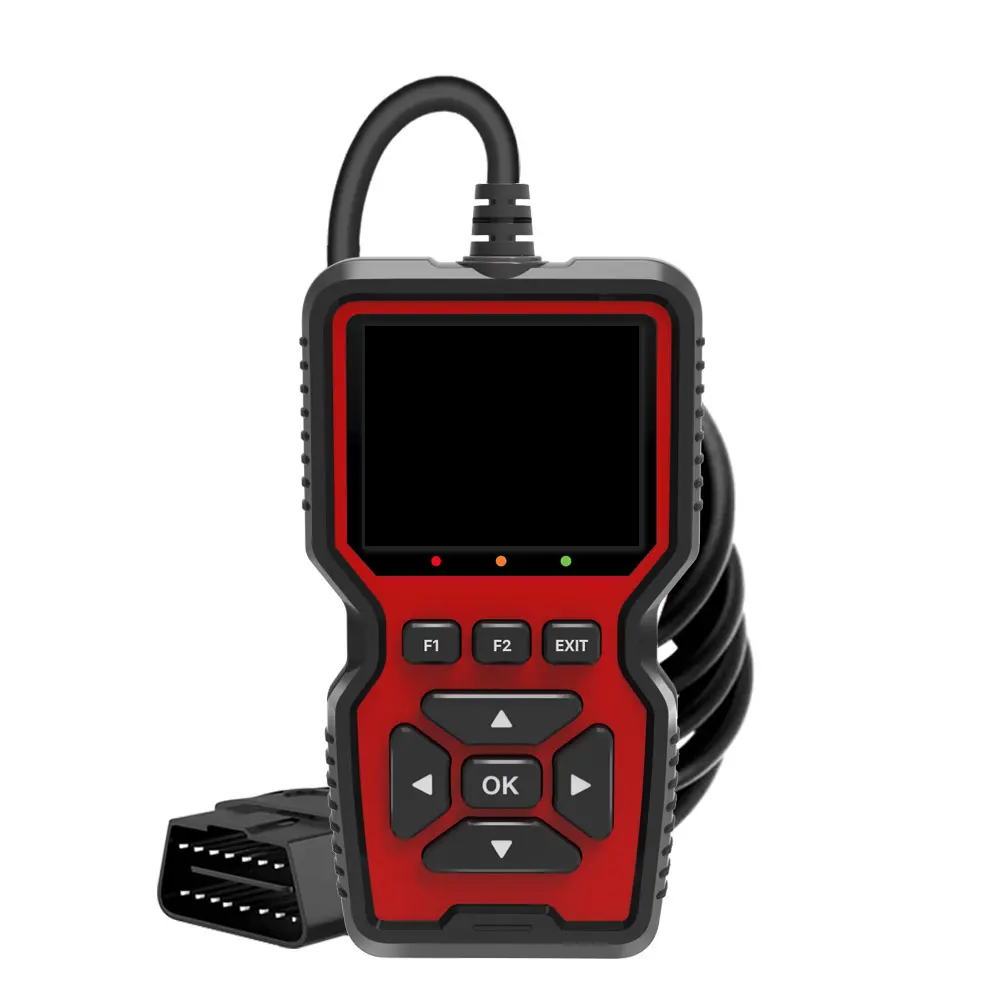
- Connect a capable scan tool (one that can access ABS/VSC/ESP modules) to retrieve the C1279 code and any associated diagnostic trouble codes (DTCs) or pending codes.
- Examine freeze frame data to understand the conditions (vehicle speed, engine RPM, load) under which the code was set, which can provide clues.
- Access live data parameters for the Yaw Rate Sensor. With the vehicle stationary and then performing slow turns (if safe), observe the sensor’s output (often in degrees/second). A properly functioning sensor should show approximately 0 deg/s when stationary and fluctuate predictably with vehicle rotation. If it reads a constant value (e.g., 0, maximum positive, or maximum negative), is erratic, or shows no change, the sensor or its circuit is faulty.
- Compare Yaw Rate Sensor readings with other vehicle dynamics sensors (e.g., Steering Angle Sensor, Lateral Acceleration Sensor) if available. Inconsistent readings between related sensors can indicate a specific sensor fault.
- Perform any available functional tests or calibrations for the Yaw Rate Sensor via the scan tool, as some systems require this.
- Electrical System Testing (Using a Digital Multimeter – DMM):
- Disconnect the Yaw Rate Sensor connector.
- Power Supply Check: With the ignition ON, measure the voltage between the power supply pin at the sensor connector and a known good chassis ground. Typically, this should be 5V or 12V, depending on the vehicle manufacturer and sensor type. Refer to the vehicle’s wiring diagram for correct pin identification and expected voltage.
- Ground Circuit Check: Measure the resistance (ohms) between the ground pin at the sensor connector and a known good chassis ground. Resistance should be very low (typically less than 0.5 ohms).
- Signal Circuit Continuity/Resistance: With the ABS/VSC/ESP module connector also disconnected, measure the resistance of the signal wire(s) between the Yaw Rate Sensor connector and the control module connector. High resistance (above 5 ohms), an open circuit (OL), or a short to ground/power indicates a wiring fault.
- Short to Ground/Power Check: With both connectors disconnected, check for continuity between the signal wire(s) and chassis ground, and between the signal wire(s) and the B+ (battery positive) terminal. There should be no continuity.
- Sensor Internal Resistance (Limited Application): For some older, passive sensors, you might check internal resistance, but most modern active sensors provide no useful DMM resistance readings and require dynamic testing or oscilloscope use for signal verification.
- Control Module Check: If all sensor and wiring tests pass conclusively, and the power/ground to the ABS/VSC/ESP module itself has been verified, the fault may lie within the control module. This is typically a last resort, as module replacement is often costly and may require specialized programming.
Recommended Repairs and Solutions
Once the root cause of C1279 has been identified through thorough diagnosis, the following repairs are typically recommended:
- Repair or Replace Wiring Harness: If a damaged wire (open, short, or high resistance) is found, repair the specific section of the wiring harness. Use proper automotive wiring repair techniques, including soldering, heat shrink tubing, and weather-resistant connectors to ensure a durable repair. If the damage is extensive, replacing the entire harness segment may be more practical.
- Clean or Replace Connectors: If corrosion or poor contact is identified at the sensor or module connectors, clean the terminals thoroughly using an electrical contact cleaner and a small brush. Apply dielectric grease to prevent future corrosion. If the connectors are severely damaged or corroded, they should be replaced.
- Replace Yaw Rate Sensor: If the Yaw Rate Sensor itself is determined to be faulty (e.g., no output, erratic readings, internal fault), replace it with a new, high-quality OEM or equivalent aftermarket unit.
- Mechanic’s Tip: After replacing the Yaw Rate Sensor, it is crucial to perform a zero-point calibration or similar sensor initialization procedure using a capable scan tool. This step “teaches” the ABS/VSC/ESP module the sensor’s neutral position and is often mandatory to clear the DTC and restore full system functionality. Failure to perform this calibration will often result in the code immediately returning.
- Replace ABS/VSC/ESP Control Module: This is a last resort repair and should only be undertaken after meticulously ruling out the sensor and all wiring as the cause. Control module replacement often requires programming or coding to the specific vehicle, which must be performed by a dealership or a specialized independent shop with the necessary equipment.
After any repair, clear the DTCs with a scan tool and perform an extended test drive that includes various driving maneuvers (e.g., turns, braking, acceleration) to verify that the stability control system operates correctly and the C1279 code does not reappear.