What Does Code C1282 Mean?
The diagnostic trouble code C1282 signifies a Lateral Accelerometer Signal Fault within the vehicle’s electronic stability control (ESC) or anti-lock braking system (ABS). This code indicates that the Vehicle Stability Control Module (VSCM), often integrated within the ABS control module, has detected an implausible, inconsistent, or absent signal from the lateral accelerometer sensor. The lateral accelerometer is a critical component of the vehicle dynamics sensing array, responsible for measuring the g-forces acting on the vehicle from side to side during turns, evasive maneuvers, and other dynamic events. The VSCM relies on this precise data, alongside inputs from the yaw rate sensor and steering angle sensor, to accurately determine the vehicle’s direction of travel and its intended path. When the signal from the lateral accelerometer is deemed faulty – either stuck, out of expected range, intermittent, or completely missing – the VSCM interprets this as a critical data integrity issue. This fault compromises the module’s ability to accurately calculate vehicle slip angles and potential instability, leading to the disablement of stability-enhancing systems such as ESC, traction control (TCS), and sometimes even affecting advanced braking functions.
Common Symptoms
- Illuminated Warning Lights: The most common symptom is the illumination of the ABS, Traction Control (TCS), and/or Electronic Stability Control (ESC) warning lights on the instrument cluster.
- Inoperable Stability/Traction Control: The vehicle’s stability control and traction control systems will be disabled, potentially leading to reduced vehicle control in slippery conditions or during aggressive maneuvering.
- Altered Brake Performance: In some highly integrated systems, a fault in the stability control system can indirectly affect brake assist or other advanced braking features, though this is less direct than ABS faults.
- Impact on Power Steering: Certain electric power steering (EPS) systems integrate with stability control for enhanced steering feel and responsiveness; a fault here could subtly alter steering dynamics, though typically without a distinct symptom.
What Causes the Code C1282?
- Faulty Lateral Accelerometer Sensor: The sensor itself can fail internally due to electrical component degradation, physical impact, or manufacturing defects, leading to an incorrect or absent signal.
- Wiring Harness Issues: Damage to the wiring harness connecting the lateral accelerometer to the ABS/VSC module, including open circuits, short circuits to power or ground, or excessive resistance due to chafing, corrosion, or pinching.
- Poor Electrical Connections: Corroded, loose, or bent pins within the sensor connector or the main ABS/VSC module connector can disrupt signal transmission and power supply.
- Faulty ABS/VSC Control Module: While less frequent, an internal malfunction within the ABS or VSC control module itself can prevent it from correctly processing the lateral accelerometer signal or communicating with the sensor.
- Improper Sensor Mounting or External Interference: Although rare, improper installation, severe vibrations, or strong electromagnetic interference can potentially cause erratic readings from the sensor.
How to Diagnose and Troubleshoot
Diagnosing C1282 requires a methodical approach, focusing on the sensor, its wiring, and the control module.
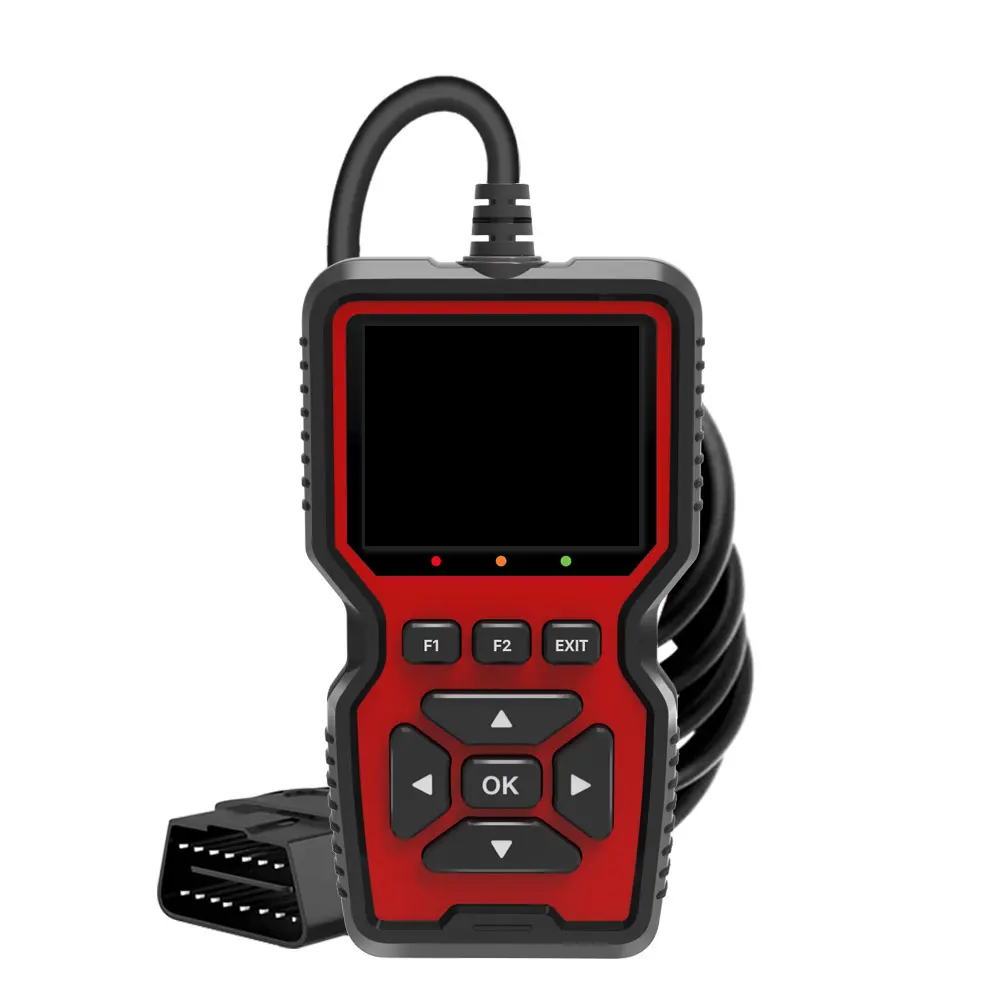
- Retrieve All DTCs: Connect an OBD-II scanner capable of accessing ABS/VSC module data. Record all active and historical codes. Note if C1282 is a current (hard) or history code. This helps determine if the fault is intermittent.
- Visual Inspection:
- Locate the lateral accelerometer sensor (typically found under the center console, under a seat, or in the trunk area, depending on vehicle make/model).
- Inspect the sensor and its electrical connector for any signs of physical damage, corrosion, or loose connections.
- Examine the entire wiring harness leading from the sensor to the ABS/VSC module for obvious signs of chafing, cuts, or pinches. Check for water intrusion in the vehicle cabin, particularly near the sensor or module, which can cause corrosion.
- Electrical System Verification with DMM:
- Power and Ground: With the ignition on (and sensor disconnected), use a digital multimeter (DMM) to check for proper power supply (typically 5V reference) and a solid ground connection at the lateral accelerometer sensor connector. Refer to the vehicle’s wiring diagram for exact pinouts and expected voltage values.
- Signal Circuit Integrity: Back-probe the signal wire at the sensor connector (or module connector, if more accessible) with the sensor connected. With the ignition on and the vehicle stationary on a level surface, the signal voltage should be stable and within the manufacturer’s specified range (e.g., often around 2.5V for a 5V reference system). Gently rock the vehicle side-to-side (if safe and feasible) to see if the voltage output changes predictably. An unchanging or out-of-range voltage indicates a sensor or wiring issue.
- Continuity and Shorts: Disconnect both the sensor and the ABS/VSC module. Use the DMM to check for continuity on the signal wire between the two connectors to rule out an open circuit. Also, check for short circuits to ground or to the power supply wire within the harness.
- Scan Tool Live Data Analysis:
- Connect an advanced scan tool capable of accessing ABS/VSC module live data.
- Select the “Lateral Acceleration Sensor” or similar parameter in the live data stream.
- With the vehicle stationary on a level surface, observe the live data reading. It should be very close to 0 m/s² (or 0g).
- Perform a slow, controlled test drive, including gentle turns. Monitor if the lateral acceleration reading changes smoothly and logically in response to vehicle movement. An unchanging value (stuck at 0 or a fixed non-zero value), erratic readings, or an “implausible” status indicates a sensor or signal path fault.
- Module Communication Check: Ensure the ABS/VSC module is fully communicating with the scan tool. If communication is lost, the issue may be with the module itself or its power/ground circuits.
Recommended Repairs and Solutions
Once the diagnostic steps have isolated the fault, the following repairs are typically recommended:
- Repair or Replace Wiring and Connectors: If the DMM tests or visual inspection revealed damaged wiring, corroded connectors, or loose terminals, repair the affected sections of the harness. Use high-quality automotive-grade connectors, heat-shrink tubing, and proper crimping techniques for a durable, weather-resistant repair. Ensure all connections are secure.
- Replace the Lateral Accelerometer Sensor: If the sensor’s voltage output is incorrect, stuck, or inconsistent despite proper power and ground, the sensor itself is likely faulty and requires replacement.
- Mechanic’s Tip: When replacing the sensor, ensure it is mounted correctly and tightened to the manufacturer’s specified torque values. Improper mounting can lead to inaccurate readings.
- Crucial Step: After replacing the lateral accelerometer sensor, a zero-point calibration or initialization procedure is almost always required. This procedure, performed with an advanced scan tool, teaches the control module the sensor’s neutral position. Failure to perform this calibration will often result in the warning lights remaining on and the C1282 code persisting, even with a new, functional sensor.
- Replace the ABS/VSC Control Module: If all other components (sensor, wiring, power, ground) have been thoroughly tested and confirmed to be in good working order, and the module still fails to process the lateral acceleration signal correctly, the ABS/VSC control module may be internally faulty. This is generally the most expensive repair and should only be undertaken after meticulously ruling out all other possibilities. Module replacement often requires programming or coding to the vehicle’s specific VIN and options.
- Clear DTCs and Test Drive: After any repair, clear all stored DTCs using an OBD-II scanner. Perform an extended test drive under various conditions to confirm that the warning lights remain off and the stability control system functions correctly. Monitor live data from the lateral accelerometer during the test drive to verify its operation.