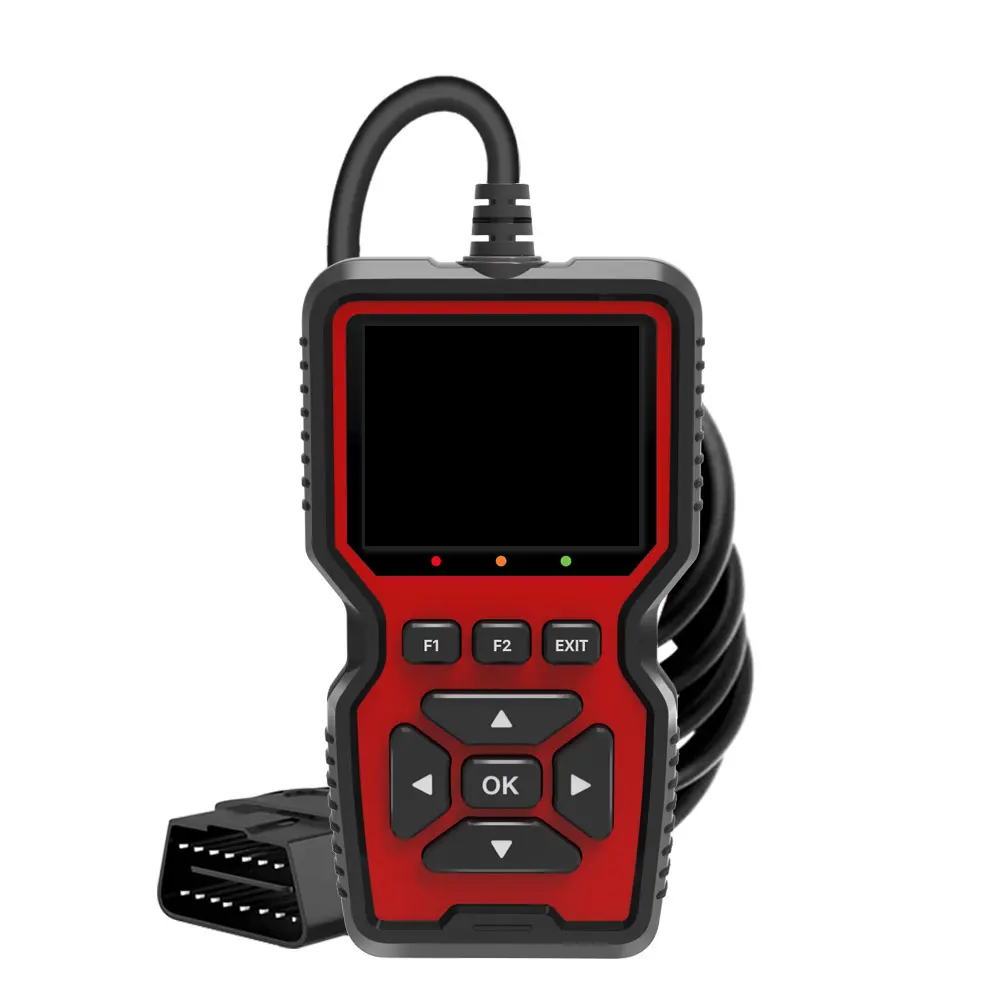
What Does Code C1401 Mean?
Diagnostic Trouble Code C1401 indicates an “Open Circuit” condition detected by the Anti-lock Braking System (ABS) or Vehicle Stability Control (VSC) module within the electrical circuit of the Right Front (RF) Traction Control Valve. This valve is a solenoid housed within the ABS Hydraulic Control Unit (HCU) responsible for modulating brake fluid pressure to the right front wheel during traction control, stability control, or dynamic braking events. The ABS/VSC module continuously monitors the electrical integrity of these solenoid circuits, typically by measuring resistance, current draw, or voltage feedback. An “open circuit” signifies that the module has detected an interruption in the electrical path to the RF traction control valve, meaning there is infinite or extremely high resistance, preventing the solenoid from being energized. This fault prevents the ABS/VSC module from activating the specific valve to control wheel slip, thereby disabling or severely limiting the functionality of the traction control and stability control systems for that wheel. This condition is immediately flagged, and the relevant warning indicators are illuminated on the instrument cluster.
Common Symptoms
- ABS Warning Light ON: The primary indicator that a fault exists within the ABS system.
- Traction Control System (TCS) Light ON: Indicates the traction control system is disabled or malfunctioning.
- Vehicle Stability Control (VSC) Light ON: Signifies that the stability control system is also impacted and likely disabled.
- Decreased or Inoperative TCS/VSC Functionality: The vehicle will not be able to effectively prevent wheel spin or maintain directional stability during slippery conditions or aggressive maneuvers, as the system cannot modulate brake pressure at the right front wheel.
- No Immediate Change in Braking Performance: Under normal braking conditions without ABS intervention, the vehicle’s braking feel and performance typically remain unchanged. However, ABS functionality itself might be compromised if the fault affects a shared component, though often the ABS remains partially functional for other wheels.
What Causes the Code C1401?
- Open Circuit within the RF Traction Control Valve Solenoid: The most direct cause, indicating an internal electrical break in the solenoid coil itself. This requires replacement of the solenoid, which often means replacing the entire ABS Hydraulic Control Unit (HCU) as solenoids are rarely serviceable individually.
- Damaged or Corroded Wiring Harness: An open circuit (break) in the wiring leading from the ABS/VSC module to the RF traction control valve. This can be caused by physical damage (chafing, cuts), corrosion at splices, or rodent damage.
- Corroded or Loose Electrical Connectors: Poor electrical contact at the ABS/VSC module connector or at the ABS HCU connector specifically affecting the RF traction control valve circuit. This can manifest as bent pins, spread terminals, or heavy oxidation.
- Faulty ABS/VSC Control Module: While less common, an internal failure within the ABS/VSC control module’s driver circuit responsible for activating the RF traction control valve can cause this code. This is usually considered after verifying the valve and wiring are intact.
How to Diagnose and Troubleshoot
Diagnosis of C1401 requires methodical electrical testing using a Digital Multimeter (DMM) and a capable OBD-II scan tool.
- Verify Code and Freeze Frame Data: Connect a professional-grade scan tool to confirm C1401 is present. Check for any other related ABS/VSC codes that might provide additional context. Review freeze frame data to understand operating conditions when the fault occurred.
- Visual Inspection:
- Perform a thorough visual inspection of the wiring harness associated with the ABS system, paying close attention to the area around the ABS Hydraulic Control Unit (HCU) and leading towards the ABS/VSC control module. Look for signs of chafing, cuts, impact damage, or rodent damage.
- Inspect the electrical connectors at both the ABS HCU and the ABS/VSC control module. Disconnect them (with the battery disconnected for safety) and examine terminals for corrosion, bent pins, or signs of poor contact. Clean any corrosion using electrical contact cleaner.
- Electrical Resistance Test (Solenoid and Wiring):
- Isolate the Circuit: With the ignition OFF and battery disconnected, locate the specific pins for the Right Front traction control valve solenoid at the ABS HCU connector. Consult the vehicle’s factory wiring diagrams for pin identification.
- Test Solenoid Resistance: Measure the resistance across the two terminals of the RF traction control valve solenoid directly at the HCU connector. Compare this reading to factory specifications (typically a low resistance value, e.g., 2-10 Ohms). An “OL” (Open Line) reading on the DMM indicates an open circuit within the solenoid itself.
- Test Wiring Continuity: If the solenoid tests good, disconnect the ABS/VSC control module connector. Identify the corresponding pins for the RF traction control valve circuit at both the HCU connector and the ABS/VSC module connector. Perform a continuity test on each wire from end to end. An “OL” reading indicates an open circuit in the wiring. Simultaneously, check for any short circuits to ground or to other power wires within the circuit.
- Bidirectional Control Test (if applicable): If your scan tool supports bidirectional control, attempt to actuate the RF traction control valve solenoid while monitoring its current draw or status. If the valve fails to respond or shows an abnormal current draw, it further points to a solenoid or circuit issue.
- Voltage Drop Test (Advanced): If wiring and solenoid resistance appear within specification, but the code persists, a voltage drop test can identify excessive resistance under load. This typically requires specialized equipment or careful setup to simulate activation.
- ABS/VSC Module Verification: If all wiring and the RF traction control valve solenoid test good, and no issues are found, the ABS/VSC control module itself may be faulty, specifically the internal driver circuit for the RF valve. This is typically a last resort after ruling out all other possibilities.
Recommended Repairs and Solutions
Once the root cause of the C1401 code is identified, the repair path becomes clear:
- Repair or Replace Damaged Wiring: If an open circuit is found in the wiring harness, perform a professional wire repair using proper soldering techniques and heat-shrink tubing. Ensure the repair is weather-sealed and properly routed to prevent future damage. For extensive damage, replacing the affected section of the wiring harness or the entire sub-harness may be necessary.
- Clean and Secure Connectors: If corrosion or loose terminals are found in the electrical connectors, clean them thoroughly with a specialized electrical contact cleaner and a small brush. Use a pick or small flat-head screwdriver to carefully tighten any spread terminals. Ensure all connectors are fully seated and locked into place.
- Replace ABS Hydraulic Control Unit (HCU): If the internal resistance test confirms an open circuit within the RF traction control valve solenoid, the HCU will likely need to be replaced. For most vehicles, these solenoids are integrated into the HCU and are not individually serviceable. After HCU replacement, the brake system must be thoroughly bled, often requiring a specific ABS bleed procedure using a scan tool to cycle the solenoids and remove air from the modulator.
- Replace ABS/VSC Control Module: If extensive diagnostics conclusively point to an internal failure of the ABS/VSC control module (e.g., faulty driver circuit for the RF valve), the module will need replacement. Be aware that many ABS/VSC modules require programming, calibration, or variant coding after installation, which typically necessitates a factory-level scan tool.
- Clear Codes and Road Test: After any repair, clear all diagnostic trouble codes using a scan tool. Perform a thorough road test, including conditions where traction control or stability control would normally engage (e.g., accelerating on a loose surface, sharp turns at low speed if safe) to confirm the repair and ensure the code does not return.