What Does Code P0040 Mean?
DTC P0040, which stands for “O2 Sensor Signals Swapped Bank 1 Sensor 1 / Bank 2 Sensor 1,” indicates that the Engine Control Module (ECM) or Powertrain Control Module (PCM) has detected an anomalous condition where the electrical signals from the upstream (pre-catalyst) oxygen sensors for Bank 1 and Bank 2 appear to be interchanged. The ECM/PCM continuously monitors the voltage output and/or heating element activity of these sensors to adjust fuel trim strategies and ensure optimal air-fuel ratio. The control module expects specific dynamic voltage fluctuations from each sensor that correlate directly with the exhaust gas composition of its respective engine bank. When the ECM/PCM performs plausibility checks – for instance, by commanding a momentary lean or rich condition on a specific bank and observing the O2 sensor response – it finds that the O2 sensor designated as Bank 1 Sensor 1 is responding as if it were Bank 2 Sensor 1, and vice-versa. This confusion prevents the ECM/PCM from accurately managing fuel delivery to each bank, severely compromising closed-loop fuel control, combustion efficiency, and ultimately, exhaust emissions. This code is almost exclusively indicative of an electrical wiring misconnection rather than a faulty sensor itself.
Common Symptoms
- Illuminated Malfunction Indicator Lamp (MIL) / Check Engine Light
- Reduced Fuel Economy
- Poor Engine Performance or Hesitation (especially during acceleration)
- Rough Idling or Stalling
- Increased Exhaust Emissions (potential for failed emissions inspection)
- Slight exhaust odor due to incorrect air-fuel mixture
What Causes the Code P0040?
- Incorrectly connected O2 sensor electrical connectors, where the Bank 1 Sensor 1 connector is plugged into the Bank 2 Sensor 1 sensor, and the Bank 2 Sensor 1 connector is plugged into the Bank 1 Sensor 1 sensor. This is the most prevalent cause, often occurring after engine maintenance or O2 sensor replacement, particularly on V-configuration engines (V6, V8, etc.) where sensors are geographically close.
- Damage to the wiring harness where the signal wires for Bank 1 Sensor 1 and Bank 2 Sensor 1 have been inadvertently spliced or shorted together or swapped during a repair.
- Extremely rare: An internal fault within the Engine Control Module (ECM/PCM) that causes it to misinterpret or misroute sensor input signals. This should only be considered after exhaustive verification of wiring and connections.
How to Diagnose and Troubleshoot
Diagnosing P0040 requires a systematic approach focusing primarily on the physical connection and integrity of the O2 sensor wiring harnesses.
- Visual Inspection:
- Locate O2 Sensors: Identify Bank 1 Sensor 1 (upstream pre-catalyst sensor on the bank containing cylinder #1) and Bank 2 Sensor 1 (upstream pre-catalyst sensor on the opposite bank).
- Check Connectors: Carefully trace the wiring from each sensor back to its electrical connector. The absolute first and most critical step is to visually confirm that the Bank 1 Sensor 1 electrical connector is plugged into the Bank 1 Sensor 1 sensor, and the Bank 2 Sensor 1 electrical connector is plugged into the Bank 2 Sensor 1 sensor. On many engines, these connectors are identical or very similar, making inadvertent swapping easy during service.
- Inspect Wiring Harnesses: Examine the wiring harnesses for Bank 1 Sensor 1 and Bank 2 Sensor 1 for any signs of damage, chafing, cuts, or improper past repairs. Look for compromised insulation or exposed wires.
- OBD-II Scanner Live Data Analysis:
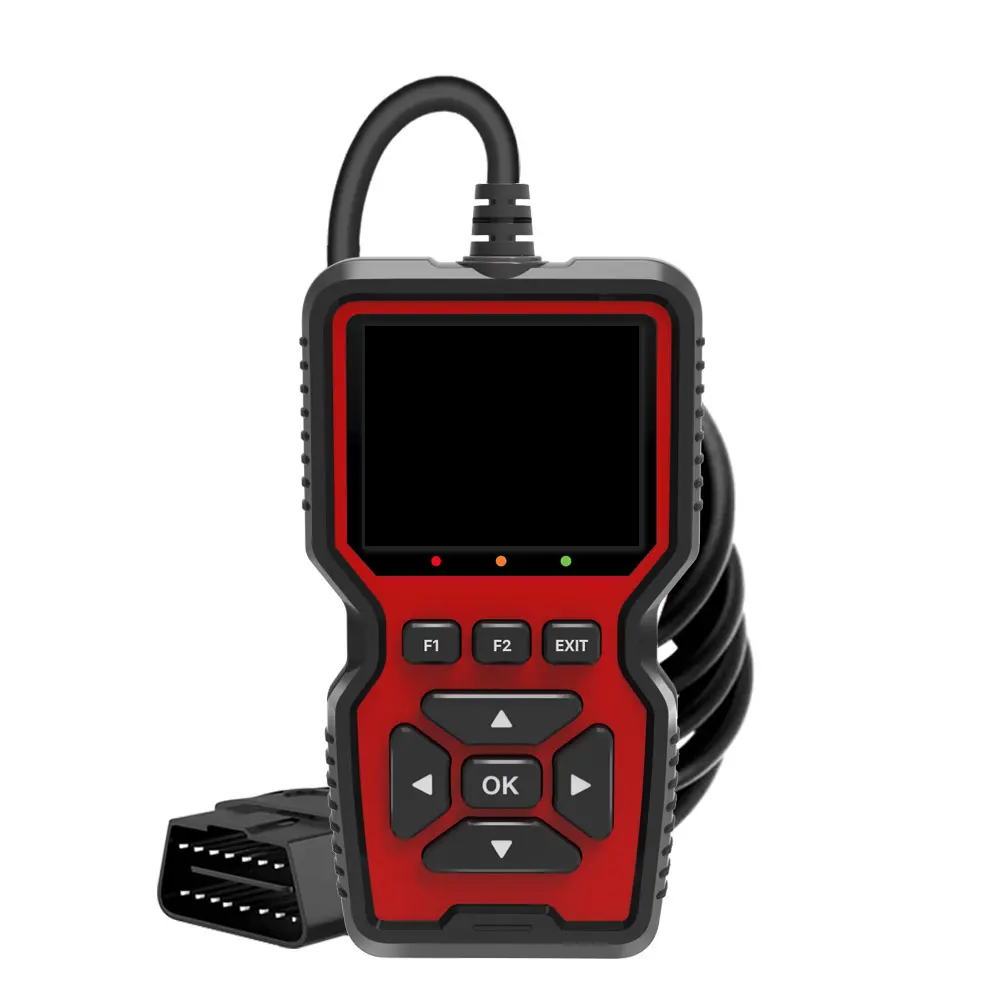
- Connect Scanner: Connect an advanced OBD-II scanner capable of displaying live data streams.
- Monitor Sensor Voltages: With the engine at operating temperature and in closed-loop operation, monitor the “O2 Sensor Bank 1 Sensor 1 Voltage” and “O2 Sensor Bank 2 Sensor 1 Voltage” parameters. Both sensors should show rapid fluctuations between approximately 0.1V (lean) and 0.9V (rich).
- Plausibility Test:
- Fuel Trim Observation: Drive the vehicle and observe Short Term Fuel Trims (STFT) for Bank 1 and Bank 2. If the O2 sensors are swapped, the ECM/PCM will attempt to correct perceived rich/lean conditions on the wrong bank. For example, if Bank 1 is running rich, the B1S1 sensor will show high voltage. If this signal is actually coming from the B2S1 connector (which is now effectively B1S1 due to the swap), the ECM will lean out Bank 1. Concurrently, the actual B1S1 (now connected to B2S1’s connector) might show a lean condition, causing the ECM to richen Bank 2. This creates opposing and illogical fuel trim corrections.
- Controlled Rich/Lean Test (Advanced): While the engine is running in closed-loop, briefly and carefully introduce a controlled amount of propane (enriching) or create a vacuum leak (leaning) near the intake manifold of a single bank. Observe which O2 sensor voltage reacts appropriately. If enriching Bank 1 causes “O2 Sensor Bank 2 Sensor 1 Voltage” to go rich, and vice-versa, the sensors are definitively swapped. (Exercise extreme caution and ensure proper ventilation for this test).
- Digital Multimeter (DMM) Testing (if visual inspection and live data are inconclusive):
- This step is usually not necessary for a P0040 if the cause is a simple connector swap. However, if wiring damage is suspected, use the DMM.
- Check Harness Continuity: Disconnect the O2 sensor connectors from the sensors and from the ECM/PCM (refer to wiring diagrams for pinouts). Use the DMM in continuity mode to check for continuity between the corresponding signal wire at the O2 sensor harness connector and the correct pin at the ECM/PCM connector for both banks. This verifies the integrity of the signal circuit.
- Check for Shorts: Also check for shorts to ground or power on the signal wires.
Recommended Repairs and Solutions
The solution for DTC P0040 is typically straightforward once the root cause is identified, overwhelmingly pointing to an electrical connection error.
- Correct Swapped O2 Sensor Connectors: The most common repair involves simply unplugging the Bank 1 Sensor 1 and Bank 2 Sensor 1 electrical connectors and re-connecting them to their correct respective O2 sensors. Ensure the connectors click firmly into place to establish a secure electrical connection. This step alone resolves the vast majority of P0040 codes.
- Repair Wiring Harness Damage: If the visual inspection revealed any damage to the wiring harness (cuts, chafes, splices, or short circuits), the damaged section must be professionally repaired. Use appropriate automotive-grade wire, heat-shrink butt connectors, and soldering techniques if necessary. Avoid temporary fixes like electrical tape, as they are prone to failure due to engine heat, vibration, and moisture. Ensure correct wire-to-wire connections based on the vehicle’s wiring diagram.
- Clear DTC and Verify Repair: After performing the repair, use an OBD-II scanner to clear the P0040 diagnostic trouble code from the ECM/PCM.
- Perform a Drive Cycle and Monitor: Conduct a thorough road test under various driving conditions (idle, steady cruise, acceleration) to allow the ECM/PCM to re-enter closed-loop operation and re-evaluate the O2 sensor signals. Monitor live O2 sensor voltages and fuel trims (STFT and LTFT for both banks) to confirm they are behaving normally and the code does not return. Fuel trims should ideally hover close to 0% (typically within +/-10%).
- ECM/PCM Replacement (Extremely Rare): Only in the rare event that all wiring and sensor connections have been meticulously verified as correct, and the P0040 code persistently returns, should an ECM/PCM internal fault be suspected. Replacement of the ECM/PCM is an expensive and complex procedure that often requires programming to the vehicle and should only be considered as a last resort by qualified technicians after all other avenues have been exhausted.
Mechanics’ Tips: Always take photographic evidence or label connectors before disconnecting multiple O2 sensors during engine repairs to prevent accidental swaps. This simple proactive measure can save significant diagnostic time later. After any repair involving O2 sensors, a quick check of live data on a scanner can confirm proper operation before the customer even leaves the bay.