What Does Code P0071 Mean?
The diagnostic trouble code P0071 indicates an “Ambient Air Temperature Sensor Range/Performance” issue. This signifies that the Powertrain Control Module (PCM), often referred to as the Engine Control Module (ECM), has detected a rationality fault with the signal from the Ambient Air Temperature (AAT) sensor. The AAT sensor is typically a thermistor, a resistor whose resistance changes predictably with temperature, thereby altering the voltage signal sent back to the PCM. The PCM uses this signal to determine the external air temperature, which is crucial for various calculations including cold-start fuel enrichment strategies, idle air control, and input for the automatic climate control system. A “Range” fault suggests the sensor’s voltage output is continuously outside the expected minimum or maximum thresholds programmed into the PCM for a given operational state. A “Performance” fault implies the sensor’s signal is inconsistent, erratic, or, more commonly, implausible when correlated with other temperature sensors (such as the Intake Air Temperature (IAT) sensor during cold soak periods or the Engine Coolant Temperature (ECT) sensor) or known environmental conditions. This discrepancy causes the PCM to flag an inconsistency, recognizing that the AAT sensor is not providing reliable data, thus affecting the logic for subsystems that rely on accurate ambient temperature readings.
Common Symptoms
- Illumination of the Malfunction Indicator Lamp (MIL), commonly known as the Check Engine Light.
- Inaccurate or absent ambient temperature display on the vehicle’s dashboard, if equipped.
- Malfunctioning automatic climate control system, such as incorrect temperature regulation, failure to activate the A/C compressor, or erratic fan speed operation.
- Potential, albeit often subtle, impact on cold-start performance or fuel economy due to compromised fuel trim calculations influenced by incorrect air density assumptions.
- In rare cases, altered transmission shift points if the vehicle’s transmission control module incorporates ambient temperature data into its adaptive strategies.
What Causes the Code P0071?
- Faulty Ambient Air Temperature (AAT) sensor: Internal open circuit, short circuit, or a drift in the thermistor’s resistance characteristics.
- Damaged or corroded wiring harness: Frayed, chafed, or shorted wires within the AAT sensor circuit, or corrosion at the sensor or PCM connector terminals.
- Poor electrical connection: Loose, bent, or corroded pins at the AAT sensor connector or the PCM connector.
- Physical damage to the AAT sensor: Sensor housing compromised or sensing element exposed to direct moisture/debris, leading to inaccurate readings.
- Less commonly, a fault within the Powertrain Control Module (PCM) itself, affecting the sensor reference voltage supply or signal processing circuitry.
How to Diagnose and Troubleshoot
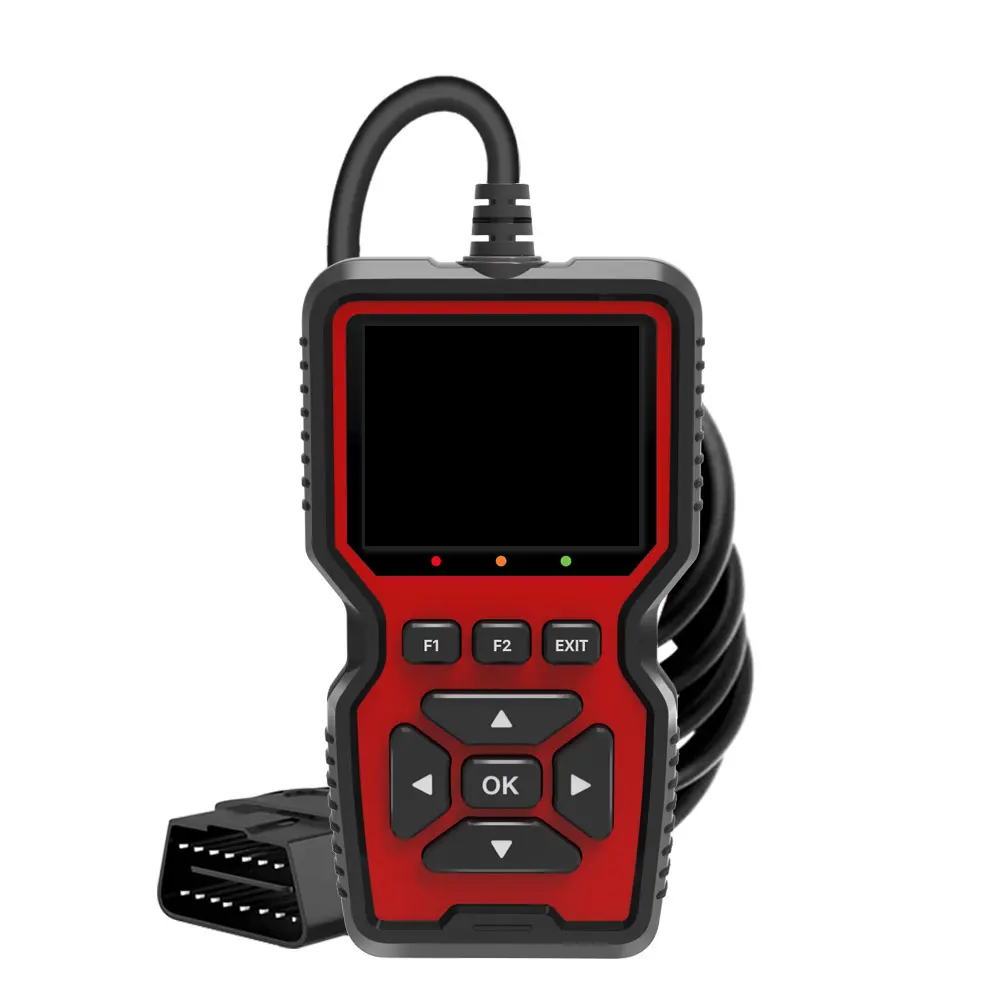
Diagnosis of P0071 requires a methodical approach using a combination of visual inspection, an OBD-II scan tool, and a digital multimeter (DMM). Begin by performing a thorough visual inspection of the AAT sensor, its connector, and the associated wiring harness for any signs of physical damage, corrosion, or improper routing that could lead to chafing or pinching. Pay close attention to the area around the sensor and along its path to the PCM. Next, connect an OBD-II scan tool and access live data stream. Monitor the AAT sensor reading and compare it with the Intake Air Temperature (IAT) and Engine Coolant Temperature (ECT) readings, especially after a prolonged cold soak period (engine off for several hours). All three temperatures should be relatively close to the actual ambient temperature under these conditions. If the AAT reading is significantly different or erratic, proceed with DMM tests. Disconnect the AAT sensor connector and, with the ignition key in the ON position (engine off), test for the 5-volt reference signal at the appropriate pin from the PCM and verify a good ground connection at the other pin. Then, measure the resistance of the AAT sensor itself using the DMM. Compare this reading to manufacturer specifications or a known good sensor; typically, resistance should decrease as temperature increases. Back-probe the sensor connector while it’s connected and the ignition is ON to measure the signal voltage returning to the PCM, observing if it changes predictably with temperature changes (e.g., using an external heat source like a hairdryer or cooling spray cautiously). If all sensor and circuit checks are within specification, but the code persists, it might indicate an intermittent fault or, in rare cases, an internal PCM issue, though this is highly improbable for an AAT circuit.
Recommended Repairs and Solutions
The most common and recommended repair for a P0071 code is the replacement of the Ambient Air Temperature (AAT) sensor itself, as these thermistors can degrade over time or suffer internal damage. Ensure the replacement sensor is an OEM equivalent or meets strict OEM specifications for accurate readings. If the diagnosis points to wiring issues, meticulously repair any damaged sections of the harness using proper automotive-grade wiring, soldering techniques, and heat-shrink tubing to ensure a durable and weatherproof connection. Address any corrosion or damage found at the sensor or PCM connectors by cleaning the terminals with electrical contact cleaner or, if necessary, replacing the connector shell and terminals. After any repair, clear the diagnostic trouble codes using the OBD-II scan tool. It is crucial to perform a drive cycle and re-monitor the AAT live data to confirm that the sensor is now providing accurate and consistent readings and that the P0071 code does not reappear. Always ensure the new sensor is correctly positioned to accurately measure ambient air and is not exposed to localized heat sources that could skew its readings.