What Does Code P0106 Mean?
The diagnostic trouble code P0106 indicates a “Manifold Absolute Pressure/Barometric Pressure Circuit Range/Performance Problem.” This signifies that the Engine Control Module (ECM), also known as the Powertrain Control Module (PCM), has detected an illogical or out-of-range signal from the Manifold Absolute Pressure (MAP) sensor when compared to other critical engine parameters. The MAP sensor measures the pressure inside the intake manifold, which is directly related to engine load and vacuum/boost conditions. The ECM uses this input, often in conjunction with an internal or external Barometric Pressure (BARO) sensor reading (atmospheric pressure), to precisely calculate air density, determine fuel delivery (fuel injection pulse width), and adjust ignition timing.
A “range/performance” issue implies that the MAP sensor’s signal is not necessarily completely absent or shorted, but rather provides data that is inconsistent with what the ECM expects under specific engine operating conditions. For instance, at key-on, engine-off (KOEO), the MAP sensor reading should closely match the BARO pressure. At idle, the MAP pressure should be significantly lower (indicating high vacuum). If the ECM observes a MAP signal that is too high or too low for the current throttle position, engine speed, or BARO pressure, or if the signal does not react quickly and predictably to changes in engine load, P0106 will be set. This discrepancy can lead to severe air-fuel mixture inaccuracies, impacting overall engine operation and emissions control.
Common Symptoms
- Illuminated Check Engine Light (CEL): This is almost always the first and most direct symptom.
- Rough Idling: Due to incorrect air-fuel mixture causing engine instability.
- Engine Hesitation or Stalling: Especially during acceleration or deceleration.
- Reduced Engine Performance: Noticeable lack of power, sluggish acceleration, or inability to reach higher RPMs.
- Poor Fuel Economy: An overly rich or lean condition will waste fuel.
- Difficulty Starting: The ECM may struggle to provide the correct fuel for ignition.
- Black Smoke from Exhaust: Indicative of a rich fuel condition, often caused by the ECM incorrectly assuming a higher engine load/air volume.
- Engine Misfires: Resulting from an imbalanced air-fuel ratio.
What Causes the Code P0106?
- Faulty Manifold Absolute Pressure (MAP) Sensor: The sensor itself may be internally defective, providing inaccurate or erratic voltage signals to the ECM.
- Vacuum Leaks in the Intake System: Leaks in vacuum hoses, intake manifold gaskets, PCV system, or brake booster can introduce unmetered air, causing the manifold pressure to be higher than expected by the ECM at idle or light load.
- Restricted MAP Sensor Port: Carbon buildup or debris within the intake manifold passage leading to the MAP sensor can hinder accurate pressure readings.
- Wiring Harness Issues: Open circuits, short circuits, or excessive resistance in the MAP sensor’s signal, reference voltage, or ground wires. This includes chafing, corrosion, or physical damage.
- Loose or Corroded Electrical Connections: Poor contact at the MAP sensor connector or at the ECM connector pins.
- Faulty Barometric Pressure (BARO) Sensor: If the vehicle uses a separate BARO sensor or if the MAP sensor integrates BARO functionality, a defect here can cause comparison errors.
- Restricted Exhaust System: A partially clogged catalytic converter or muffler can cause excessive exhaust backpressure, which in turn can lead to higher than normal manifold pressure readings at certain engine speeds.
- ECM/PCM Failure: While rare, an internal fault within the ECM/PCM affecting its ability to process the MAP sensor signal or compare it to other parameters can trigger this code.
How to Diagnose and Troubleshoot
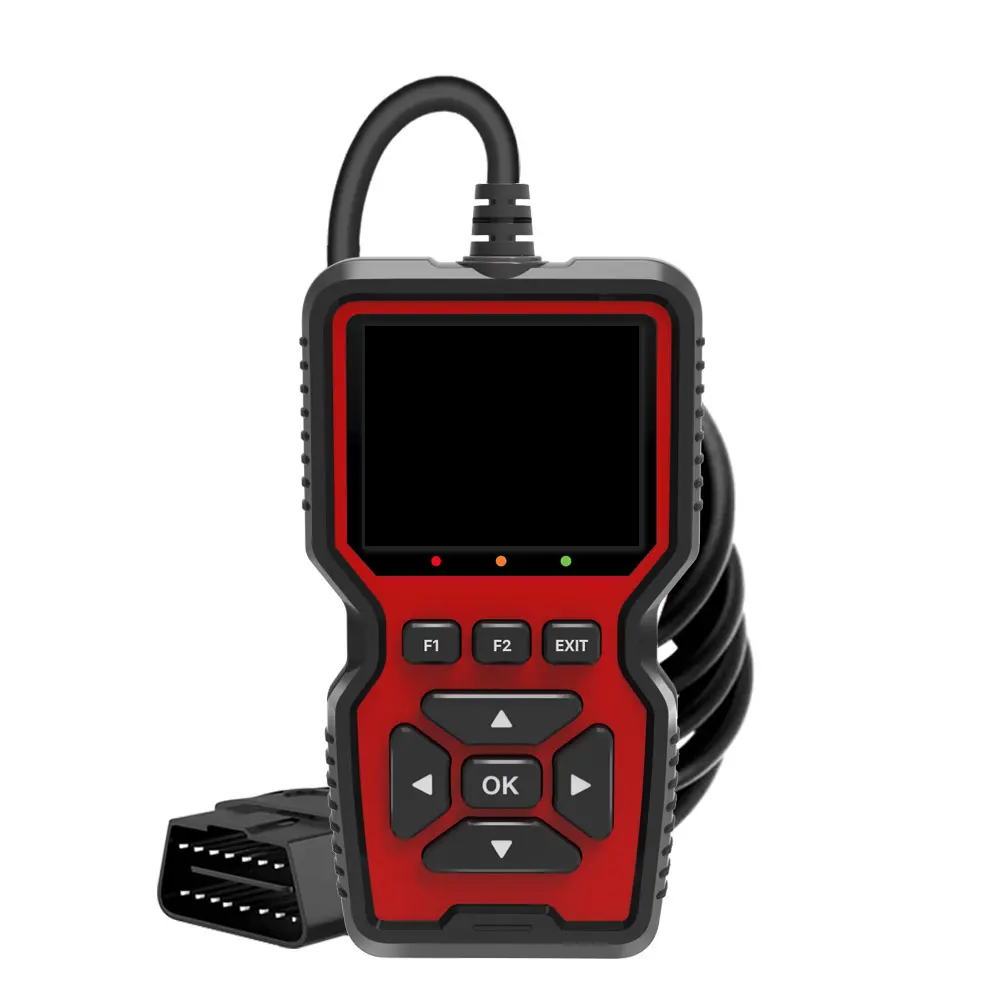
Diagnosis of P0106 requires a systematic approach using a combination of visual inspection, an OBD-II scanner with live data capabilities, and a digital multimeter (DMM).
- Pre-Diagnostic Check and Freeze Frame Data:
- Connect an OBD-II scanner. Note any other present DTCs, as they might be related or the primary cause.
- Review freeze frame data for P0106. This provides critical information about engine conditions (RPM, engine temperature, load, fuel trim, MAP voltage/kPa) at the moment the code was set. This data can help replicate the fault.
- Clear the DTC and perform a road test under similar conditions to verify if the code returns.
- Visual Inspection:
- Inspect the MAP sensor and its electrical connector for physical damage, corrosion, or loose connections.
- Carefully inspect all vacuum lines connected to the intake manifold, the brake booster hose, PCV system hoses, and the MAP sensor vacuum line for cracks, disconnections, or signs of dry rot.
- Check the intake manifold gaskets for signs of leaks (e.g., whistling sounds, oil residue).
- Examine the MAP sensor’s port on the intake manifold for carbon buildup or obstructions.
- Live Data Analysis with OBD-II Scanner (Key On, Engine Off – KOEO):
- With the ignition on (KOEO) and engine off, observe the MAP sensor reading in kPa or InHg. This reading should closely match the BARO sensor reading (if available on the scanner) and be consistent with the atmospheric pressure for your current altitude. A significant discrepancy (e.g., 10-15 kPa difference) suggests a sensor or circuit issue.
- Live Data Analysis with OBD-II Scanner (Engine Running):
- Idle Test: Start the engine and let it warm up. At a stable idle, the MAP reading should drop significantly, indicating manifold vacuum (typically 25-40 kPa or 7-12 InHg for naturally aspirated engines). If the reading remains high (close to atmospheric pressure), suspect a large vacuum leak or a faulty MAP sensor reading.
- Snap Throttle Test: With the engine idling, rapidly open and close the throttle (snap throttle). Observe the MAP sensor reading on the scanner. The voltage/pressure should react quickly and smoothly, dropping sharply, then momentarily rising towards atmospheric pressure, and then settling back to the idle value. Slow, erratic, or no response indicates a potential MAP sensor failure.
- Compare MAP to TP Sensor: As throttle position (TP) increases, MAP pressure should increase. If the TP sensor shows wide open throttle (WOT) but the MAP sensor shows high vacuum, there’s a discrepancy.
- Digital Multimeter (DMM) Testing:
- Reference Voltage: Disconnect the MAP sensor connector. With the ignition on, backprobe the reference voltage (Vref) terminal at the connector. It should typically read 5.0V DC. If not, check wiring back to the ECM.
- Ground Circuit: Check for good ground at the ground terminal of the connector. Use the DMM to check for continuity to chassis ground or battery negative.
- Signal Circuit:
- Reconnect the MAP sensor. Backprobe the signal wire terminal at the connector.
- At KOEO, the signal voltage should be high (e.g., 4.5-5.0V, depending on altitude and design).
- At idle, the signal voltage should drop significantly (e.g., 1.0-1.5V).
- Compare these readings to manufacturer specifications. If voltages are incorrect but Vref and ground are good, the MAP sensor is likely faulty.
- Check for continuity and resistance in the signal wire between the MAP sensor connector and the ECM connector (with both ends disconnected).
- Vacuum Gauge Comparison: Connect a separate mechanical vacuum gauge to a reliable vacuum port on the intake manifold. Compare its reading to the MAP sensor reading displayed on the scanner at various engine speeds. Significant differences indicate a faulty MAP sensor or a restricted sensor port.
- Smoke Test for Vacuum Leaks: Introduce smoke into the intake system (e.g., via a vacuum line or the throttle body). Visible smoke escaping from hoses, gaskets, or other connections will pinpoint vacuum leaks.
- Exhaust Backpressure Test: If MAP readings are consistently high at higher RPMs, check exhaust backpressure using a pressure gauge threaded into the oxygen sensor port upstream of the catalytic converter. High backpressure indicates a restricted exhaust.
Recommended Repairs and Solutions
Once the diagnostic steps have pinpointed the root cause, the following repairs are typically recommended:
- Repair Vacuum Leaks: This is a very common cause. Replace any cracked, brittle, or disconnected vacuum hoses, PCV valve, intake manifold gaskets, or brake booster if found to be leaking. Ensure all clamps are secure.
- Clean MAP Sensor Port: If carbon buildup or debris is found obstructing the MAP sensor’s port on the intake manifold, carefully remove the sensor and clean the passage using a suitable solvent and a small brush, ensuring no debris falls into the manifold.
- Replace Manifold Absolute Pressure (MAP) Sensor: If testing (live data, DMM voltage checks) definitively indicates a faulty MAP sensor (inaccurate readings, slow response, or no signal output despite proper reference voltage and ground), replace it with a high-quality OEM or equivalent aftermarket part. Be cautious of cheap, non-OE sensors that can exhibit similar performance issues.
- Repair Wiring or Connectors: Address any identified issues in the MAP sensor’s electrical circuit. This may involve repairing frayed wires, replacing corroded terminals, or re-pinning connectors. Always use proper automotive wiring repair techniques (e.g., soldering and heat-shrink tubing).
- Replace Faulty Barometric Pressure (BARO) Sensor: If diagnostic steps indicate a separate BARO sensor is faulty and providing incorrect atmospheric pressure data, leading to calculation errors for the MAP sensor, replace it.
- Address Exhaust Restriction: If an exhaust backpressure test confirms a clogged catalytic converter or muffler, replace the restricted component.
- ECM/PCM Replacement/Reprogramming: This is a last resort. If all other components and wiring have been thoroughly tested and verified to be functional, and the code persists, the ECM itself may be at fault. This typically requires professional diagnosis and potentially reprogramming or replacement by a dealership or specialized automotive electronics shop.
After any repair, clear the DTCs and perform a thorough road test to confirm the P0106 code does not return and that engine performance has normalized.