What Does Code P0129 Mean?
Diagnostic Trouble Code (DTC) P0129 indicates that the Engine Control Module (ECM) or Powertrain Control Module (PCM) has detected an implausibly low signal voltage from the Barometric Pressure (BARO) sensor. The BARO sensor’s primary function is to measure ambient atmospheric pressure, which the ECM utilizes to determine air density. This data is critical for precise fuel delivery calculations, ignition timing adjustments, and, in some applications, transmission shift strategies, ensuring optimal engine performance and emissions control across varying altitudes and weather conditions. When P0129 is set, the ECM perceives the barometric pressure reading to be significantly below the manufacturer’s specified minimum threshold, suggesting an atmospheric pressure lower than what is naturally possible (e.g., an extremely deep vacuum or a fault that creates a voltage output indicative of such a condition). This out-of-range low signal typically results in the ECM defaulting to a calculated or stored barometric pressure value, potentially compromising engine efficiency and drivability.
Common Symptoms
- Malfunction Indicator Lamp (MIL) illumination: The “Check Engine” light will be activated.
- Reduced engine performance: The vehicle may exhibit a noticeable lack of power or sluggish acceleration.
- Poor fuel economy: Incorrect air density calculations can lead to an over-rich or lean fuel mixture.
- Rough idle or stalling: Especially noticeable after cold starts or during deceleration.
- Hesitation or stumble during acceleration: The engine may struggle to respond smoothly to throttle input.
- Black smoke from exhaust: An overly rich fuel mixture, caused by the ECM misinterpreting air density, can lead to unburnt fuel.
- Erratic or firm transmission shifts: In some vehicles, barometric pressure data influences load calculations that dictate transmission shift points.
What Causes the Code P0129?
- Faulty Barometric Pressure (BARO) sensor: This is the most common cause, often due to internal electrical failure, sensor degradation, or contamination.
- Wiring harness issues: An open circuit, short to ground, or excessively high resistance in the BARO sensor’s signal, reference voltage, or ground wires can cause a low voltage output.
- Poor electrical connection: Corroded, bent, or loose pins within the BARO sensor connector or the ECM/PCM connector can interrupt the signal.
- ECM/PCM malfunction: While less common, an internal fault within the ECM/PCM itself could prevent it from correctly reading or processing the BARO sensor’s signal.
- Water intrusion or physical damage: Damage to the sensor or its wiring due to environmental factors or physical impact.
How to Diagnose and Troubleshoot
A systematic approach is essential for accurately diagnosing P0129. Begin with the least intrusive steps:
- Visual Inspection:
- Locate the BARO sensor. It may be a standalone unit, integrated into the Mass Air Flow (MAF) sensor, or part of the Manifold Absolute Pressure (MAP) sensor, or even housed within the ECM/PCM itself. Consult service information for your specific vehicle.
- Carefully inspect the BARO sensor, its electrical connector, and the associated wiring harness for any visible signs of damage, such as frayed wires, corrosion, loose connections, or evidence of water intrusion.
- OBD-II Scanner Data Analysis:
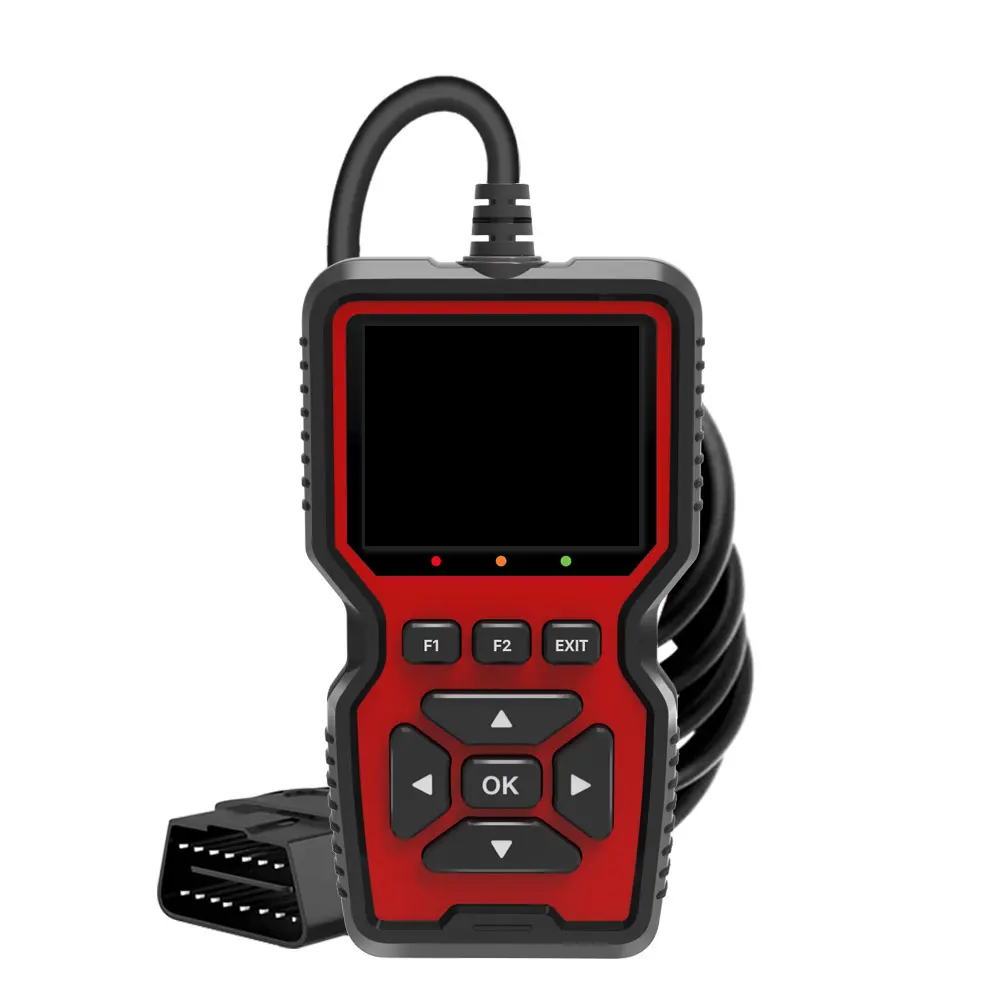
- Connect a professional-grade OBD-II scanner and retrieve all stored, pending, and history DTCs.
- Access live data parameters for the BARO sensor (often labeled BARO, BPS, or similar) with the ignition ON and engine OFF.
- Compare the BARO sensor reading (typically in kPa, psi, or inHg) to the actual ambient atmospheric pressure for your current altitude. A known good reading at sea level is approximately 101 kPa (14.7 psi or 29.92 inHg), which decreases with increasing altitude.
- With the engine OFF, compare the BARO sensor reading to the MAP sensor reading. Both should be nearly identical as they are both reading ambient pressure. A significant discrepancy or an implausibly low BARO reading is a strong indicator of a fault.
- Monitor the BARO sensor voltage output if available in live data; an extremely low or static voltage (e.g., near 0V) despite normal ambient conditions confirms a problem.
- Digital Multimeter (DMM) Testing:
- Sensor Connector Voltage Check: With the ignition ON and engine OFF, disconnect the BARO sensor. Using a DMM, check for:
- Reference Voltage: Typically 5V DC, supplied from the ECM/PCM to the sensor. Measure between the reference voltage wire and ground.
- Ground: Verify a good ground connection (near 0V) at the sensor connector by measuring between the ground wire and battery positive.
- If either reference voltage or ground is absent or incorrect, trace the wiring back to the ECM/PCM for open circuits or shorts.
- Signal Voltage Check: If reference voltage and ground are good, reconnect the sensor. Back-probe the signal wire at the BARO sensor connector (or at the ECM connector, if necessary). Monitor the voltage output. For P0129, you should typically observe a voltage that is consistently too low, possibly near 0V, or completely absent. Consult vehicle-specific service information for expected voltage ranges at various barometric pressures.
- Wiring Continuity and Shorts: Disconnect the ECM/PCM and the BARO sensor. Perform continuity checks on each wire (signal, reference, ground) from the sensor connector to the ECM/PCM connector to identify open circuits. Also, check each wire for shorts to ground and shorts to power.
- Sensor Connector Voltage Check: With the ignition ON and engine OFF, disconnect the BARO sensor. Using a DMM, check for:
- ECM/PCM Testing: If all sensor and wiring tests pass, and the issue persists, a faulty ECM/PCM should be considered, although this is a rare occurrence. Further diagnosis of the ECM/PCM typically requires specialized diagnostic tools and expertise.
Recommended Repairs and Solutions
Based on the diagnostic findings, the following repairs and solutions are recommended:
- Repair or Replace Wiring and Connectors: If the visual inspection or DMM tests identify damaged wires, corroded pins, or loose connections, repair the affected section of the wiring harness using appropriate splice techniques, or replace the connector. Ensure all connections are clean, secure, and properly sealed to prevent future issues.
- Replace the Barometric Pressure (BARO) Sensor: This is the most common resolution if the sensor itself is determined to be faulty, providing a consistently low or incorrect signal output.
- Mechanic’s Tip: Always use a high-quality, OEM-specification replacement BARO sensor. Ensure the replacement part is an exact match for your vehicle’s year, make, and model, as sensor designs and calibrations vary. Be mindful of the sensor’s location – whether it’s standalone, integrated into another sensor, or part of the ECM.
- ECM/PCM Reprogramming or Replacement: If all other components (sensor, wiring, and connectors) test good, and a P0129 persists, the ECM/PCM may require reprogramming or replacement. This is an advanced procedure that often requires specialized factory diagnostic tools and should be performed by a qualified technician or dealership. Always confirm all other possibilities before considering ECM/PCM replacement.
- Clear DTCs and Verify Repair: After any repair, clear the DTCs using an OBD-II scanner. Then, perform a comprehensive drive cycle under various operating conditions to confirm that the fault does not return and that all relevant readiness monitors have reset. Monitor live data for the BARO sensor to ensure stable and plausible readings.