What Does Code P0146 Mean?
The diagnostic trouble code P0146 signifies “O2 Sensor Circuit No Activity Detected (Bank 1 Sensor 3)”. This code indicates that the Engine Control Module (ECM) or Powertrain Control Module (PCM) has detected a lack of voltage fluctuation or a static voltage signal from the oxygen sensor located in Bank 1, Sensor 3. In most automotive applications, Bank 1 refers to the engine side containing cylinder number one, and Sensor 3 typically denotes the third oxygen sensor in the exhaust stream for that bank. This sensor is almost universally a post-catalytic converter sensor, primarily responsible for monitoring the efficiency of the catalytic converter by comparing the oxygen content exiting the catalyst to that entering it (measured by Sensor 2 or a combination of upstream sensors). A properly functioning post-catalyst O2 sensor should exhibit some, albeit slow, voltage oscillations, indicating it is reacting to the residual oxygen in the exhaust. “No activity detected” means the ECM perceives the sensor’s signal as a flat line—either consistently low (e.g., 0 volts), consistently high (e.g., 1 volt), or stuck at a middle reference voltage (e.g., 0.45 volts)—failing to meet the expected operational parameters for signal change over a specified monitoring period. This directly affects the vehicle’s emissions control subsystem, preventing the ECM from accurately assessing catalytic converter performance and potentially leading to higher emissions.
Common Symptoms
- Malfunction Indicator Light (MIL) Illumination: The “Check Engine” light will almost certainly be illuminated on the dashboard.
- Increased Emissions: While not always directly perceptible to the driver, a non-functional Sensor 3 means the ECM cannot monitor catalytic converter efficiency, potentially leading to increased tailpipe emissions.
- Failed Emissions Test: The MIL illumination and the inability to monitor catalyst efficiency will prevent the vehicle from passing an emissions inspection.
- No Noticeable Drivability Issues: Since Sensor 3’s primary role is catalyst monitoring, its failure typically does not directly impact engine performance, fuel economy, or drivability. The engine’s air-fuel ratio control is primarily managed by the upstream (pre-catalyst) oxygen sensors.
What Causes the Code P0146?
- Faulty Oxygen Sensor (Bank 1 Sensor 3): The most common cause is an internal failure of the sensor itself, such as a damaged heating element, a contaminated sensing element, or an open/short within the sensor’s internal wiring.
- Damaged or Corroded Wiring/Connector: An open circuit, short to ground, or short to voltage in the sensor’s signal, heater, or ground wires between the sensor and the ECM/PCM. Corrosion within the electrical connector can also impede signal transmission.
- Blown Fuse: The heating element of the oxygen sensor typically draws power through a fuse. A blown fuse would disable the heater circuit, preventing the sensor from reaching its operating temperature and consequently failing to produce a usable signal.
- Exhaust Leak Near the Sensor: A significant exhaust leak either upstream of Sensor 3 or at its mounting point can introduce ambient air into the exhaust stream, skewing the sensor’s readings or preventing it from accurately sensing the post-catalyst exhaust gas, potentially leading to a “no activity” reading if the sensor is starved of proper exhaust flow.
- ECM/PCM Failure: Although rare, an internal fault within the ECM/PCM’s input circuit responsible for reading the Bank 1 Sensor 3 signal could cause this code.
How to Diagnose and Troubleshoot
A systematic diagnostic approach is crucial for accurately resolving code P0146:
- Visual Inspection:
- Locate Bank 1 Sensor 3 (post-catalyst sensor on the bank containing cylinder #1). Inspect its wiring harness for any signs of physical damage, chafing, melting, rodent damage, or loose connections.
- Check the sensor’s electrical connector for corrosion, bent pins, or proper seating.
- Inspect the exhaust system for any leaks near or upstream of the sensor that could influence its readings.
- OBD-II Scanner Live Data Analysis:
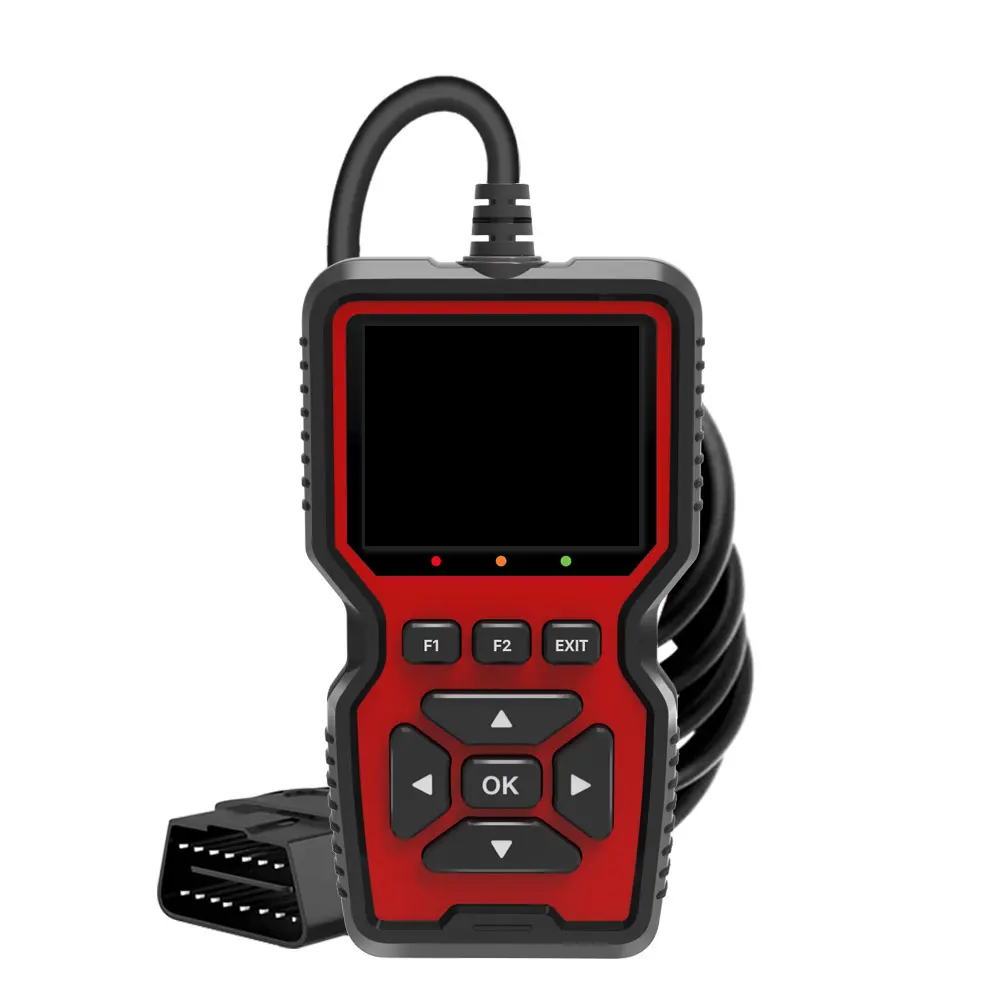
- Connect an OBD-II scan tool and check for active and pending P0146 codes.
- Access live data parameters, specifically monitoring the voltage output of “O2S13” (Oxygen Sensor Bank 1 Sensor 3).
- With the engine at operating temperature, a healthy post-catalyst sensor should show a relatively stable voltage, typically oscillating slowly between 0.1V and 0.9V, often biased towards the higher end (0.6-0.8V) if the catalyst is efficient. A “no activity” condition will present as a static voltage, such as 0V, a fixed low voltage (e.g., 0.1V), a fixed high voltage (e.g., 0.9V), or a fixed reference voltage (e.g., 0.45V), regardless of engine speed or load.
- If available, monitor heater circuit parameters for O2S13 (e.g., heater duty cycle, current draw).
- Digital Multimeter (DMM) Tests:
- Sensor Heater Circuit Check:
- Disconnect the Bank 1 Sensor 3 electrical connector.
- Measure the resistance across the two heater circuit terminals on the sensor side of the connector (typically two white wires on a 4-wire sensor). Expect a resistance of 2-10 ohms. An open circuit (infinite resistance) indicates a faulty heater element within the sensor.
- With the ignition ON (engine OFF), test for 12V power supply and ground at the vehicle harness side of the heater circuit connector. One wire should have 12V (or battery voltage) and the other a good ground. If no 12V, check relevant fuses and wiring back to the ECM/PCM or relay.
- Sensor Signal Circuit Check:
- With the sensor connected and engine running at operating temperature, carefully backprobe the signal wire (typically black) and signal ground wire (typically grey) at the sensor connector or further upstream at the ECM/PCM connector.
- Observe the voltage. It should show fluctuation. A static voltage reading confirms the “no activity” condition.
- With the ignition OFF, disconnect both the sensor and the ECM/PCM connectors. Perform continuity checks on the signal wire, heater wires, and ground wires between the sensor connector and the ECM/PCM connector. Confirm there are no open circuits (infinite resistance) or short circuits (near 0 ohms) to vehicle ground or to other wires in the harness.
- Sensor Heater Circuit Check:
Recommended Repairs and Solutions
Based on diagnostic findings, the following repairs are commonly recommended:
- Replace Faulty Oxygen Sensor (Bank 1 Sensor 3): If the visual inspection, live data analysis, and DMM tests confirm an internal sensor failure (e.g., open heater circuit, static signal), replacing the oxygen sensor is the most frequent and effective solution. Always use a high-quality, OEM-grade replacement sensor to ensure proper compatibility and longevity.
- Repair or Replace Damaged Wiring/Connector: If diagnostic tests identify an open, short, or corroded circuit in the wiring harness or connector leading to Bank 1 Sensor 3, repair the damaged section. Use proper automotive wiring repair techniques, including solder and heat-shrink tubing, or replace the entire damaged pigtail or connector if severe.
- Replace Blown Fuse: If a blown fuse is identified as the cause of the heater circuit failure, replace the fuse. It is crucial to investigate why the fuse blew, as it may indicate an underlying short in the sensor’s heater element or wiring.
- Repair Exhaust Leak: If an exhaust leak is found to be impacting the sensor’s performance, repair the leak by replacing gaskets, pipes, or welding as necessary.
- ECM/PCM Replacement/Reprogramming: This should only be considered as a last resort, after all other potential causes have been thoroughly investigated and ruled out. ECM failures are rare for specific O2 sensor input circuits but can occur.
After any repair, clear the diagnostic trouble codes using a scan tool and perform a drive cycle to allow the ECM to re-run its diagnostic monitors. Confirm that the P0146 code does not return and that the O2S13 live data now shows appropriate voltage activity.