What Does Code P0244 Mean?
DTC P0244 indicates a performance or range issue within the turbocharger/supercharger wastegate control system, specifically referencing solenoid “A”. The Engine Control Module (ECM), or Powertrain Control Module (PCM), monitors the actual boost pressure developed by the turbocharger via the Manifold Absolute Pressure (MAP) sensor. It then compares this value to the desired boost pressure, which is calculated based on engine load, RPM, atmospheric pressure, and other operational parameters. The wastegate solenoid, typically a Pulse Width Modulated (PWM) valve, controls the application of vacuum or pressure to the wastegate actuator, which in turn regulates the flow of exhaust gases through or around the turbine housing. This control mechanism is crucial for modulating boost pressure. Code P0244 is triggered when the ECM detects that the actual boost pressure deviates significantly and consistently from the desired boost pressure despite its commanded control input to the wastegate solenoid. This implies that the wastegate system is not operating within its expected functional range or responding as commanded, leading to either underboost or overboost conditions, and is categorized as a range/performance fault rather than a direct circuit malfunction.
Common Symptoms
- Reduced Engine Power: The vehicle may enter a “limp mode” or exhibit significant power reduction due to the ECM limiting engine output to prevent damage from incorrect boost pressure.
- Illuminated Check Engine Light (CEL): The Malfunction Indicator Lamp (MIL) will be illuminated on the dashboard.
- Poor Acceleration or Hesitation: Noticeable delay or lack of responsiveness when accelerating, often referred to as turbo lag.
- Unusual Noises: Hissing, whistling, or rattling sounds emanating from the turbocharger or wastegate area, indicating potential leaks or mechanical binding.
- Decreased Fuel Economy: The engine may operate less efficiently due to improper air-fuel mixture caused by incorrect boost.
- Black Smoke from Exhaust: In cases of underboost, the engine may run rich, leading to unburnt fuel and black smoke.
What Causes the Code P0244?
- Faulty Turbocharger Wastegate Solenoid: Internal electrical or mechanical failure preventing the solenoid from accurately modulating vacuum or pressure to the actuator.
- Vacuum Leaks or Pressure Leaks/Restrictions: Cracked, disconnected, collapsed, or blocked vacuum/pressure lines leading to or from the wastegate solenoid or actuator, preventing proper wastegate operation.
- Stuck or Seized Wastegate Actuator/Arm: Mechanical binding or corrosion preventing the wastegate actuator rod or its internal diaphragm from moving freely, thus preventing the wastegate valve from opening or closing correctly.
- Damaged Turbocharger Wastegate Flapper Valve: Carbon buildup, corrosion, or physical damage to the wastegate valve itself, causing it to stick open, closed, or preventing proper sealing.
- Faulty Manifold Absolute Pressure (MAP) Sensor: Providing inaccurate boost pressure readings to the ECM, which can lead the ECM to misinterpret boost conditions and incorrectly command the wastegate.
- Wiring and Connector Issues: Corroded terminals, intermittent open circuits, or short circuits in the electrical harness connecting to the wastegate solenoid.
- ECM/PCM Failure: Although rare, an internal fault within the ECM/PCM’s boost control circuitry can cause incorrect wastegate solenoid operation.
How to Diagnose and Troubleshoot
Diagnosis of P0244 requires a methodical approach, utilizing both diagnostic scan tools and manual inspection:
- Perform a Comprehensive Scan Tool Analysis:
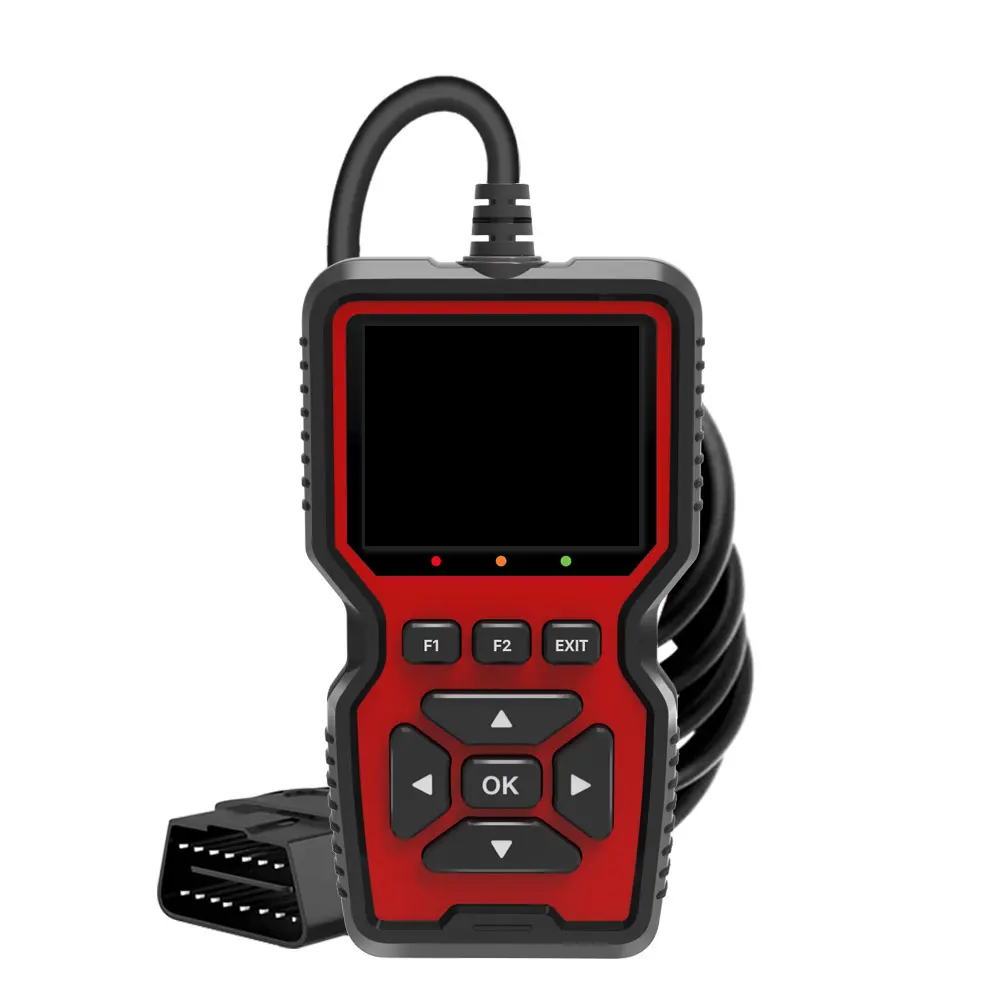
- Connect an advanced OBD-II scanner and retrieve all active and pending Diagnostic Trouble Codes (DTCs). Note any other codes present, as they may offer additional diagnostic pathways.
- Access live data streams. Monitor key parameters such as Engine RPM, Manifold Absolute Pressure (MAP) Sensor Reading, Barometric Pressure (BARO) Sensor Reading, Desired Boost Pressure, Actual Boost Pressure, and Wastegate Solenoid Command (%) or Duty Cycle.
- Perform a test drive under varying load conditions (e.g., light acceleration, heavy acceleration, cruise). Observe the relationship between Desired Boost Pressure and Actual Boost Pressure. If the actual boost consistently under-performs or over-performs the desired value despite appropriate wastegate solenoid commands, it confirms a performance issue in the boost control system.
- Conduct a Thorough Visual Inspection:
- Visually inspect all vacuum/pressure lines connected to the wastegate solenoid, wastegate actuator, and related boost components (e.g., intercooler, throttle body). Look for signs of cracking, fraying, kinks, disconnections, or rodent damage. Ensure all connections are secure.
- Examine the wastegate actuator rod and its pivot points for any signs of binding, excessive rust, or damage. Manually attempt to articulate the wastegate arm on the turbocharger; it should move freely without excessive force.
- Inspect the wastegate solenoid itself for physical damage, loose electrical connectors, or corrosion on the terminals.
- Test Wastegate Solenoid Electrical Circuit:
- With the ignition OFF, disconnect the electrical connector from the wastegate solenoid.
- Using a Digital Multimeter (DMM), measure the resistance across the solenoid terminals. Compare the reading to the manufacturer’s specifications (typically between 10-40 ohms). An open circuit (OL) or a reading significantly outside the specified range indicates an internal fault within the solenoid coil.
- With the ignition ON, engine OFF, check for voltage supply at the solenoid connector terminals. One terminal should have battery voltage (12V). The other terminal is typically controlled by the ECM for grounding.
- Using a test light or oscilloscope, verify the ECM’s ability to ground the solenoid circuit when commanded (e.g., through a bidirectional control function on the scanner or during engine operation).
- Evaluate Wastegate Actuator and Vacuum/Pressure System:
- Disconnect the vacuum/pressure line from the wastegate actuator. Using a hand-held vacuum pump (for vacuum-actuated systems) or pressure pump (for pressure-actuated systems), apply the specified amount of vacuum/pressure directly to the actuator. The actuator rod should move smoothly and hold the applied vacuum/pressure without leakage. If it leaks or the rod binds, the actuator is faulty.
- Test the wastegate solenoid’s functional ability to control vacuum/pressure. Apply vacuum (if applicable) to the solenoid’s input port and observe if it holds, then apply 12V to the solenoid’s electrical terminals (if safe and within specifications) to see if it switches state and releases/applies vacuum.
- Verify MAP Sensor Accuracy:
- Monitor the MAP sensor reading with the ignition ON, engine OFF. It should closely match the BARO sensor reading (atmospheric pressure).
- Compare live MAP sensor readings with a known good sensor or specification under various engine operating conditions. An inaccurate MAP sensor can lead the ECM to misinterpret boost levels and command the wastegate incorrectly, indirectly causing P0244.
Recommended Repairs and Solutions
Once the root cause of P0244 has been accurately identified through systematic diagnosis, the following repairs are commonly recommended:
- Repair or Replace Vacuum/Pressure Lines: If any leaks, cracks, or restrictions are found in the lines connecting the wastegate solenoid to the actuator or manifold, these must be replaced. Use high-quality, reinforced silicone or rubber hoses designed for automotive applications and high temperatures. Ensure all connections are secured with appropriate clamps.
- Replace Wastegate Solenoid: If electrical tests (resistance, voltage supply, or ground control) indicate an internal fault within the solenoid, or if it fails to accurately control vacuum/pressure during functional testing, replace the wastegate solenoid. Always use an OEM equivalent or higher-quality aftermarket part for reliability. Ensure correct hose routing and electrical connection.
- Replace Wastegate Actuator: If the wastegate actuator rod is found to be binding, seized, or incapable of holding the specified vacuum/pressure, it requires replacement. On some turbocharger designs, the actuator can be replaced as a standalone unit; on others, it may necessitate the replacement of the entire turbocharger assembly if it’s not a serviceable component.
- Service or Replace Wastegate Flapper Valve/Turbocharger: If the wastegate flapper valve inside the turbocharger housing is sticking due to carbon buildup or is physically damaged, cleaning or replacement may be necessary. Cleaning often requires turbocharger removal. If the valve itself is damaged beyond repair, or if there is excessive play in the turbocharger shaft affecting wastegate operation, the turbocharger assembly may need to be replaced.
- Replace Manifold Absolute Pressure (MAP) Sensor: If the MAP sensor is found to be providing inaccurate readings, replace it with a new OEM or equivalent quality sensor.
- Repair Wiring/Connector Issues: If any corrosion, open circuits, or short circuits are identified in the wastegate solenoid’s wiring harness or connector, repair them using proper crimping and soldering techniques, ensuring watertight connections. Replace severely damaged connectors.
- Clear DTCs and Perform Drive Cycle: After any repair, clear all stored DTCs using the OBD-II scanner. Perform an extended test drive under various engine loads and speeds to confirm the repair, ensuring that boost pressure control is restored to specification and the P0244 code does not return. This also allows the ECM to complete its readiness monitors.
- Check for ECM Updates: In rare cases, especially with persistent or intermittent P0244 codes without obvious mechanical or electrical faults, consult manufacturer technical service bulletins (TSBs) for possible ECM software updates or reprogramming that address boost control logic.