What Does Code P0249 Mean?
The P0249 diagnostic trouble code indicates that the Engine Control Module (ECM) or Powertrain Control Module (PCM) has detected a low voltage condition in the control circuit for the “B” turbocharger/supercharger wastegate solenoid. This “low” state specifically means that the voltage measured by the ECM on the solenoid’s dedicated control circuit is consistently below a manufacturer-specified threshold. This condition typically points to an open circuit, a short to ground, or excessively high resistance within the solenoid’s winding or its associated wiring. The wastegate solenoid is an electro-mechanical device crucial for regulating exhaust gas flow past the turbine wheel in a forced induction system. It typically operates as a pulse-width modulated (PWM) valve, controlling vacuum or pressure to the wastegate actuator to precisely modulate boost pressure. When the ECM identifies a low voltage in this circuit, it interprets it as a malfunction that prevents accurate or full control of the wastegate, leading to potential issues with boost regulation, engine performance, and protection against over-boost conditions. The “B” designation is manufacturer-specific and typically refers to a particular wastegate solenoid in complex turbocharging systems (e.g., twin-turbo) or simply a specific control circuit for the primary wastegate.
Common Symptoms
- Reduced Engine Power (Limp Mode): The ECM will often engage a failsafe or “limp home” mode to prevent engine damage from incorrect boost pressure, significantly reducing available horsepower and torque.
- Check Engine Light (CEL) Illumination: The primary and most immediate indicator that the ECM has detected and stored a fault code.
- Noticeable Turbo Lag or No Boost: If the wastegate remains open or uncontrolled due to the solenoid malfunction, exhaust gases bypass the turbine, resulting in a significant reduction or complete loss of boost pressure.
- Engine Hesitation or Stalling: Inconsistent or improperly regulated boost pressure can lead to poor air-fuel mixture control, causing the engine to run roughly, hesitate during acceleration, or even stall.
- Unusual Engine Noises: While less common, uncontrolled boost or a malfunctioning wastegate could potentially lead to wastegate fluttering, compressor surge, or other abnormal sounds from the turbocharger system.
What Causes the Code P0249?
- Faulty Wastegate Solenoid “B”: The most common cause is an internal electrical fault within the solenoid itself, such as an open circuit in its winding, an internal short to ground, or excessive internal resistance.
- Open or Short Circuit in Solenoid Wiring: Damage to the wiring harness connected to the wastegate solenoid “B,” including frayed wires, cuts, pinches, or heat damage, can create an open circuit or a short to ground, leading to the low voltage detection.
- Corroded or Loose Electrical Connections: Poor electrical contact at the solenoid connector, or within the wiring harness leading to it, due to corrosion, bent pins, or inadequate terminal tension, can increase resistance or cause intermittent open circuits.
- ECM/PCM Driver Circuit Failure: Although less frequent, an internal failure within the ECM/PCM, specifically affecting the driver circuit responsible for supplying power or ground to the wastegate solenoid “B,” can cause this code.
How to Diagnose and Troubleshoot
Diagnosing P0249 requires a precise and systematic approach, integrating an OBD-II scanner, a digital multimeter (DMM), and thorough visual inspection:
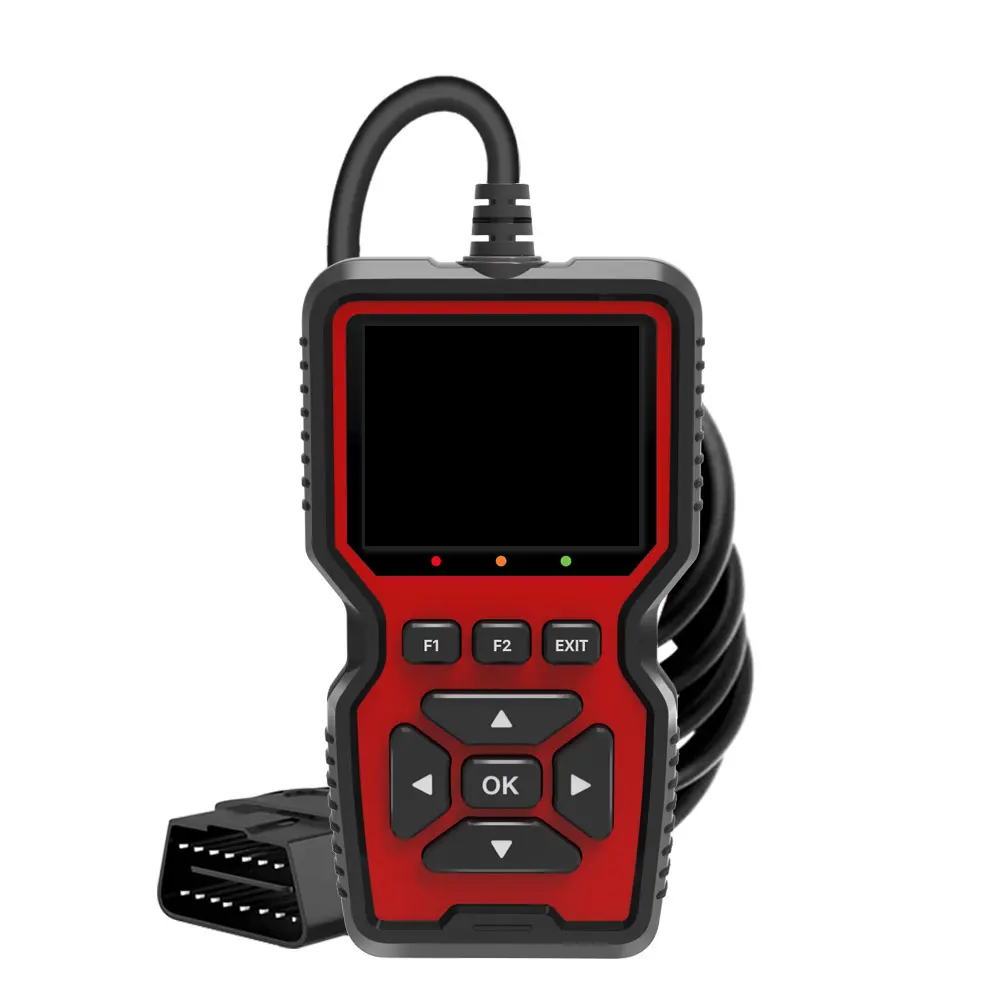
- Initial Scan and Freeze Frame Data: Connect an OBD-II scanner to the vehicle’s diagnostic port. Retrieve and record the P0249 code along with any associated freeze frame data. This data provides valuable context, such as engine RPM, load, and temperature at the moment the fault occurred, which can assist in replicating the conditions. Clear the DTC and perform a brief test drive to see if the code immediately resets.
- Visual Inspection of Wiring and Connectors:
- Consult the vehicle’s service manual to accurately locate Wastegate Solenoid “B.” It is typically situated near the turbocharger, on the intake manifold, or mounted on the engine block/valve cover.
- Thoroughly inspect the wiring harness extending to the solenoid. Look for any visible signs of physical damage, such as chafing, cuts, pinches, melting from heat exposure, or rodent damage. Pay particular attention to areas where the harness might rub against sharp edges or hot components.
- Examine the electrical connector at the solenoid. Check for corrosion on the terminals, bent or pushed-out pins, or a loose connection. Disconnect the connector and visually inspect both the solenoid and harness terminals.
- Wastegate Solenoid “B” Resistance Test:
- With the ignition OFF and the solenoid disconnected from the wiring harness, set your DMM to the ohms (Ω) function.
- Measure the internal resistance across the two electrical terminals of the wastegate solenoid itself.
- Compare the measured resistance value to the manufacturer’s specifications (typically ranging from 10 to 30 ohms, but varies significantly by make/model). An “OL” (open circuit/infinite resistance) reading or a resistance value significantly outside the specified range indicates an internal fault within the solenoid, requiring its replacement.
- Circuit Voltage and Ground Integrity Check:
- Power Supply Check: Reconnect the solenoid. With the ignition ON (engine OFF), carefully back-probe the power supply wire at the solenoid connector using your DMM set to DC volts. You should observe battery voltage (approximately 12V). If no voltage is present, trace the power wire back to the fuse box and inspect relevant fuses.
- Control Circuit Check (Solenoid Disconnected): With the ignition OFF and the solenoid disconnected, use your DMM set to continuity or ohms to check for a short to chassis ground on both wires of the harness-side connector. Neither wire should show continuity to ground unless the circuit design specifies a permanent ground on one side (rare for control circuits).
- Control Circuit Integrity (Solenoid Disconnected, ECM side): Disconnect the harness connector at the solenoid and at the ECM (refer to the service manual for ECM pinouts). Use the DMM to check for continuity between the corresponding pins at the ECM connector and the solenoid connector for both wires. An “OL” or infinite resistance indicates an open circuit within the wiring. Also, check each wire for a short to ground and a short to voltage (with ignition ON) by placing one DMM lead on the wire terminal and the other on a known good chassis ground or battery positive, respectively.
- ECM/PCM Driver Test (Advanced Diagnostics): If the solenoid tests good and all wiring circuits demonstrate proper continuity, no shorts, and correct power supply, the issue may reside within the ECM’s internal driver circuit for the wastegate solenoid “B.” This typically necessitates advanced diagnostic tools capable of commanding the solenoid on/off and monitoring the ECM’s driver output. In rare cases, substitution with a known good, properly programmed ECM may be required, but this should be a last resort.
Recommended Repairs and Solutions
Based on the thorough diagnostic procedure, the following repairs are commonly recommended to resolve a P0249 code:
- Replace Faulty Wastegate Solenoid “B”: If the resistance test or active component tests confirm an internal fault within the solenoid, direct replacement is the primary solution. Always ensure the replacement part is an OEM equivalent or meets strict manufacturer specifications to guarantee proper function and longevity.
- Repair or Replace Damaged Wiring Harness: If the visual inspection or continuity tests identify damaged sections of the wiring harness or compromised connectors, the affected sections must be repaired. Utilize proper automotive wiring repair techniques, which typically involve soldering connections and applying heat-shrink tubing for environmental protection. For extensive or severe damage, replacing the entire harness section or the complete harness may be more effective and reliable.
- Clean or Replace Corroded Connectors: For connectors exhibiting corrosion, use an electrical contact cleaner and a small, non-abrasive brush to meticulously clean the terminals. If corrosion is severe, or if terminals are bent, broken, or suffering from pitting, the connector shell and individual terminals should be replaced to ensure robust electrical contact.
- Address ECM/PCM Issues: Should all other components and wiring prove to be functioning correctly, and diagnostic steps point to the ECM’s internal driver circuit as the culprit, the ECM/PCM may require specialized repair by an automotive electronics specialist or replacement and reprogramming to the vehicle. This is a rare occurrence and should only be considered after all other potential causes have been exhaustively ruled out.
After completing any repair, it is crucial to clear the stored DTCs using an OBD-II scanner. Subsequently, perform an extended test drive under various engine loads and RPM ranges to confirm that the code does not return and that the wastegate system is operating correctly. Monitoring live data streams for parameters such as boost pressure, manifold absolute pressure (MAP), and wastegate solenoid duty cycle during the test drive can provide valuable confirmation of successful repair.