What Does Code P0265 Mean?
Diagnostic Trouble Code (DTC) P0265 signifies an detected electrical anomaly within the circuit for the fuel injector of cylinder 2. The Engine Control Module (ECM) or Powertrain Control Module (PCM), which meticulously monitors the resistance and voltage drop across each fuel injector circuit, has identified a condition where the voltage or resistance in cylinder 2’s injector circuit is higher than its calibrated operational parameters. This “High” reading typically indicates an open circuit, an excessive resistance, or a short circuit to battery voltage (B+), preventing the ECM from effectively controlling the fuel injector for cylinder 2. When this condition is present, the ECM is unable to command proper fuel delivery to the second cylinder, leading to a significant disruption in the combustion process for that specific cylinder. The subsystem primarily affected is the electronic fuel injection system, which is critical for precise air-fuel mixture control and engine performance.
Common Symptoms
- Engine Misfire: A noticeable and often severe misfire specifically originating from cylinder 2 due to lack of fuel.
- Rough Idle: The engine may idle erratically or roughly as it attempts to compensate for the missing cylinder’s contribution.
- Reduced Engine Power: A significant decrease in overall engine power and acceleration performance.
- Check Engine Light (CEL) Illumination: The Malfunction Indicator Lamp (MIL) will be illuminated on the instrument cluster.
- Increased Fuel Consumption: The ECM may try to compensate by enriching fuel to other cylinders, or unburnt fuel may escape, leading to lower fuel efficiency.
- Engine Hesitation or Stumbling: The vehicle may exhibit hesitation or stumble during acceleration or steady-state driving.
- Difficulty Starting: In some cases, prolonged cranking may be required, or the engine may not start at all.
What Causes the Code P0265?
- Open Circuit in Injector Wiring: Damage, chafing, or a complete break in the power or ground wire leading to the cylinder 2 fuel injector.
- Short to Voltage in Injector Wiring: The injector control wire accidentally contacting a constant 12V power source, causing a “high” reading.
- Faulty Fuel Injector: An internal open circuit or excessively high resistance within the windings of the cylinder 2 fuel injector itself.
- Corroded or Loose Injector Connector: Poor electrical connection at the injector harness connector due to corrosion, bent pins, or insufficient terminal tension.
- Compromised ECM/PCM Driver: A rare but possible internal failure of the Engine Control Module’s specific driver circuit responsible for controlling the cylinder 2 fuel injector.
- Aftermarket Component Incompatibility: Incorrectly installed or incompatible aftermarket fuel injectors that present an improper resistance value to the ECM.
How to Diagnose and Troubleshoot
Diagnosis of P0265 requires systematic electrical testing and careful visual inspection:
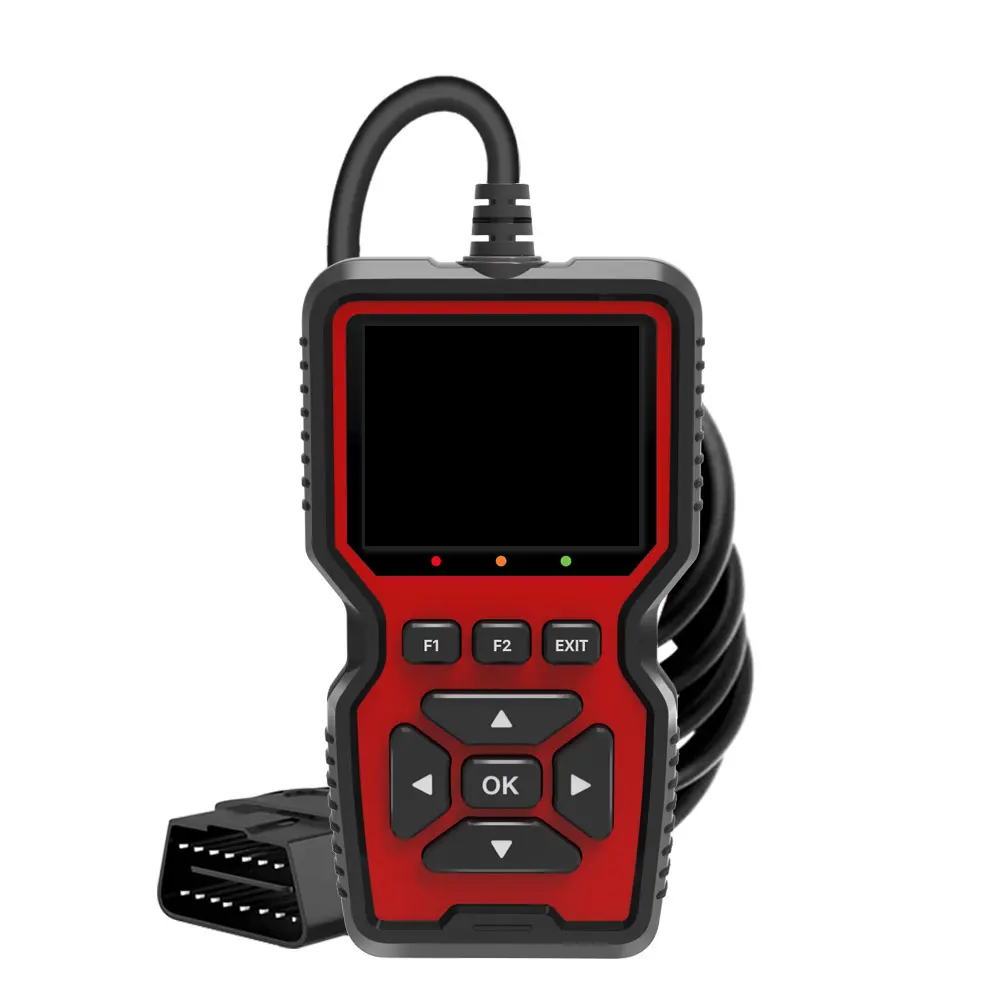
- Initial Scan Tool Data Analysis: Connect an OBD-II scan tool to confirm the presence of P0265. Check for any related misfire codes (e.g., P0302) or other injector circuit codes. Observe freeze frame data for engine operating conditions when the code was set. Monitor live data for injector pulse width on cylinder 2 (if available) to see if the ECM is attempting to control it.
- Visual Inspection of Wiring and Connector: With the ignition off, visually inspect the wiring harness leading to the cylinder 2 fuel injector. Look for signs of chafing, cuts, rodent damage, or pinched wires. Carefully inspect the injector’s electrical connector for corrosion, bent pins, pushed-back terminals, or a loose fit. Ensure the connector is fully seated.
- Fuel Injector Resistance Test (DMM): Disconnect the electrical connector from the cylinder 2 fuel injector. Using a Digital Multimeter (DMM) set to ohms, measure the resistance across the two terminals of the fuel injector itself. Compare this reading to the manufacturer’s specifications (typically between 10-16 ohms for most port injectors). An “OL” (open loop) reading or a significantly higher-than-spec resistance indicates an internal open circuit or high resistance within the injector, confirming its failure.
- Power Supply Test (DMM): Reconnect the injector connector. Turn the ignition to the “Key On Engine Off” (KOEO) position. Using the DMM, back-probe the power supply wire (usually a constant 12V when KOEO) at the cylinder 2 injector connector. It should show battery voltage (B+). If no voltage is present, trace the power supply wire back to its source (fuse box or relay).
- Control Circuit Continuity and Short Test (DMM):
- Continuity: Disconnect the ECM/PCM connector and the cylinder 2 fuel injector connector. Use the DMM set to ohms to test for continuity between the injector’s control wire terminal (not the power side) and the corresponding pin at the ECM/PCM connector. Expect very low resistance (near 0 ohms).
- Short to Ground: Test for continuity between the injector control wire (at the injector connector) and a known good chassis ground. Expect an “OL” reading. If continuity exists, there’s a short to ground.
- Short to Voltage/Other Wires: With the ECM/PCM disconnected, measure voltage on the injector control wire with KOEO. Expect 0V. Also, test for continuity between the injector control wire and adjacent wires in the harness to check for short circuits between wires.
- ECM/PCM Driver Test (Oscilloscope or Noid Light): If power and ground wires test good, the issue might be the ECM driver. With the engine cranking or running, use a noid light plugged into the cylinder 2 injector connector. A rapidly flashing light indicates the ECM is sending a ground pulse. If the light remains solid (always grounded) or off (never grounded), further ECM diagnosis is needed. An oscilloscope can provide a more detailed waveform analysis of the injector pulse.
- Injector Swap Test: If the resistance test is inconclusive or you suspect an intermittent injector failure, swap the cylinder 2 injector with a known good injector from an adjacent cylinder. Clear the DTCs and re-test. If the P0265 code follows the injector to the new cylinder (e.g., P0262 for cylinder 1 if swapped with #1), it confirms the injector is faulty.
Recommended Repairs and Solutions
Based on the diagnostic findings, the following repairs are typically recommended:
- Repair/Replace Damaged Wiring: If the visual inspection or continuity tests reveal an open circuit, short to voltage, or other damage to the injector wiring harness, the affected section must be repaired using appropriate automotive-grade wire and connectors, or the entire sub-harness replaced if necessary. Ensure all connections are soldered and sealed properly.
- Replace Faulty Fuel Injector: If the resistance test of the injector itself indicates an open circuit or excessively high resistance, or if the injector swap test confirms its failure, the cylinder 2 fuel injector should be replaced. Always use an OEM equivalent or higher-quality replacement part to ensure proper fuel delivery and engine operation. It’s often prudent to replace fuel injector O-rings and seals during this process.
- Clean or Repair Injector Connector: If corrosion or loose terminals at the injector connector are identified, clean the terminals thoroughly using electrical contact cleaner and a small brush. If the terminals are bent or severely corroded, the connector shell and terminals should be replaced. Ensure a tight, secure connection after repair.
- ECM/PCM Replacement (Last Resort): If all other circuit components (wiring, connector, injector) have been thoroughly tested and confirmed to be in good working order, and the ECM’s driver output for cylinder 2 is verified to be non-functional (e.g., no ground pulse), then the ECM/PCM may require replacement. This is a complex and often expensive repair that usually necessitates programming or coding the new module to the vehicle. Always exhaust all other diagnostic possibilities before condemning the ECM.
- Clear Codes and Verify Repair: After any repair, clear the DTCs from the ECM/PCM using a scan tool. Perform a road test or extended idle to ensure the code does not return and that the engine operates smoothly. Monitor misfire counters and fuel trim values to confirm proper function.